Introduction
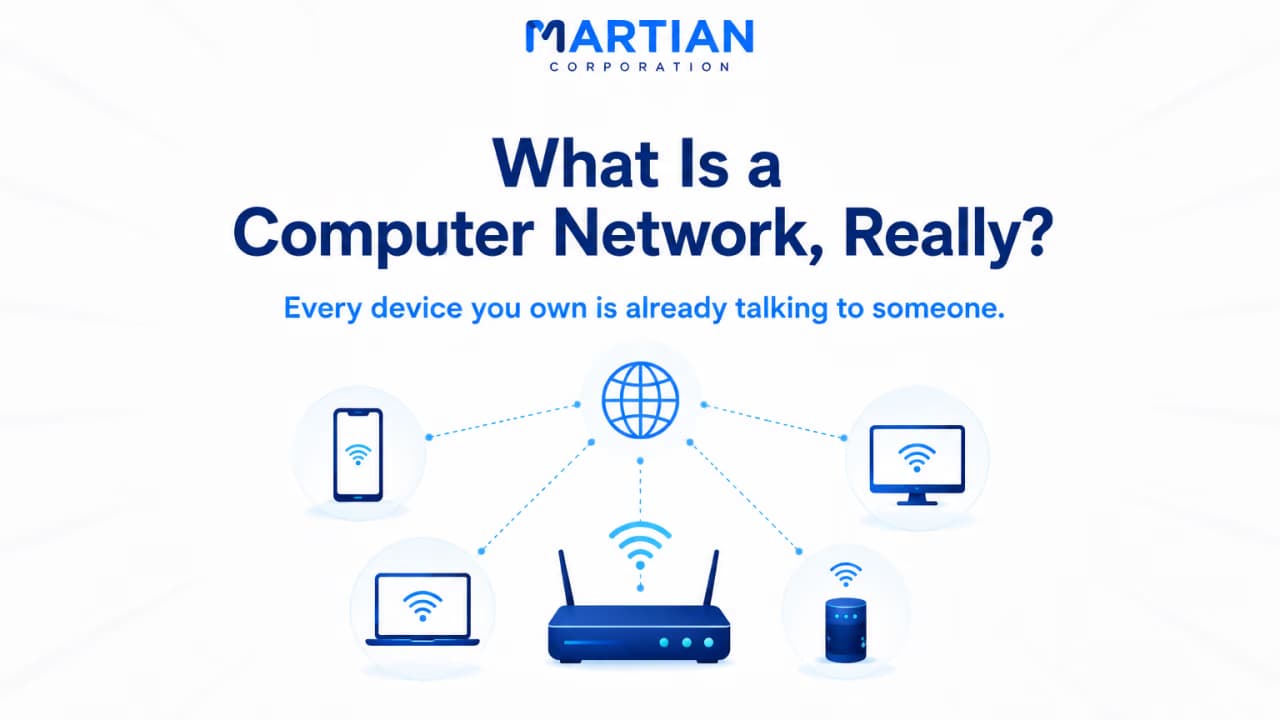
“Every device you own is already talking to someone.”
Right now, your phone, your laptop, and probably three other things in the room are exchanging data with machines you'll never see. That entire invisible conversation — the routers, the cables, the Wi-Fi signal bouncing off your walls — is a computer network. Most people use the word every day without ever pinning down what it actually means, and that gap causes real confusion later on.
What Actually Makes a Network a Network?
“Two connected devices are technically already a network.”
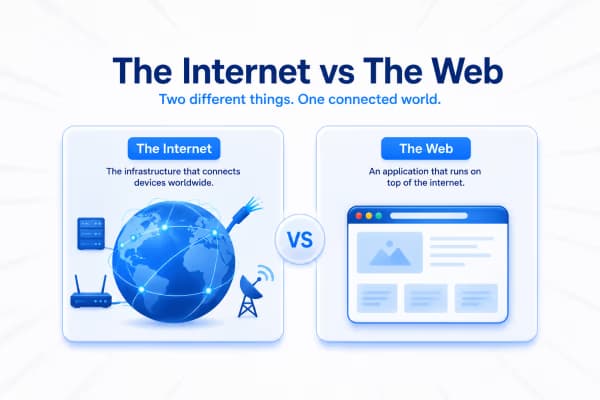
Strip away the buzzwords and the definition is simple: a computer network is a group of devices connected together to share resources and exchange data. Two laptops linked by one cable count. So does a single wireless mouse paired to a computer. The global internet is the exact same idea — just scaled up to billions of devices. Almost everything in networking exists to answer one question: how do we make this work at that scale?
The Four Building Blocks
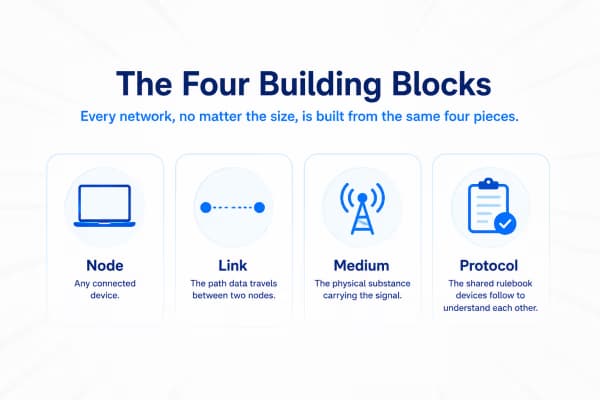
“Every network, no matter the size, is built from the same four pieces.”
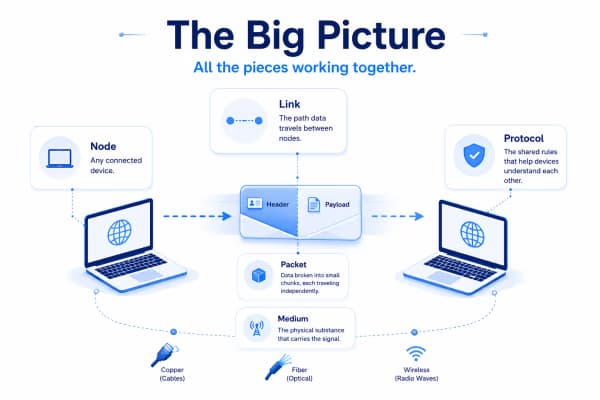
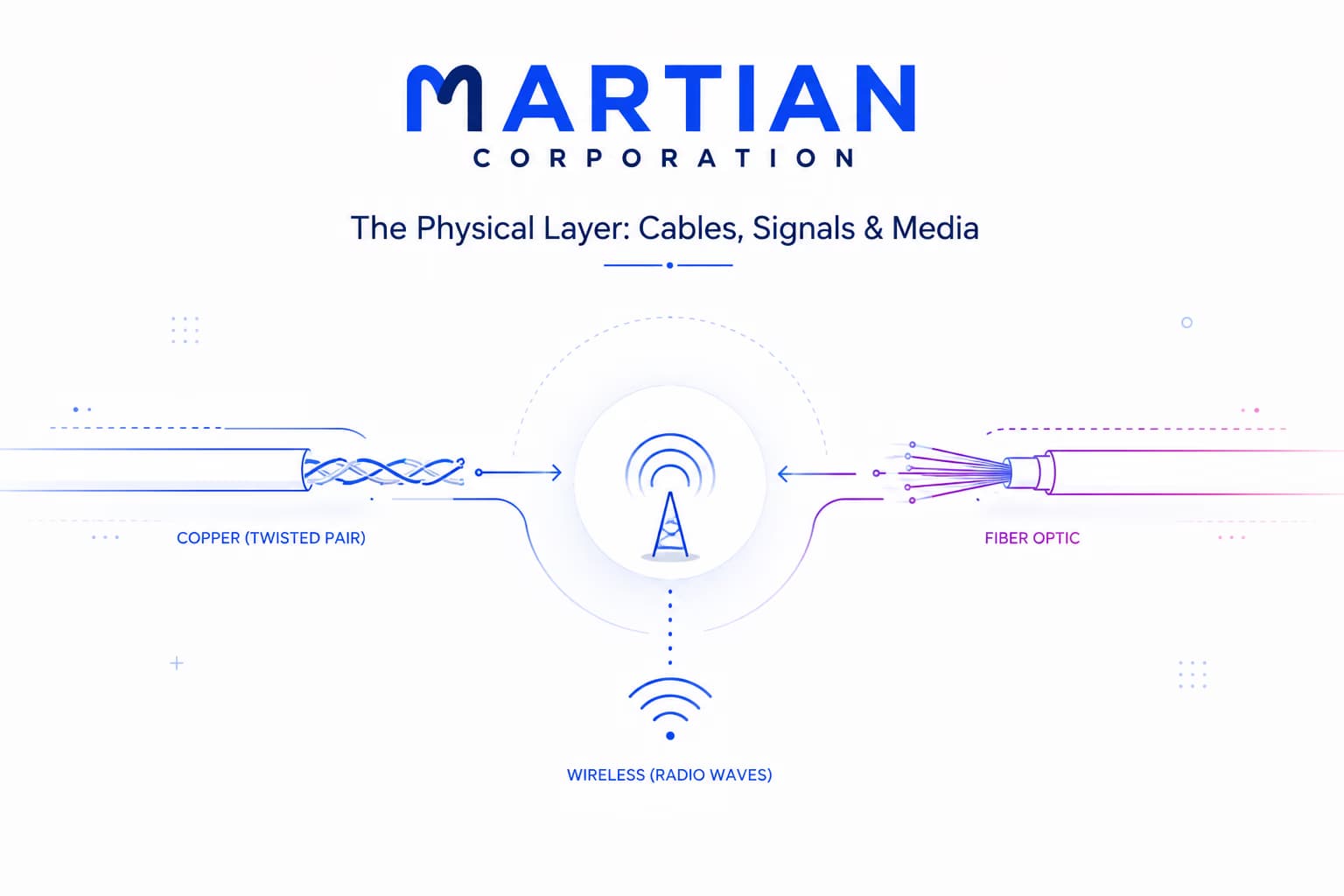
A node is any connected device — a laptop, a printer, a router. A link is the path data travels between two nodes, wired or wireless. A medium is the physical substance carrying the signal — copper, fiber, radio waves. And a protocol is the shared rulebook devices follow to actually understand each other — similar to how a phone call has an unspoken structure of “hello,” conversation, then “goodbye.” Skip the structure, and communication breaks down. Computers need that same shared etiquette, just far more precise.