Introduction
“The Physical Layer moves signals. The Data Link Layer turns those signals into local communication.”
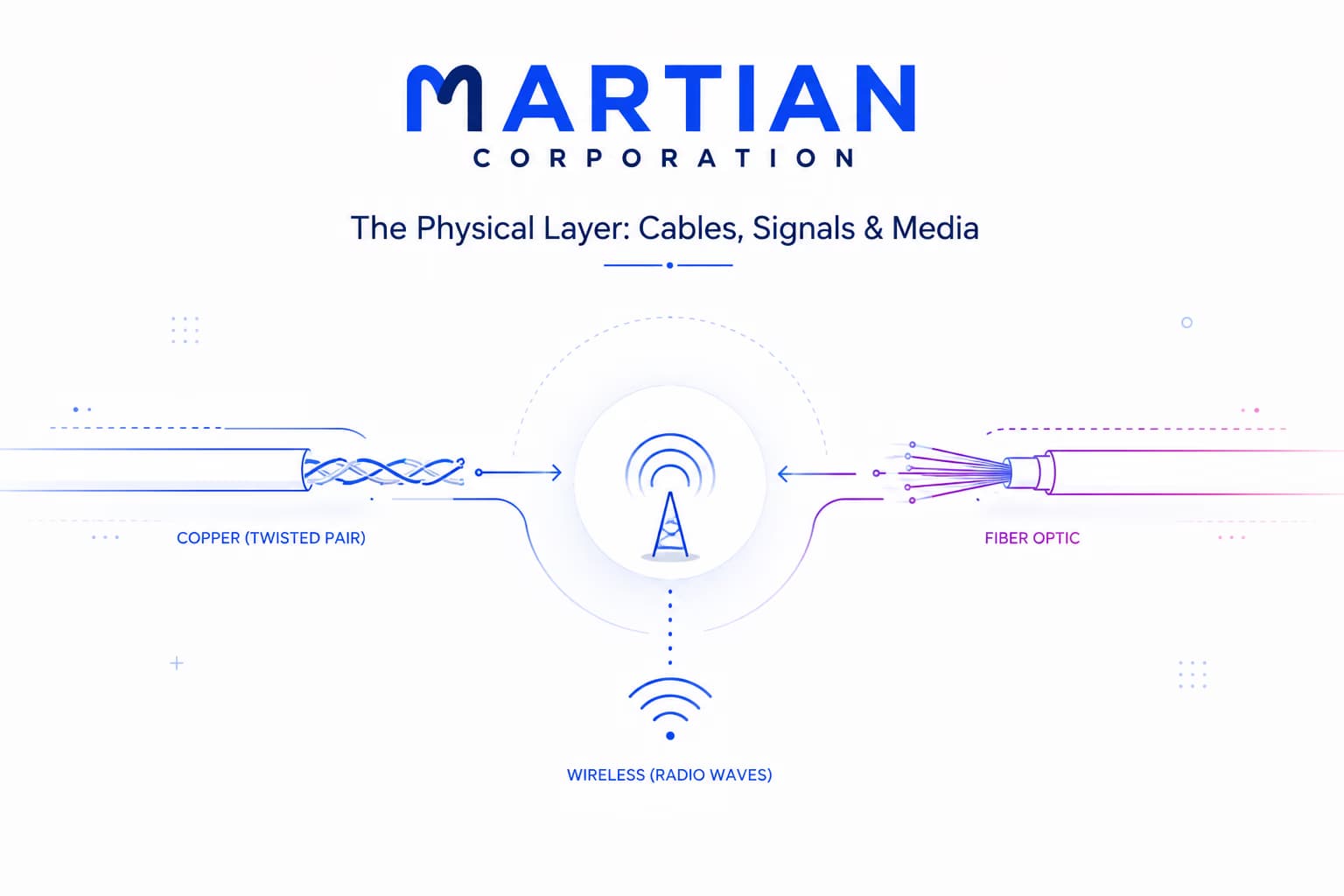
In the previous article, we saw how bits become physical signals and travel through copper, fiber, or wireless media. But a signal reaching a device is only the beginning. A network still needs to organize those bits, identify devices, detect errors, and decide where the data should go.
This is where the Data Link Layer becomes important. It sits directly above the Physical Layer and focuses on communication across the local network — using frames, MAC addresses, Ethernet, switches, and error detection.
Frames Give Data a Structure
“Bits become useful when the network knows which bits belong to the same transmission.”
The Physical Layer deals with a stream of signals. The Data Link Layer gives that stream structure by organizing data into units called frames.
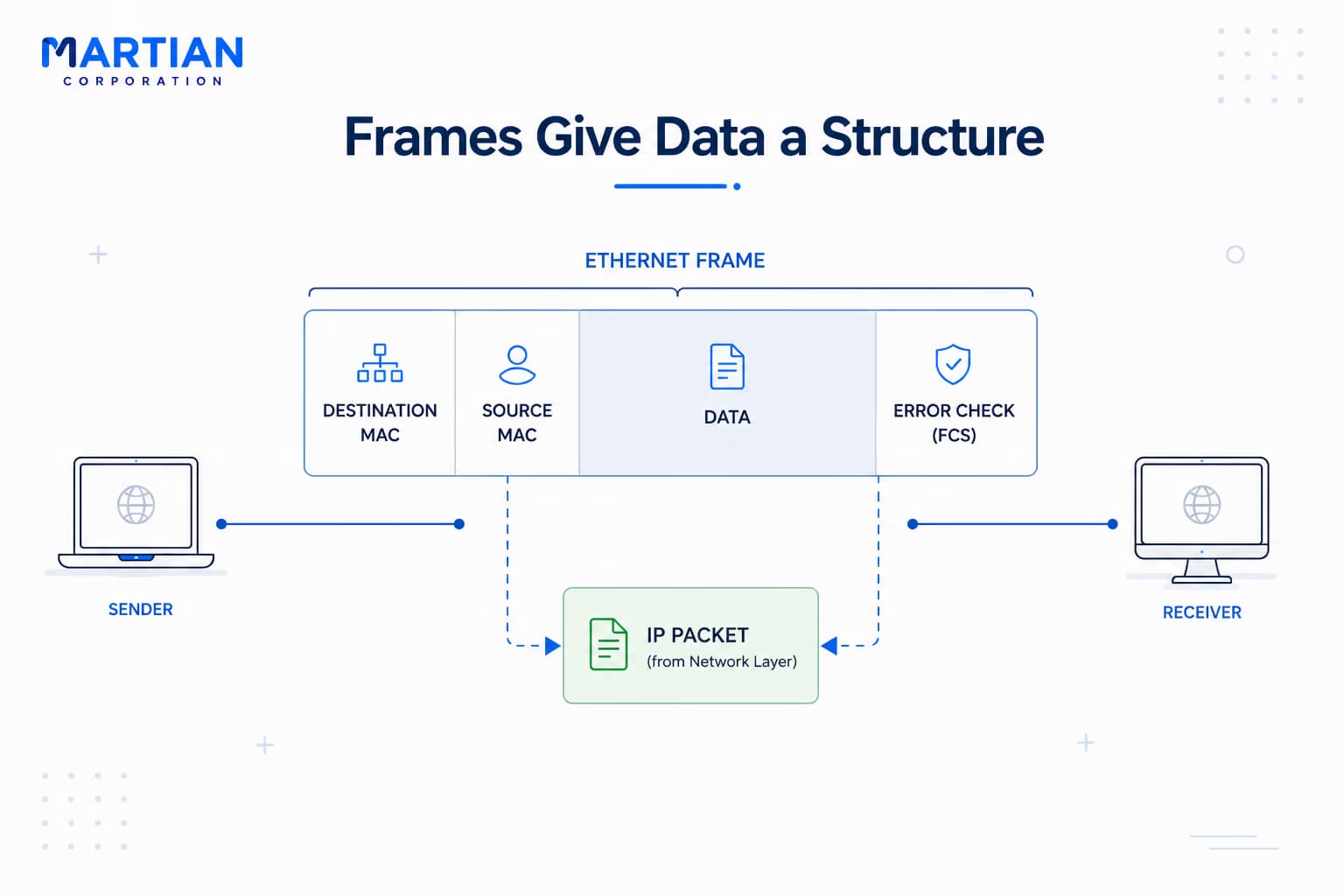
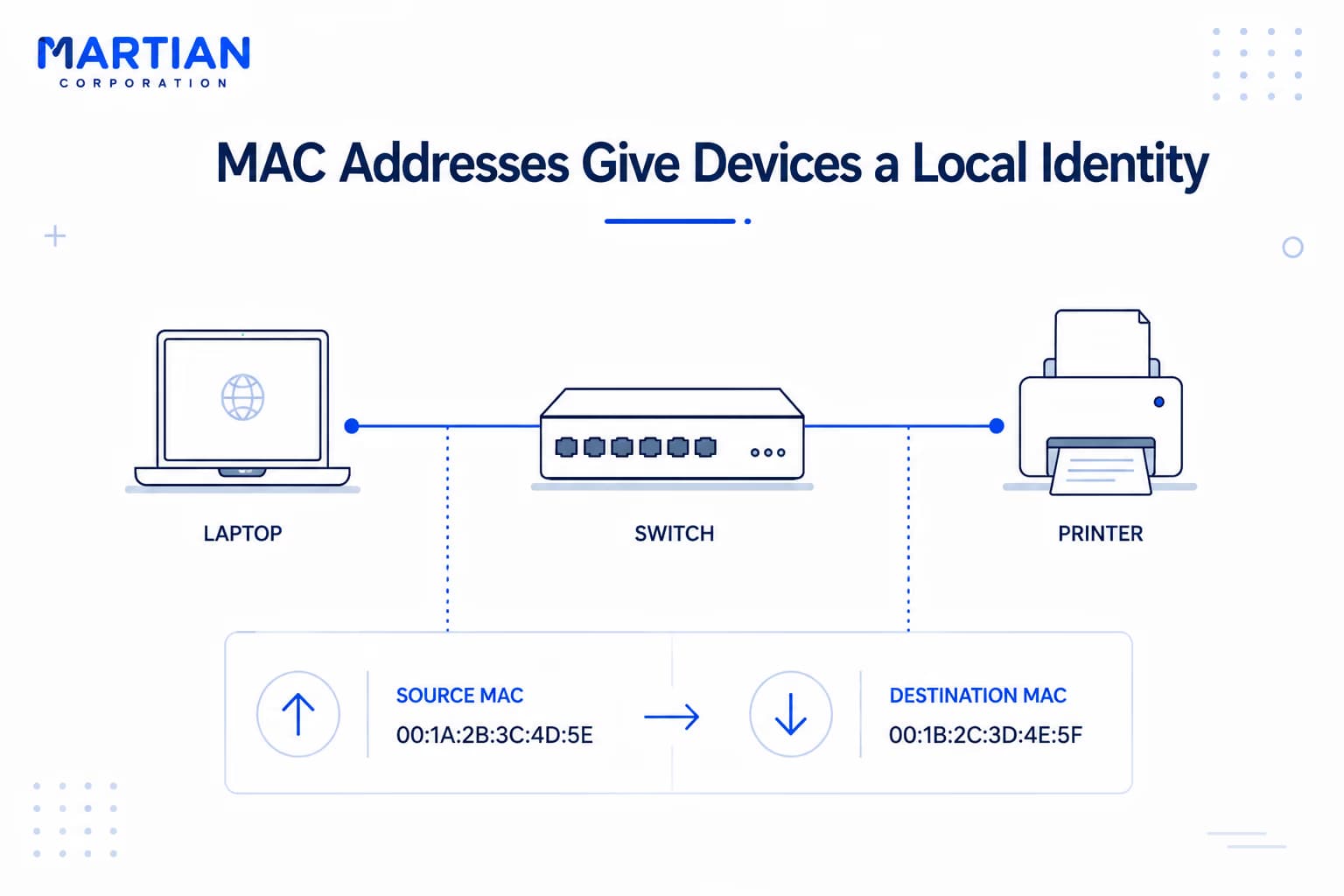
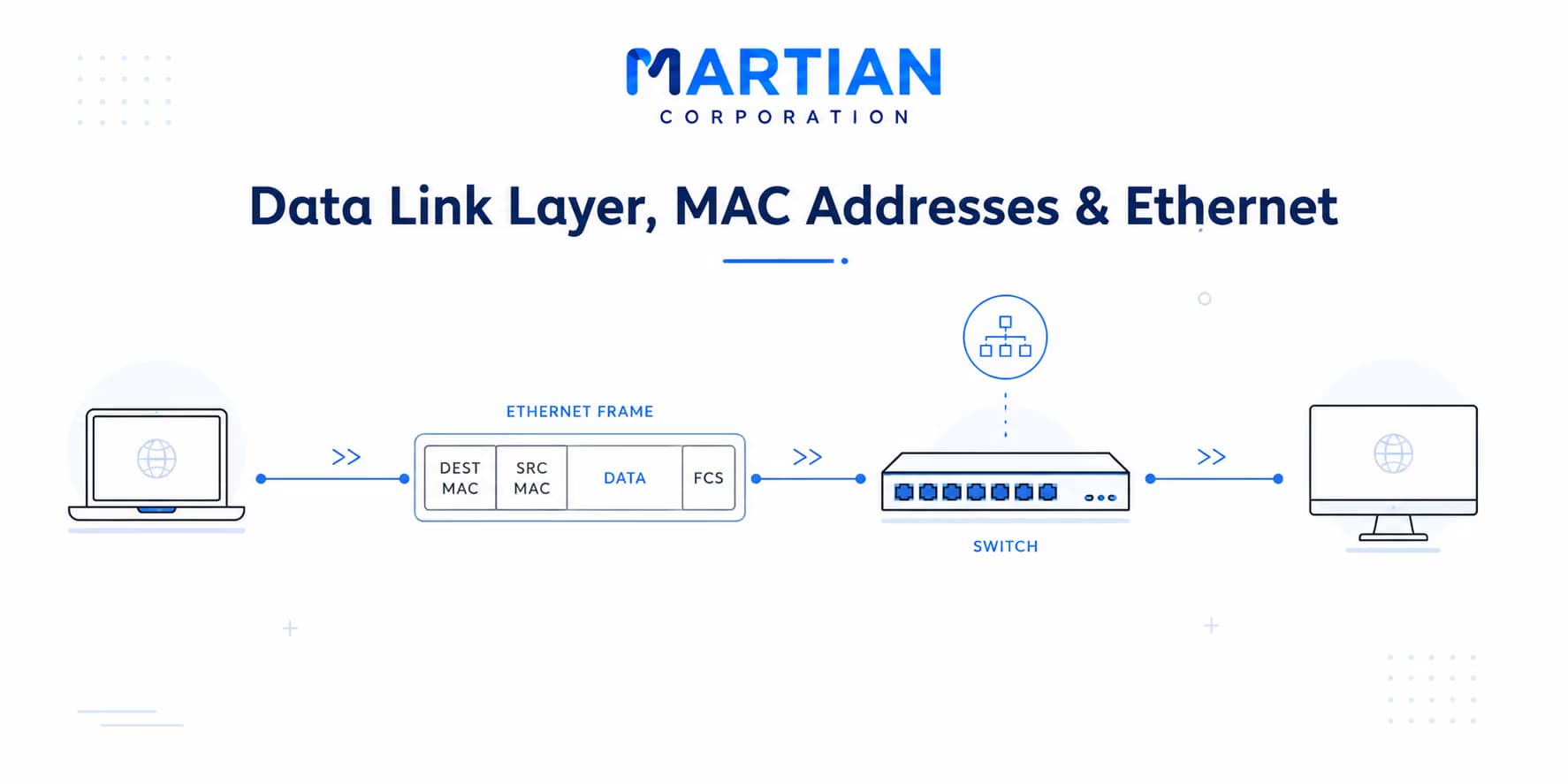
An Ethernet frame contains information such as the destination MAC address, source MAC address, the data being carried, and an error-checking value. A simplified view is: Destination MAC → Source MAC → Data → Error Check.
Think of a frame like a local delivery package. The physical network provides the road, while the package contains the information needed to handle that particular delivery.
The layer above may provide an IP packet, but the Data Link Layer wraps that packet inside a frame so it can move across the local network. At the receiving end, the device examines the frame, removes the Data Link information, and passes the packet upward.
This process connects the logical world of IP packets to the physical world of signals.