Introduction
"The fear was never the math. It was not knowing which math to trust."
Ask any networking student which topic makes their stomach drop, and the answer is almost always the same: subnetting. Not routing, not the OSI model, not even cabling standards — subnetting. It has a reputation for being the gatekeeper skill, the one that separates people who understand networks from people who merely use them. But the fear around it is mostly inherited, passed down from one confused study session to the next. Underneath the intimidating notation, subnetting is really just careful counting — and counting is something everyone already knows how to do.
1. Subnet Masks and CIDR: Reading the Address Correctly
"A mask doesn't hide anything — it decides what matters."
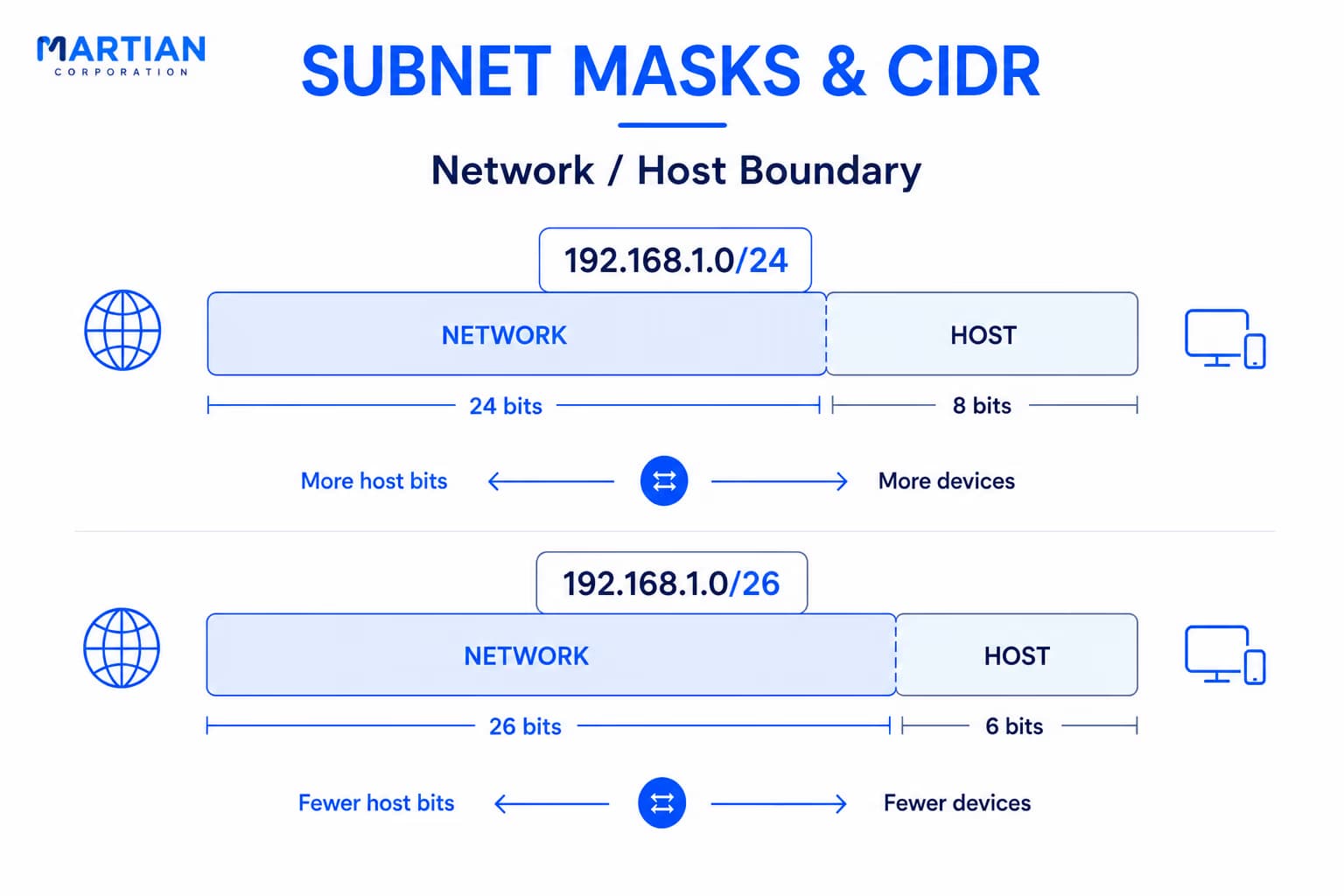
Every IP address is really two questions squeezed into one number: which network is this device on, and which specific device is it on that network? The subnet mask is what separates those two answers. It draws a line through the address and says, "everything on this side is the network, everything on that side is the host."
Think of an apartment building's mailing address. "123 Main Street" identifies the building — that's the network portion. "Apartment 4B" identifies a specific unit inside it — that's the host portion. The mask is simply the rule for where the building's address ends and the apartment number begins.
CIDR notation is that same rule written faster. Before it existed, engineers relied on rigid address classes — Class A, B, and C — each locked into a fixed, wasteful split between network and host bits. CIDR replaced that rigidity with something far more flexible: a single number that says exactly where the line falls, wherever it needs to fall.
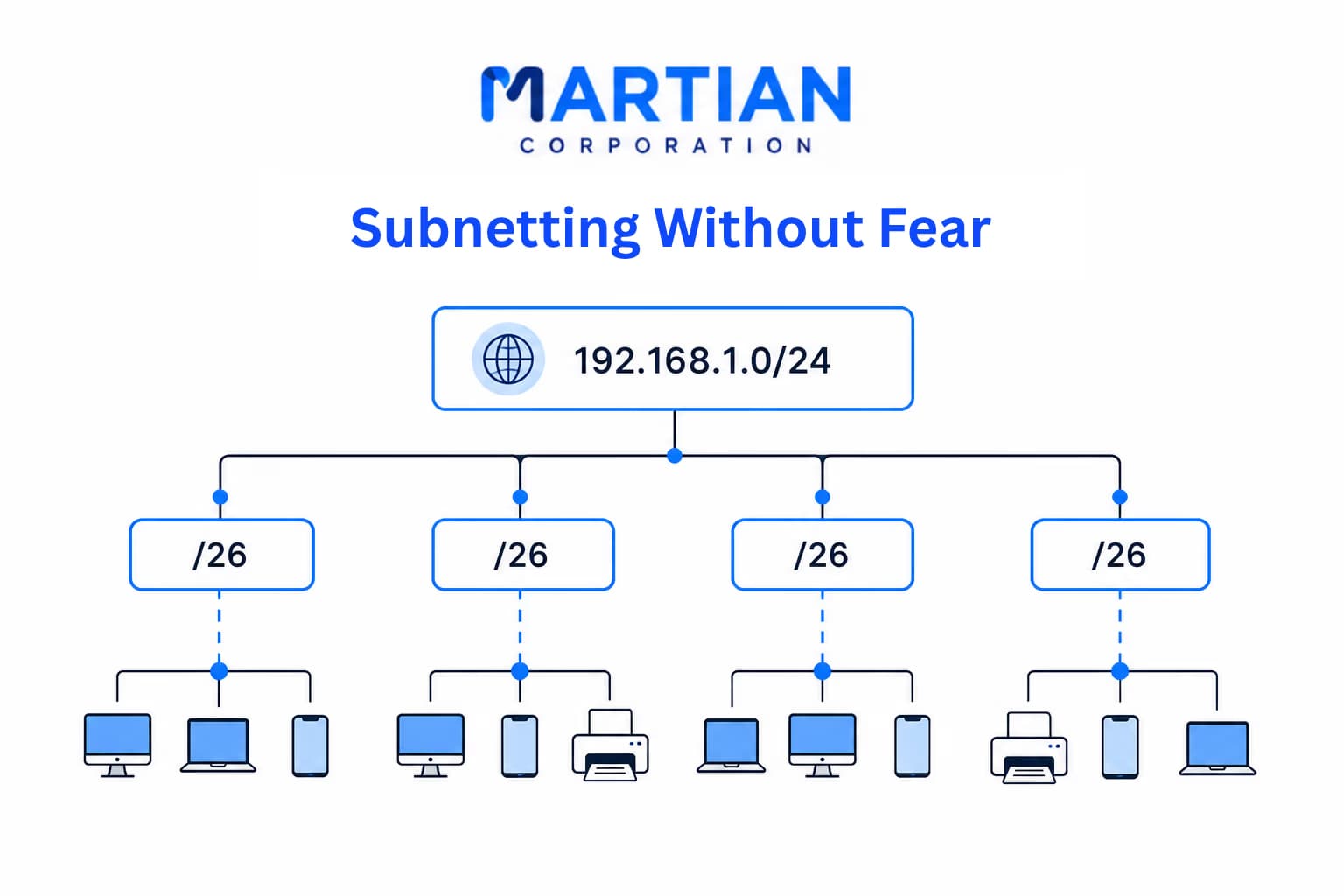
When you see an address like 192.168.1.0/24, the slash-24 is telling you how many of the 32 total bits in the address belong to the network. A /24 leaves 8 bits for hosts. A /26 leaves only 6. The higher the number after the slash, the more addresses get claimed by the network, and the fewer are left for actual devices. This one relationship — more network bits, fewer host bits — is the foundation everything else in subnetting is built on. Once it clicks, every mask you'll ever see, from /8 to /30, is read the same simple way.