All Blogs/Cloud Computing
23 Jun 2026
2 min read

Serverless Architecture: The Future of Cloud Development

Serverless Architecture: The Future of Cloud Development

By: Martian Corporation

Article content

Introduction

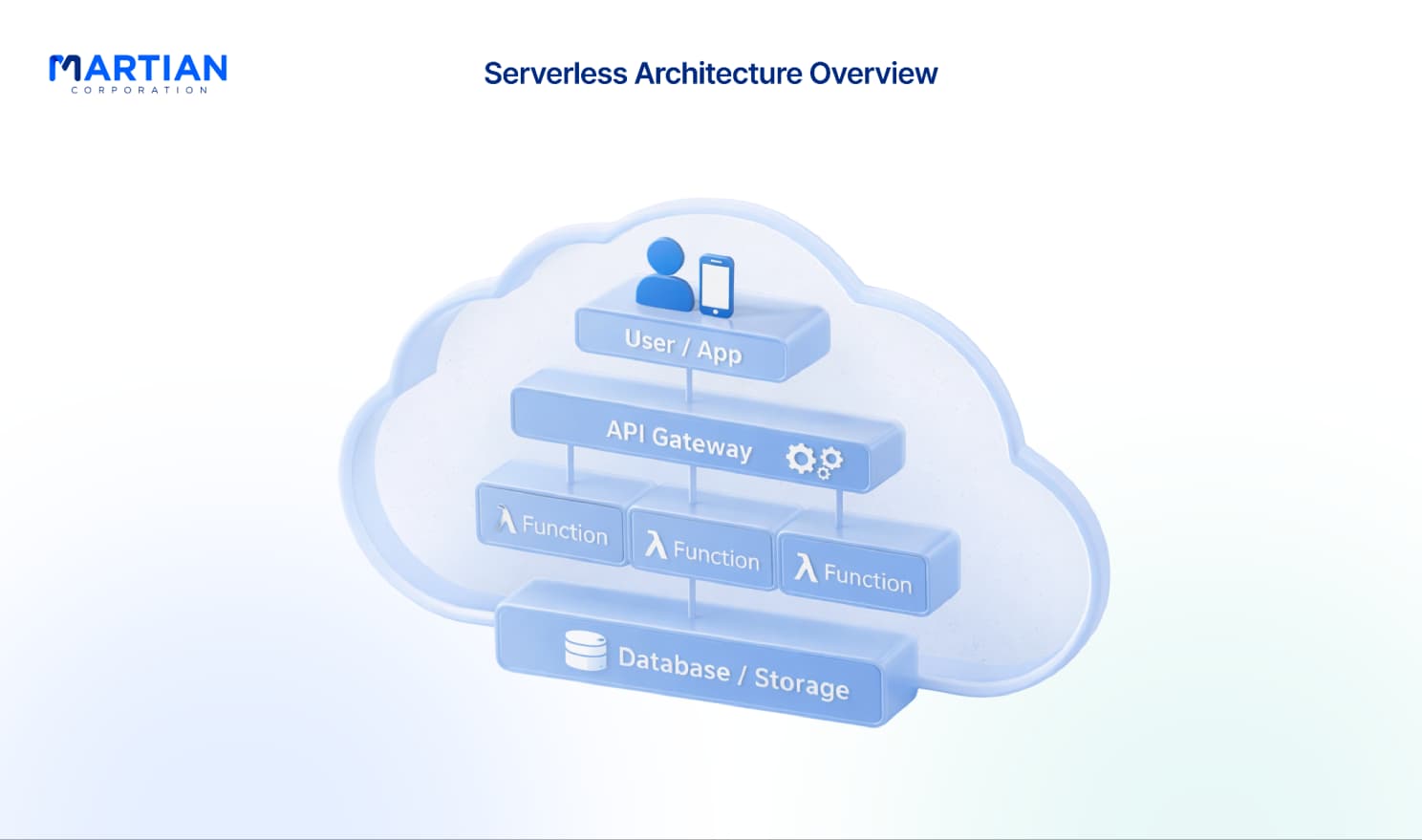
“The best infrastructure is the one you don’t have to manage.” Serverless architecture is transforming how modern applications are built and deployed. Instead of maintaining servers, developers focus purely on writing code while cloud providers handle infrastructure, scaling, and maintenance automatically. This model allows businesses to launch faster, reduce operational complexity, and pay only for the resources they actually use.
Lambda and Function-Based Computing

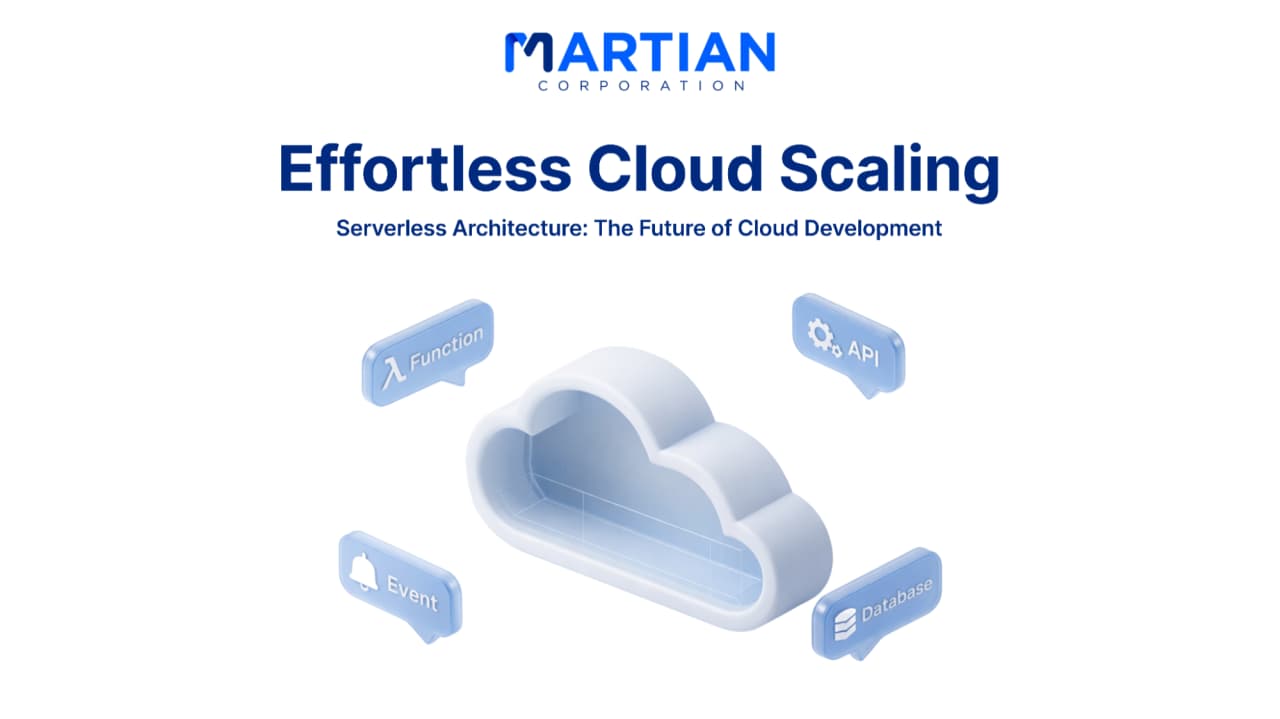
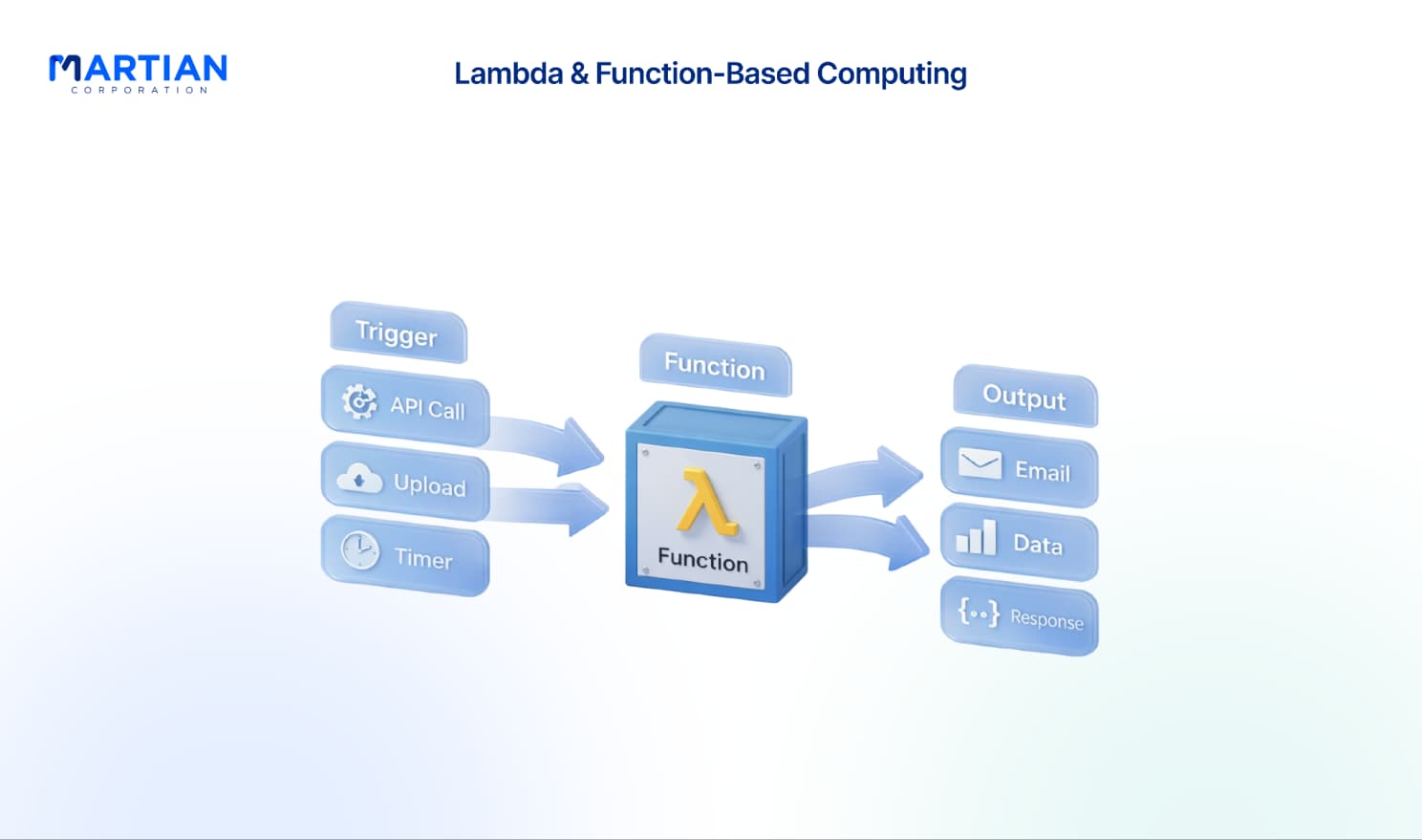
“Small functions can power large systems.” Services like AWS Lambda allow developers to run code in response to specific triggers without managing servers. Instead of deploying full applications, developers create small functions that perform individual tasks such as processing data, sending notifications, or handling API requests. These functions run only when needed and automatically scale based on demand, making them ideal for modern, flexible cloud applications.

Cloud Functions and Platform Support

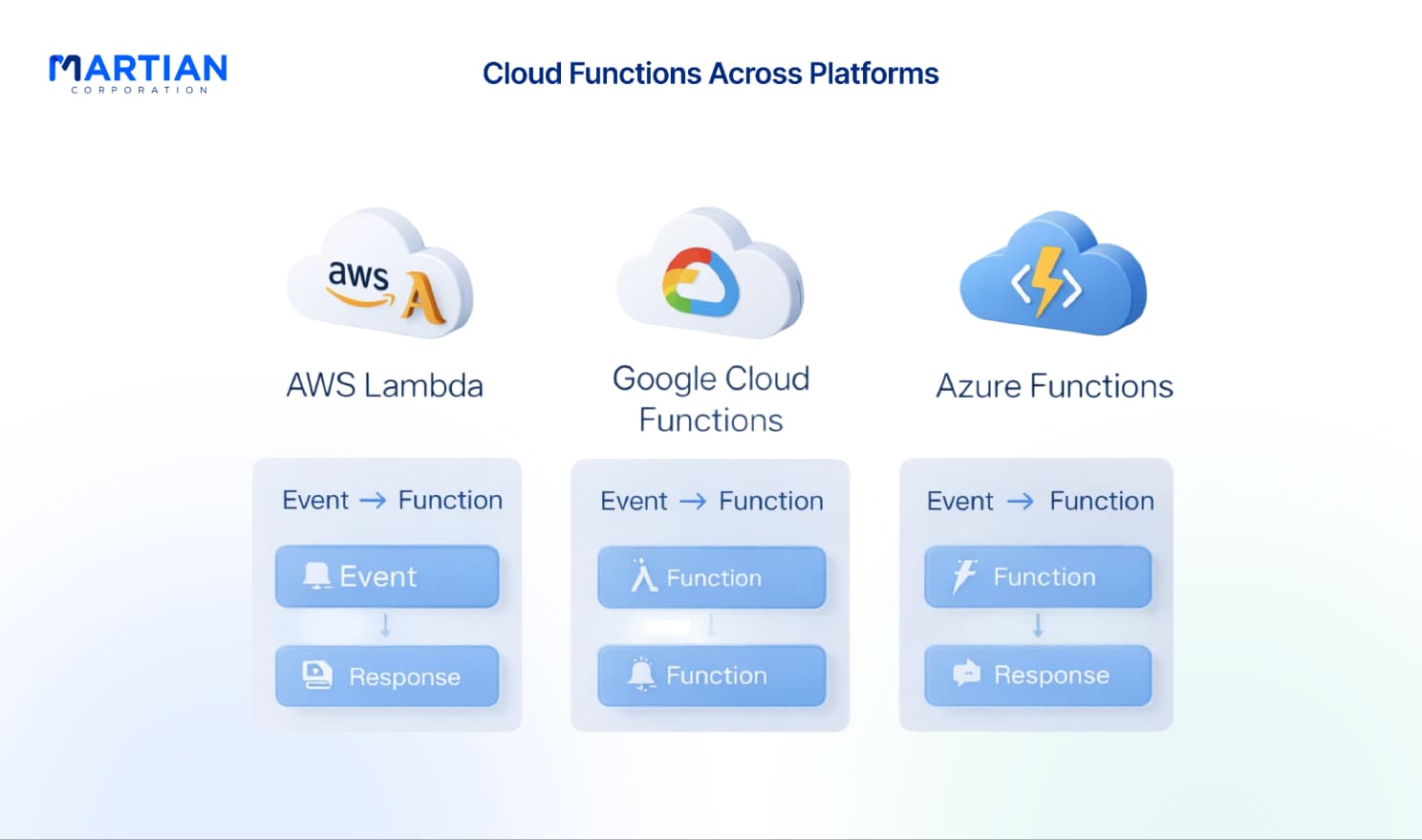
“Cloud platforms now deliver computing as a simple service.” Major cloud providers offer serverless computing tools such as Google Cloud Functions and Azure Functions. These platforms allow developers to deploy lightweight code that executes instantly when triggered by events like database updates, file uploads, or HTTP requests. Because the cloud provider manages the underlying infrastructure, teams can focus entirely on application logic rather than system administration.

Article content

Event-Driven System Design

“Modern applications react to events instead of waiting for commands.” Serverless architecture often uses event-driven systems where functions are triggered automatically by actions within the system. For example, uploading a file can trigger image processing, sending a message can trigger notifications, or a new user registration can start verification workflows. This reactive design allows systems to remain efficient, responsive, and capable of handling complex workflows without constant background processes.

Cost Efficiency and Scalability

“Pay only for what you use.” One of the biggest advantages of serverless architecture is cost efficiency. Traditional infrastructure requires servers to run continuously, even when demand is low. In a serverless model, functions run only when triggered, meaning businesses are charged only for the actual compute time used. Combined with automatic scaling, this makes serverless systems highly cost-effective for applications with unpredictable or fluctuating workloads.

Conclusion

“Serverless development shifts the focus from infrastructure to innovation.” By combining function-based computing, event-driven design, and automated scaling, serverless architecture enables developers to build applications faster while reducing operational overhead. As cloud platforms continue to evolve, serverless systems are becoming an essential approach for businesses aiming to build efficient, scalable, and future-ready applications.

Article content

NewsLetter

Stay ahead in the world of technology

Get curated technology trends, expert analysis, and product updates delivered straight to your inbox — no noise, just signal.

Enter your email address

By subscribing you agree to our Terms and Conditions and Privacy Policy