
All Blogs/Cloud Computing
12 Jun 2026
4 min read

AWS vs Google Cloud vs Microsoft Azure: Which Cloud Platform Is Best in 2026?

AWS vs Google Cloud vs Microsoft Azure: Which Cloud Platform Is Best in 2026?

By: Martian Corporation

Article content

Introduction

“Choosing a cloud platform today is choosing your company’s digital foundation.” In 2026, cloud computing powers everything from small startup apps to global enterprise systems. But with three major players — AWS, Google Cloud, and Microsoft Azure — choosing the right platform can feel overwhelming.

Each provider offers powerful infrastructure, global networks, and advanced services. The real question isn’t which cloud is best overall, but which one fits your business needs, development workflow, and growth plans. Understanding how these platforms differ in performance, pricing, and scalability helps teams make smarter long-term decisions.
The Big Three in Cloud Computing

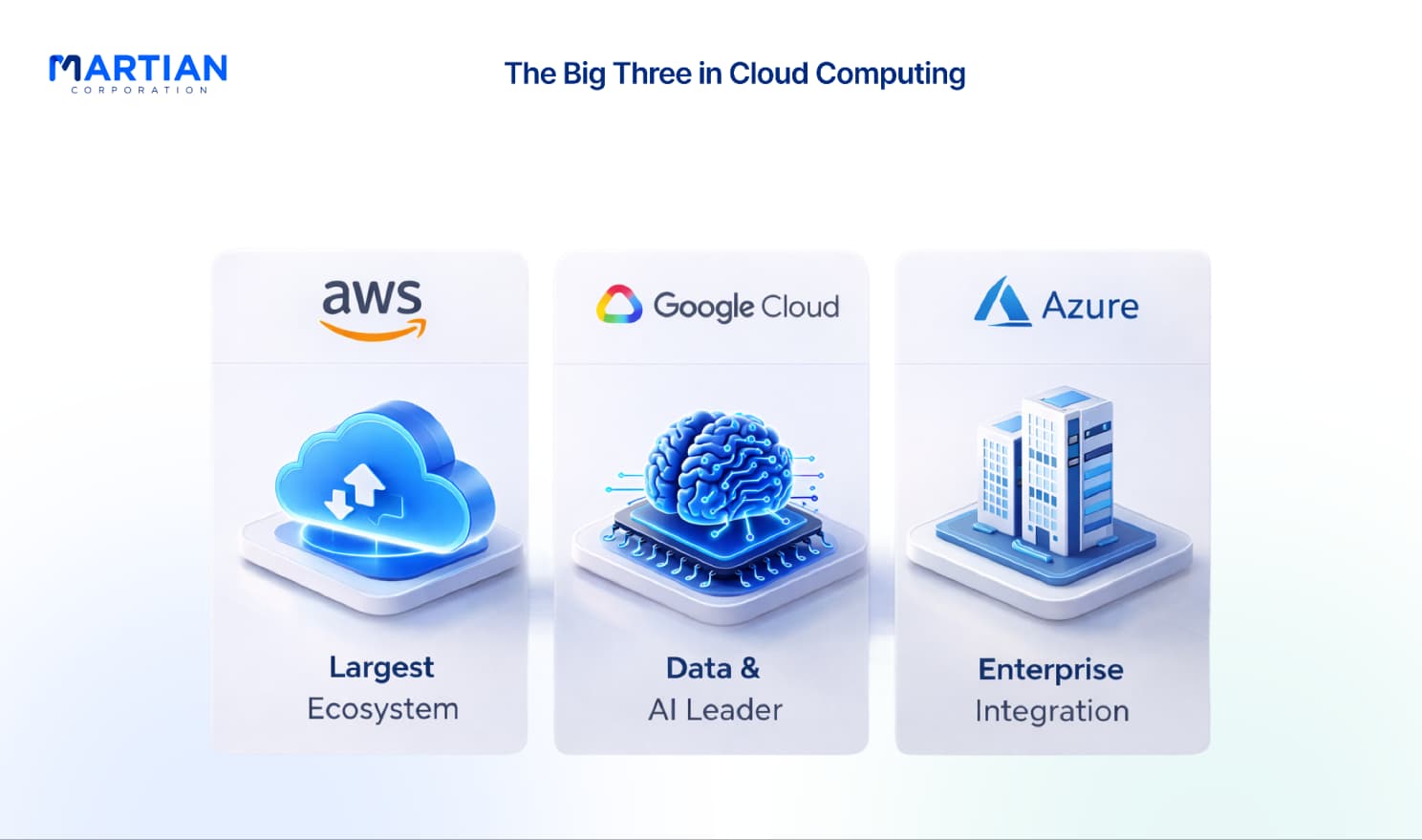
“All clouds provide infrastructure — but each has a different strength.” Amazon Web Services (AWS) remains the largest cloud provider with the most mature ecosystem and widest service portfolio. Google Cloud is known for strong data analytics, AI tools, and developer-friendly infrastructure. Microsoft Azure stands out for enterprise integration, especially for companies already using Microsoft technologies.

While all three platforms deliver computing power, storage, networking, and databases, the experience developers and businesses get from each platform can be quite different.

Performance and Infrastructure

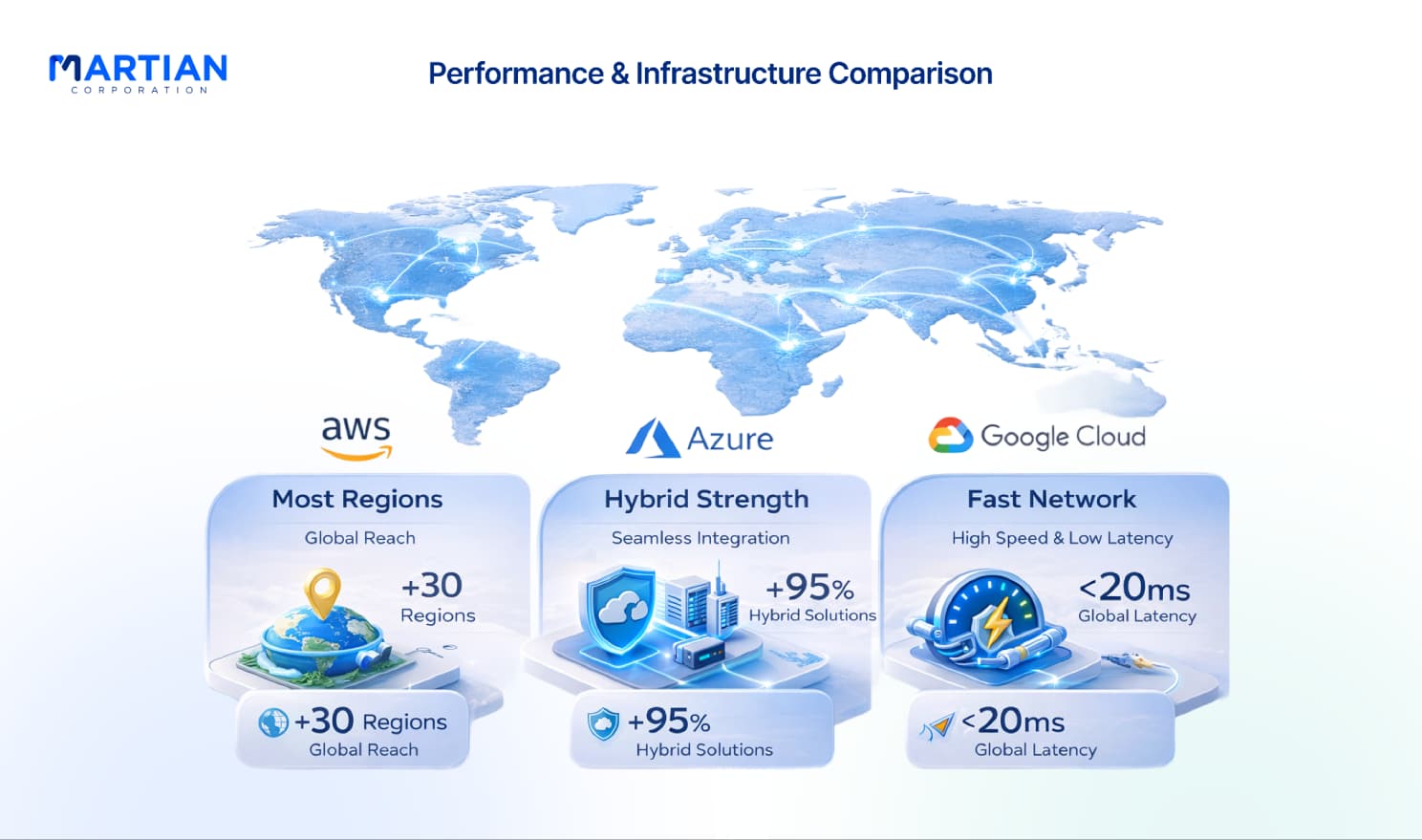
“Speed and reliability define real cloud performance.” AWS offers one of the largest global infrastructures with dozens of regions and availability zones, making it highly reliable for large-scale systems. Azure provides similar global coverage and integrates smoothly with enterprise environments and hybrid cloud systems.

Google Cloud, while slightly smaller in infrastructure footprint, is often praised for its high-performance networking and advanced data processing capabilities. Many companies running data-heavy workloads or AI systems prefer Google’s infrastructure because of its speed and optimization.

Article content

Pricing and Cost Efficiency

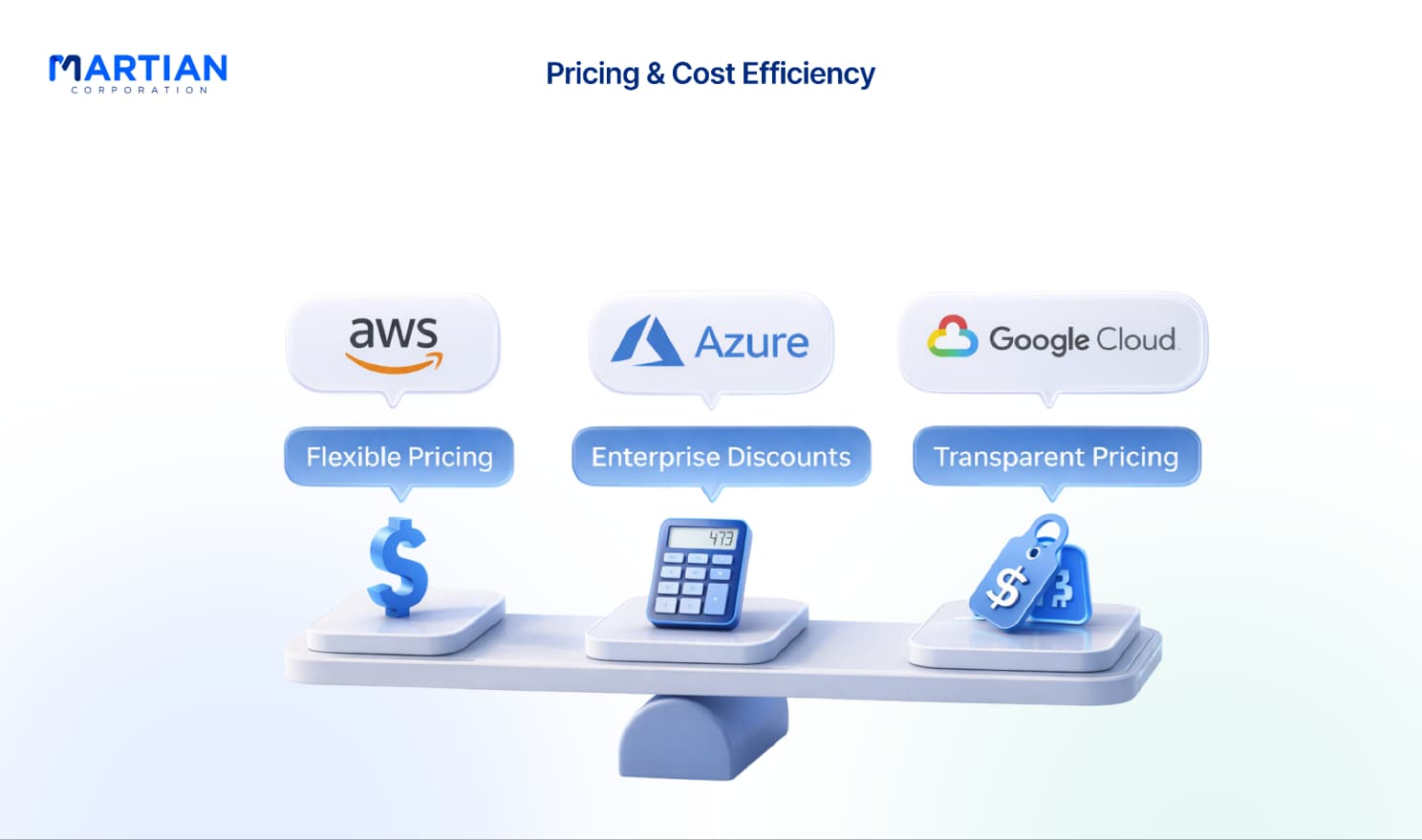
“Cloud pricing is simple in theory — complex in reality.” AWS uses a pay-as-you-go model with a huge variety of pricing options depending on compute usage, storage, and networking. Azure follows a similar model but offers attractive discounts for organizations already invested in Microsoft ecosystems.

Google Cloud is often considered the most transparent in pricing, with automatic discounts for sustained usage and competitive rates for compute-heavy workloads. However, total cost always depends on how efficiently resources are managed rather than the platform itself.

Scalability and Flexibility

“The real power of the cloud is scaling without limits.” AWS has long been trusted by startups and global companies for its ability to scale massive systems quickly. Many large internet platforms rely on AWS because of its mature tools and reliability under heavy demand.

Azure shines in hybrid cloud environments where businesses combine on-premise systems with cloud infrastructure. This flexibility is valuable for large enterprises migrating gradually to the cloud.

Google Cloud focuses heavily on containerization and modern development tools, making it especially attractive for teams using Kubernetes and microservices architectures.

Real-World Use Cases

“Different clouds solve different business problems.” Startups often choose AWS because of its extensive services and strong developer ecosystem. Large enterprises frequently adopt Azure because it integrates naturally with Microsoft products like Windows Server, Active Directory, and Office systems.

Google Cloud tends to attract companies working heavily with data analytics, machine learning, and modern cloud-native applications. Its tools for big data processing and AI development are among the most advanced in the industry.

Article content

Which Cloud Platform Should You Choose?

“The best cloud platform is the one that matches your workflow.” If your team values maturity, ecosystem depth, and global reliability, AWS is often the safest choice. If your organization already relies on Microsoft technologies, Azure offers seamless integration and enterprise-friendly solutions.

For teams focused on data engineering, machine learning, and modern infrastructure tools, Google Cloud may provide the most efficient environment.

Ultimately, most companies today adopt a multi-cloud strategy, combining services from different providers to reduce risk and maximize flexibility.

Conclusion

“The cloud isn’t just infrastructure — it’s strategy.” AWS, Google Cloud, and Microsoft Azure all provide powerful platforms capable of supporting modern digital businesses. The real difference lies in their strengths: AWS leads in ecosystem scale, Azure excels in enterprise integration, and Google Cloud stands out in data and AI capabilities.

In 2026, the smartest approach isn’t simply choosing the biggest provider. It’s selecting the platform that aligns with your technology stack, your team’s expertise, and the future you’re building.

NewsLetter

Stay ahead in the world of technology

Get curated technology trends, expert analysis, and product updates delivered straight to your inbox — no noise, just signal.

Enter your email address

By subscribing you agree to our Terms and Conditions and Privacy Policy