Introduction
"Knowing how routing works is theory. Knowing which protocol to run is engineering."
Routers can learn paths in different ways, but real networks rarely use just one method. A company campus, an internet provider, and a multi-cloud platform each have different needs, so each uses different tools.
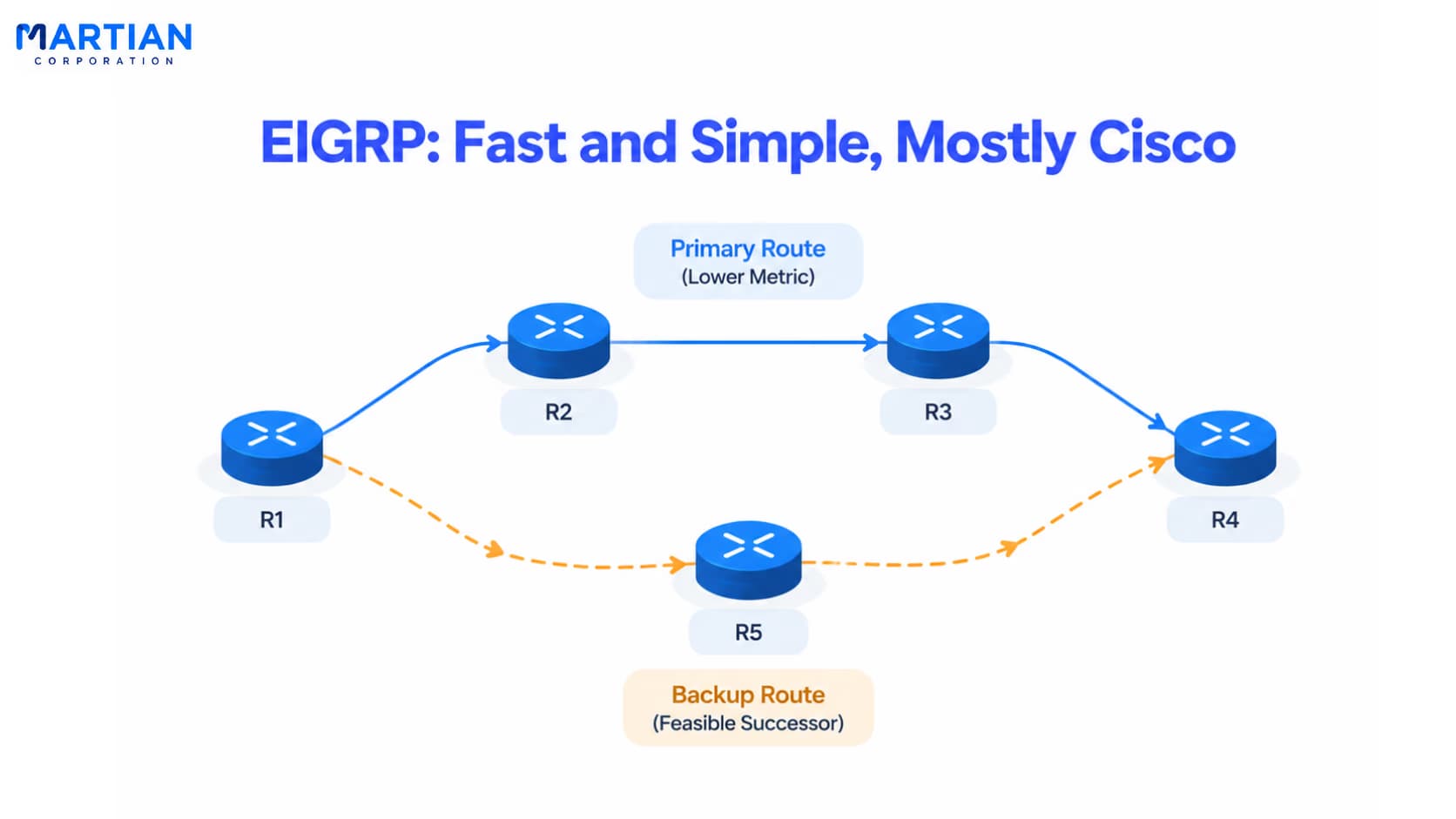
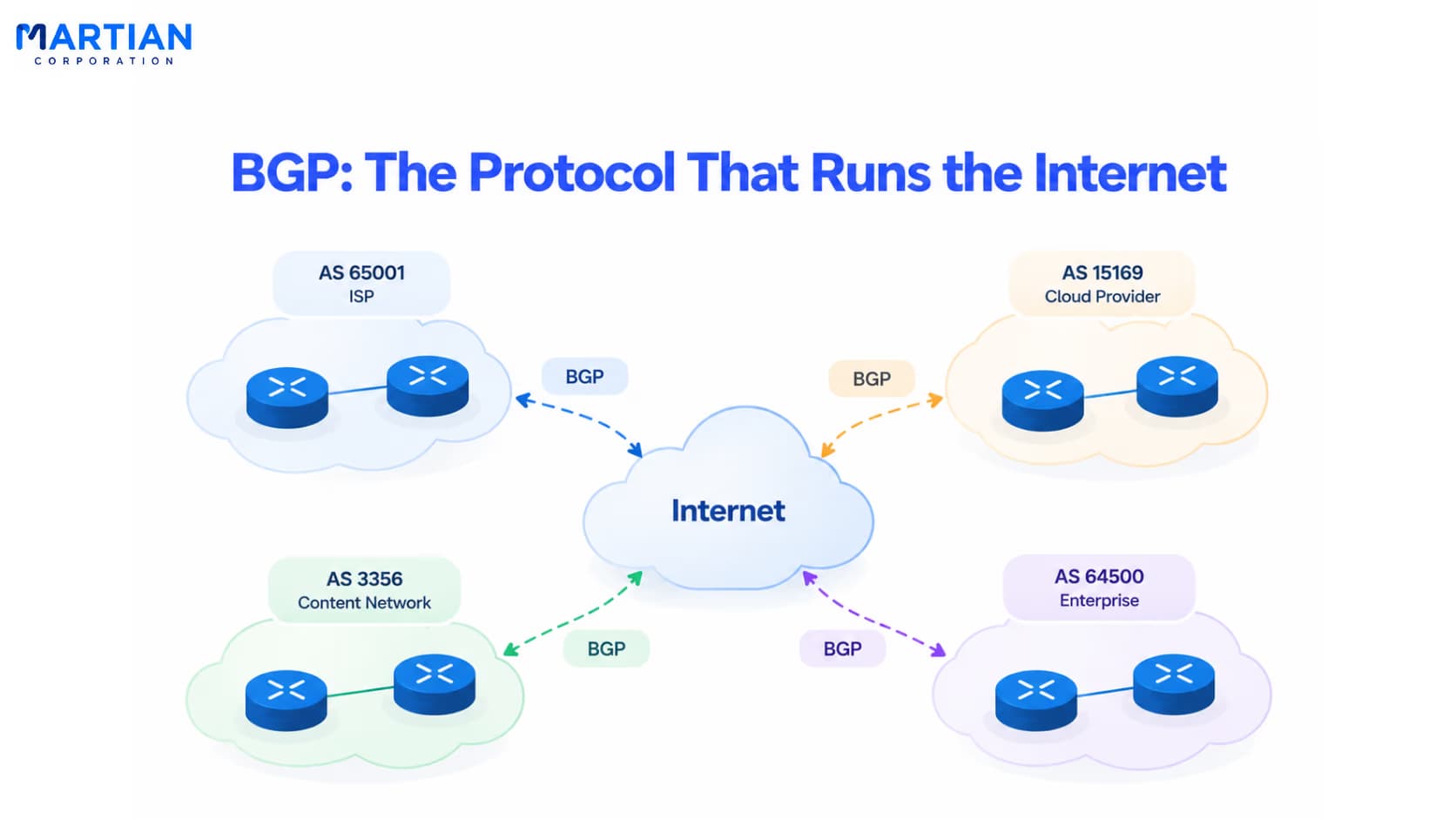
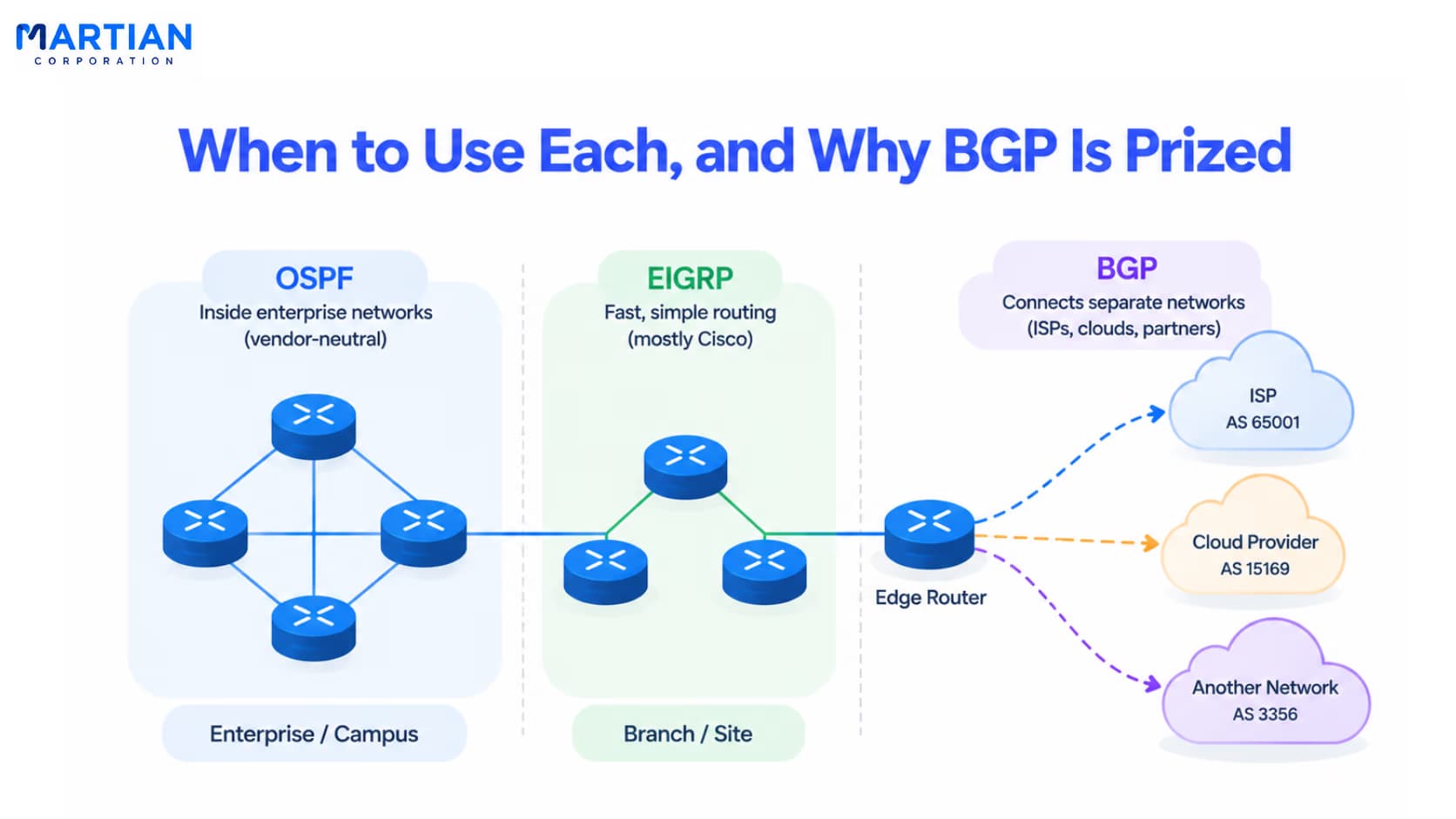
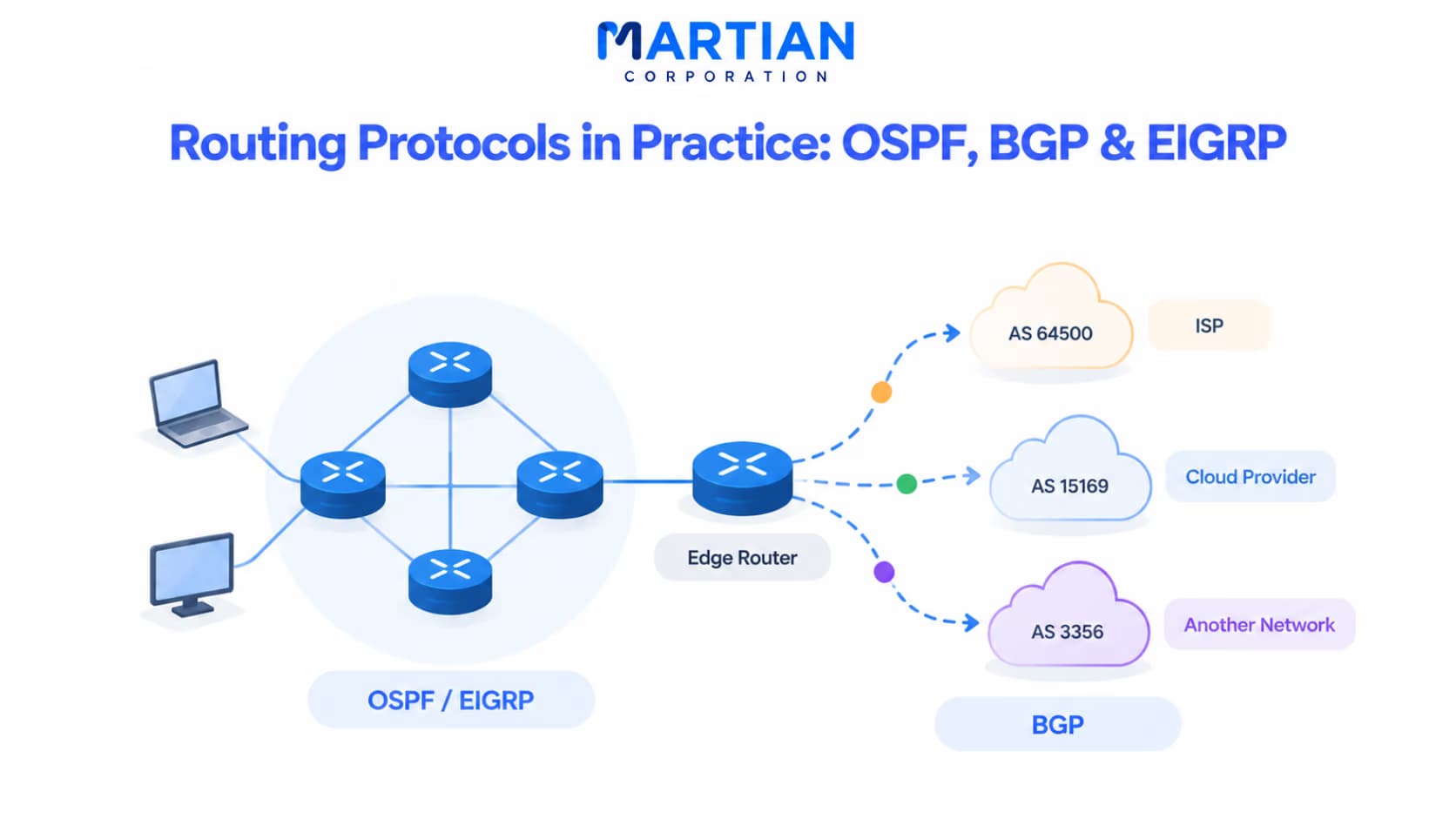
Three protocols appear again and again: OSPF, EIGRP, and BGP. The first two usually work inside a single organization's network, while BGP connects networks to each other. Let's see what each does and where it fits.
1. OSPF: The Interior Standard
"Inside your own network, everyone should share the same map."
OSPF (Open Shortest Path First) is a link-state protocol and an interior gateway protocol (IGP), meaning it routes traffic within one organization's network, known as an autonomous system.
Each OSPF router describes its directly connected links and floods that information to the others in its area. Every router then builds the same topology map and runs Dijkstra's algorithm to find the lowest-cost path. Cost is typically based on link bandwidth, so faster links are preferred.
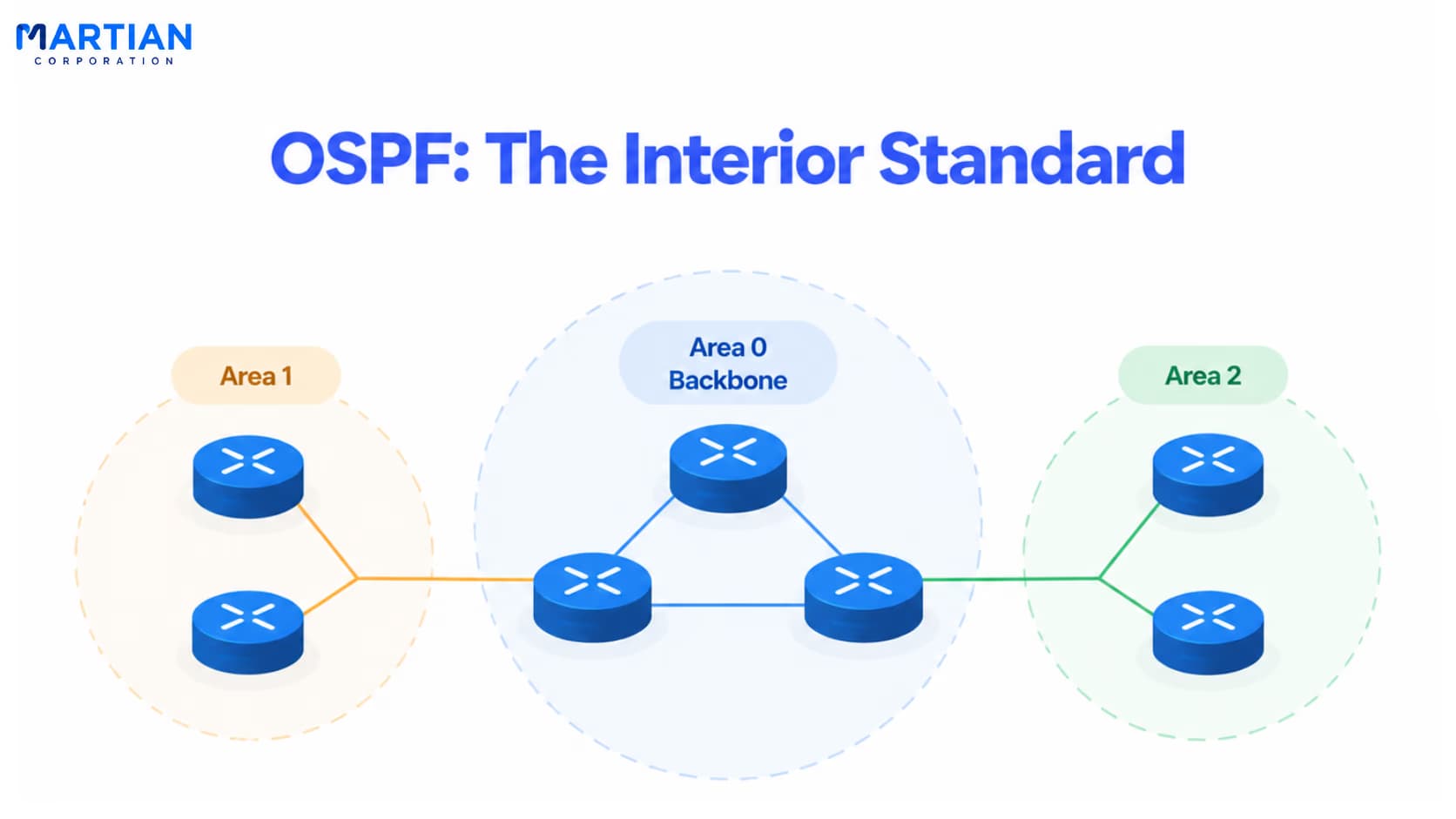
To stay manageable in large networks, OSPF divides them into areas. All areas connect to a central backbone, Area 0, which keeps routing updates local and reduces the load on each router.
Because OSPF is an open standard, it works across equipment from different vendors. That makes it a common choice for enterprise campuses, data centres, and service provider cores.