Introduction
"Every network is built twice — first as a design, then as a reality."
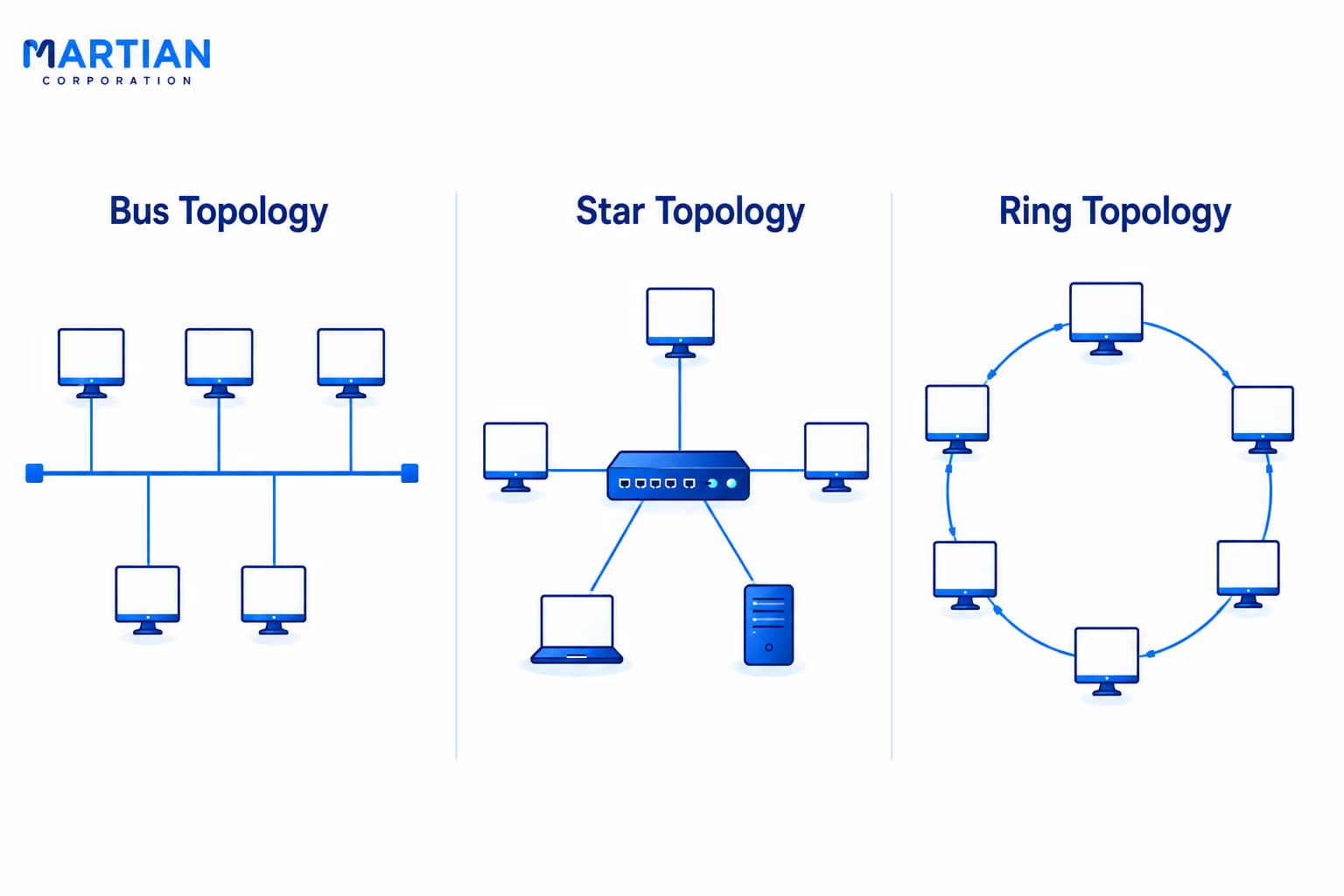
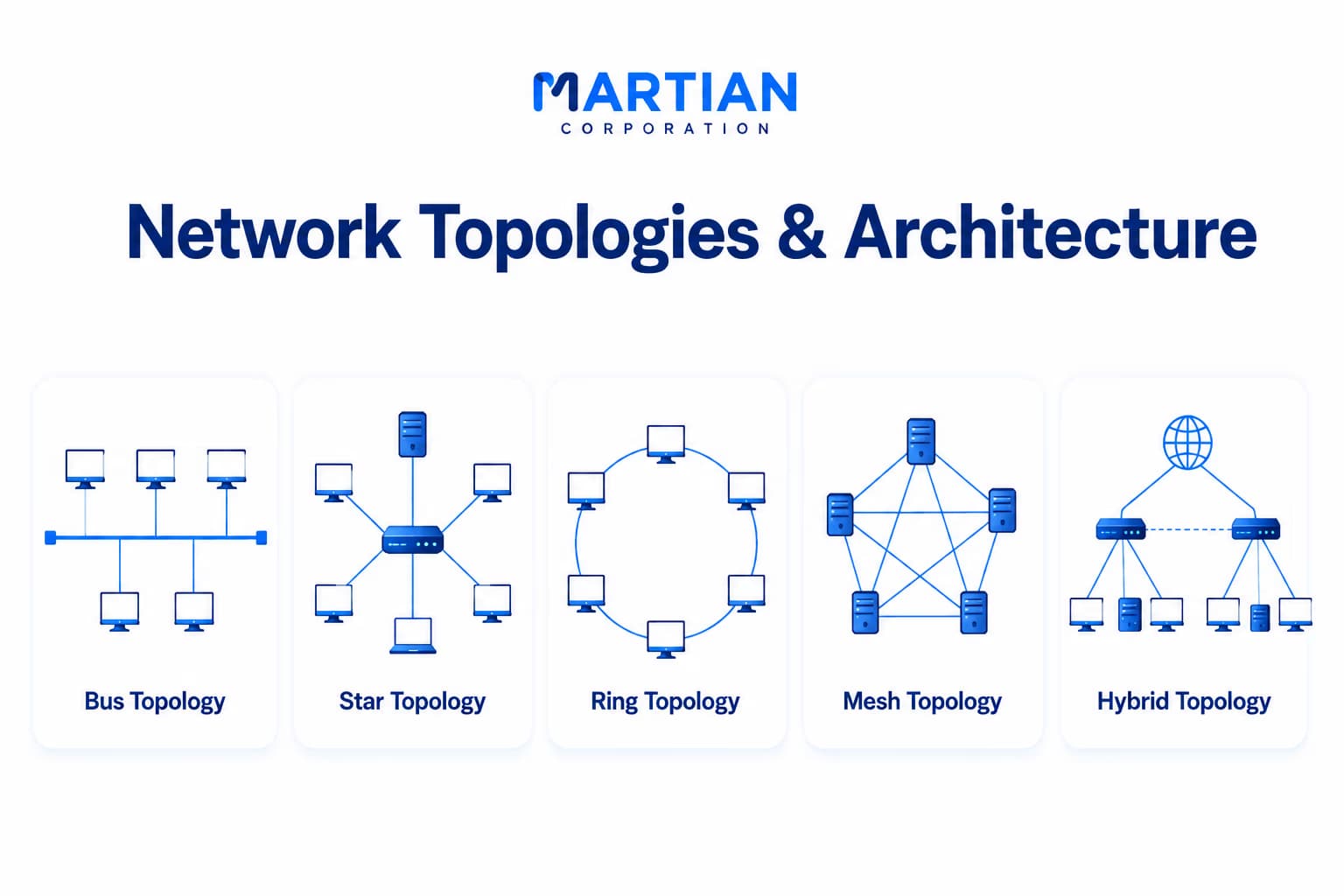
Before a single cable is run, someone has to decide how all these devices will connect. That decision is called topology — the shape and layout of a network. Just like a building's floor plan shapes how people move through it, a network's topology shapes how data flows and where it breaks.
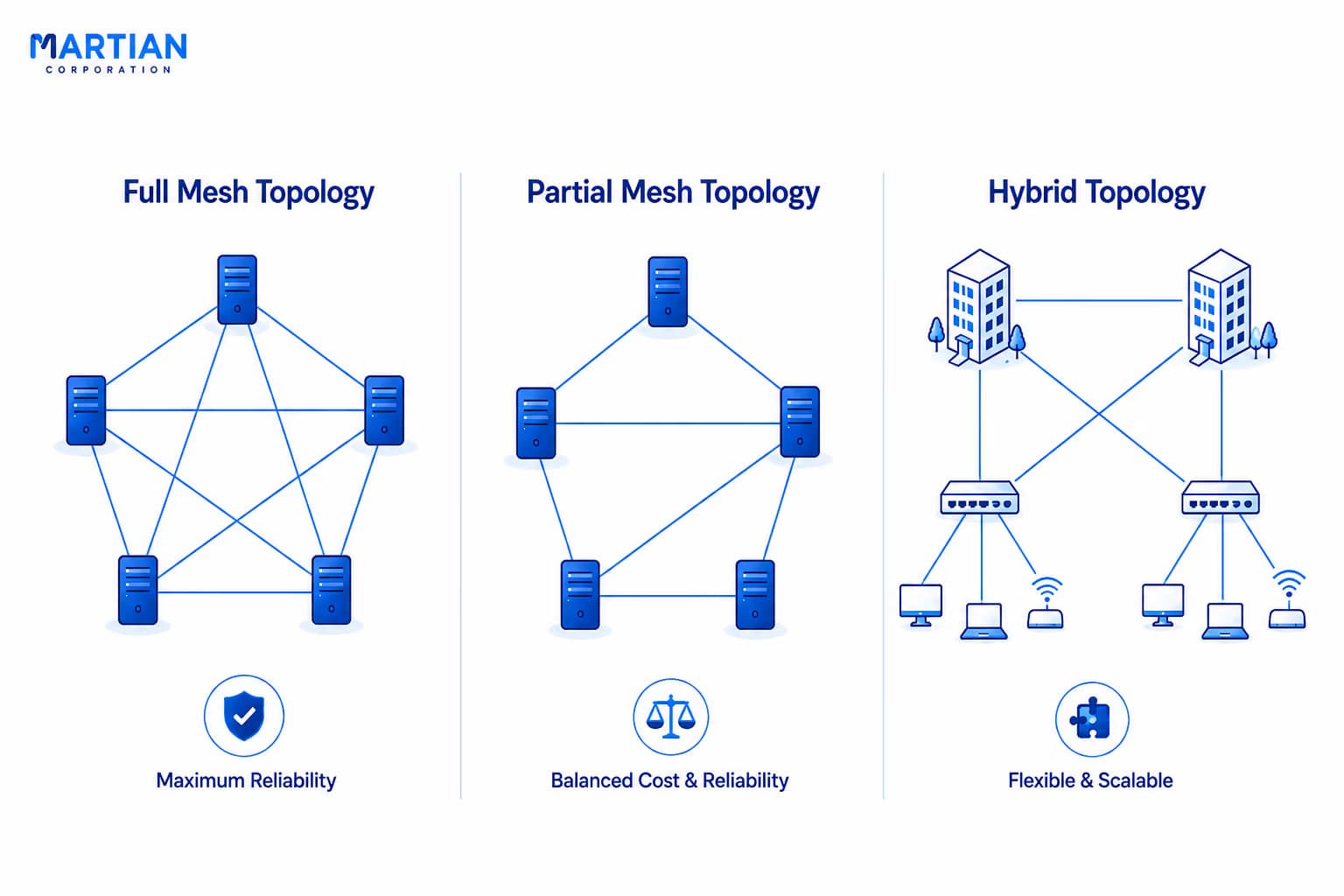
In this article, we'll walk through the major topologies and see how organizations balance cost, resilience, and scale — the three forces behind every architecture decision.
Physical vs. Logical Topology
"How a network looks and how it behaves are rarely the same thing."
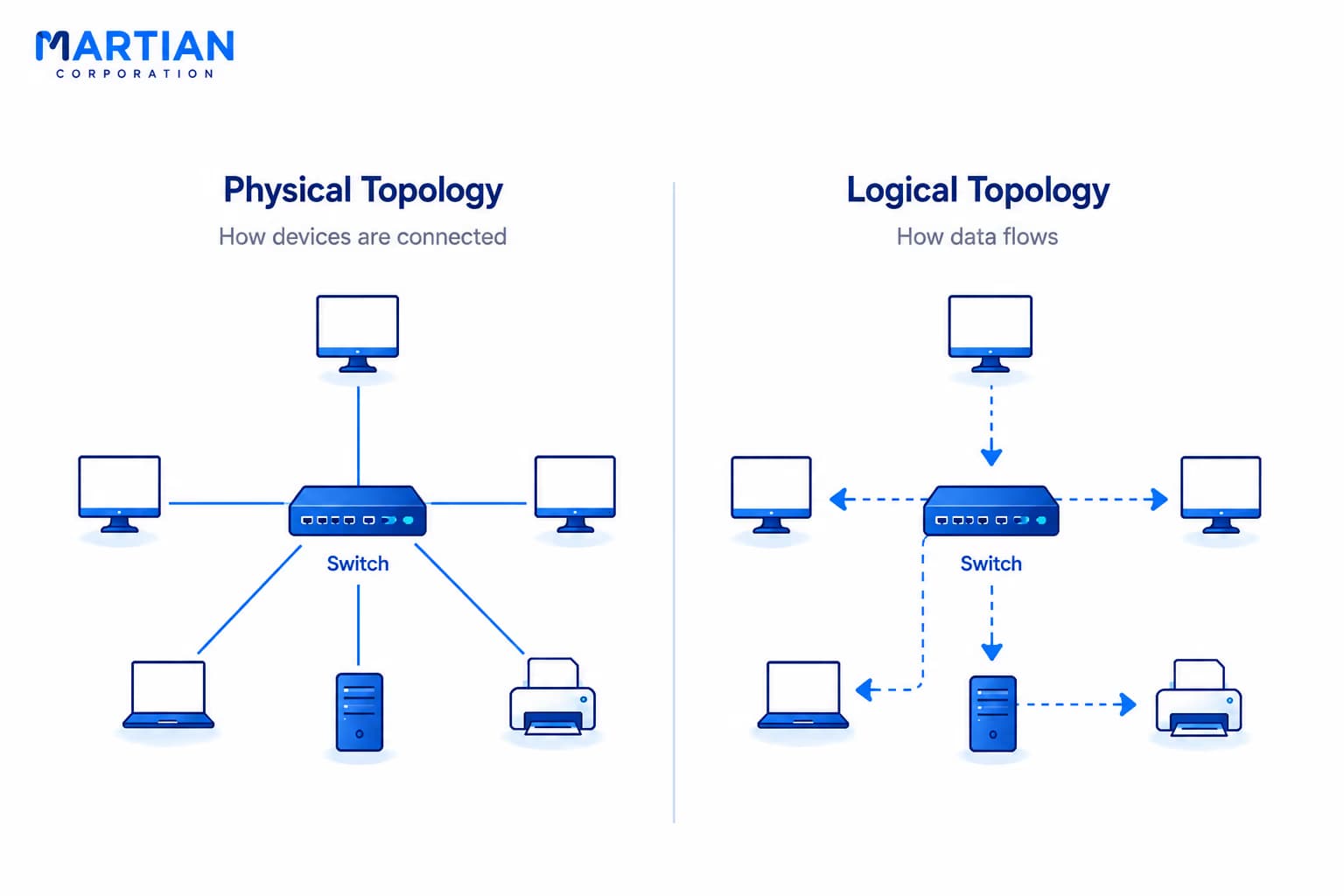
Every network has two topologies at once. The physical topology is what you can touch — the cables, switches, and hardware. The logical topology is how data actually travels between devices, which can look completely different from the physical layout.
Most office networks are physically wired as a star, with every device plugging into a central switch. Yet data may flow logically in a different pattern, depending on how that switch is configured. Troubleshooting means thinking about both layers at once.