
Introduction
"Technology evolves by solving yesterday's limitations."
Modern computer networks didn't appear overnight—they evolved through decades of innovation, experimentation, and problem-solving. As communication demands increased, networking technologies continuously adapted to become faster, more reliable, and easier to manage.
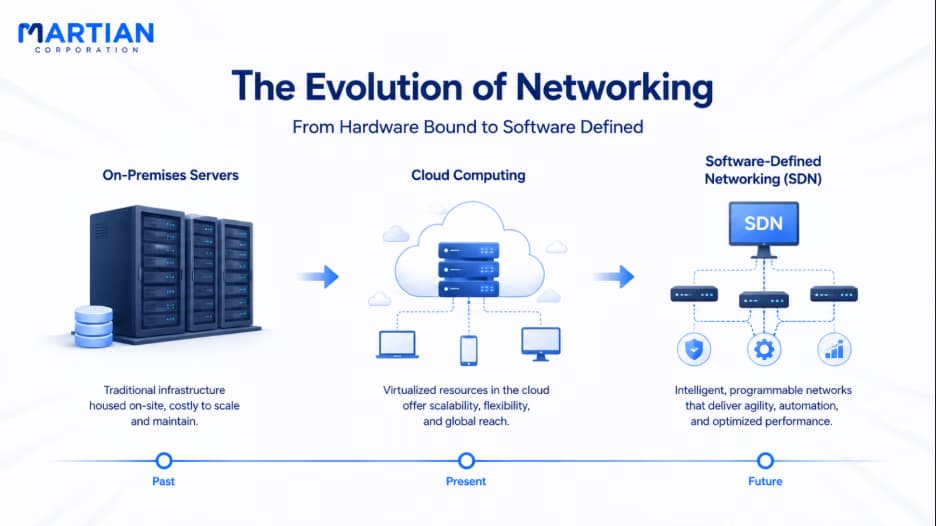
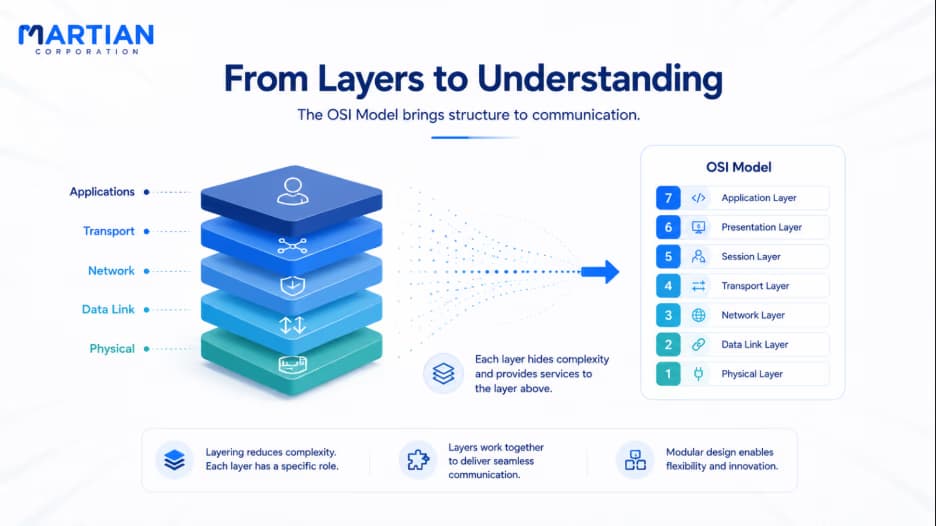
Many of the design choices we see today, from packet switching to cloud networking, were driven by one goal: creating networks that are scalable, efficient, and universally compatible. Understanding these changes helps explain why modern networking is built the way it is and prepares us for concepts like the OSI Model.
From Circuit Switching to Packet Switching
"Efficiency wins when every byte finds its own path."
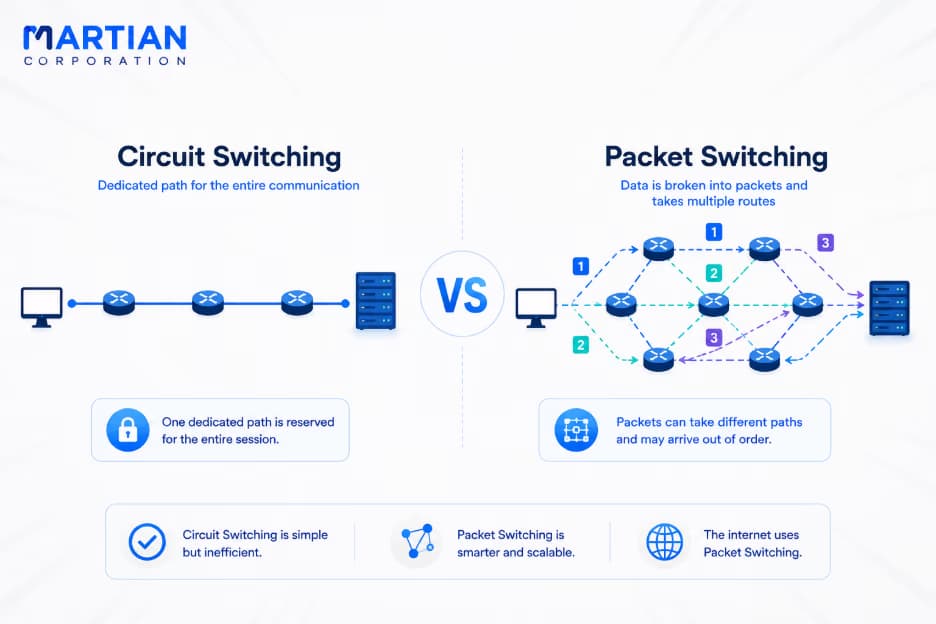
Early communication systems relied on circuit switching, where a dedicated connection was established before data could be transmitted. While this worked well for telephone calls, it wasted bandwidth because the connection remained reserved even when no data was being sent.
The introduction of packet switching changed everything. Instead of reserving a single path, data was divided into small packets that could travel independently through the network and be reassembled at the destination. This approach improved bandwidth utilization, increased reliability, and allowed multiple users to share the same network efficiently.
Today, packet switching forms the backbone of the Internet.