All Blogs/AI Agents
26 May 2026
4 min read

How Multi-Agent Systems Will Power the Future of Software

How Multi-Agent Systems Will Power the Future of Software

By: Martian Corporation

Article content

Introduction

“One intelligent system is powerful — but many working together are transformative.” As software systems grow more complex, relying on a single AI agent is often not enough. One system trying to handle everything—data, decisions, execution—can quickly become inefficient or limited.

That’s where multi-agent systems come in.

Instead of one system doing everything, multiple systems share the work.

Each agent focuses on a specific role, and together they create something far more capable. This shift is quietly shaping how modern software is being designed.
What Are Multi-Agent Systems

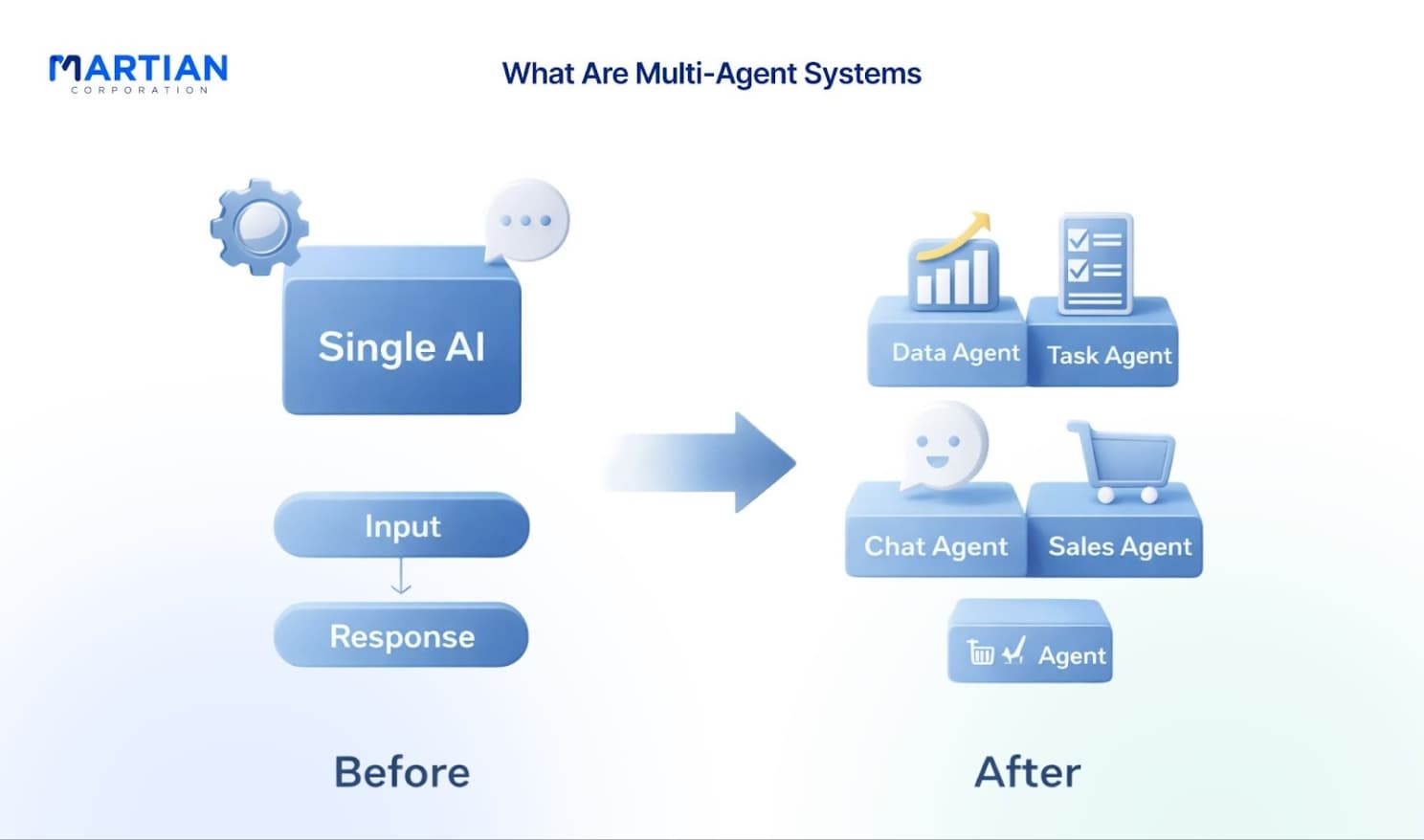
“Multiple agents working together create smarter systems.” A multi-agent system consists of several AI agents, each responsible for a specific function. One might handle data collection, another analysis, and another execution.

This division of responsibility allows the system to operate more efficiently. Instead of overloading a single agent, tasks are distributed in a way that improves performance and clarity.

Not one system doing all, But many systems doing their part

That’s what makes the approach powerful.

Collaboration Between Agents

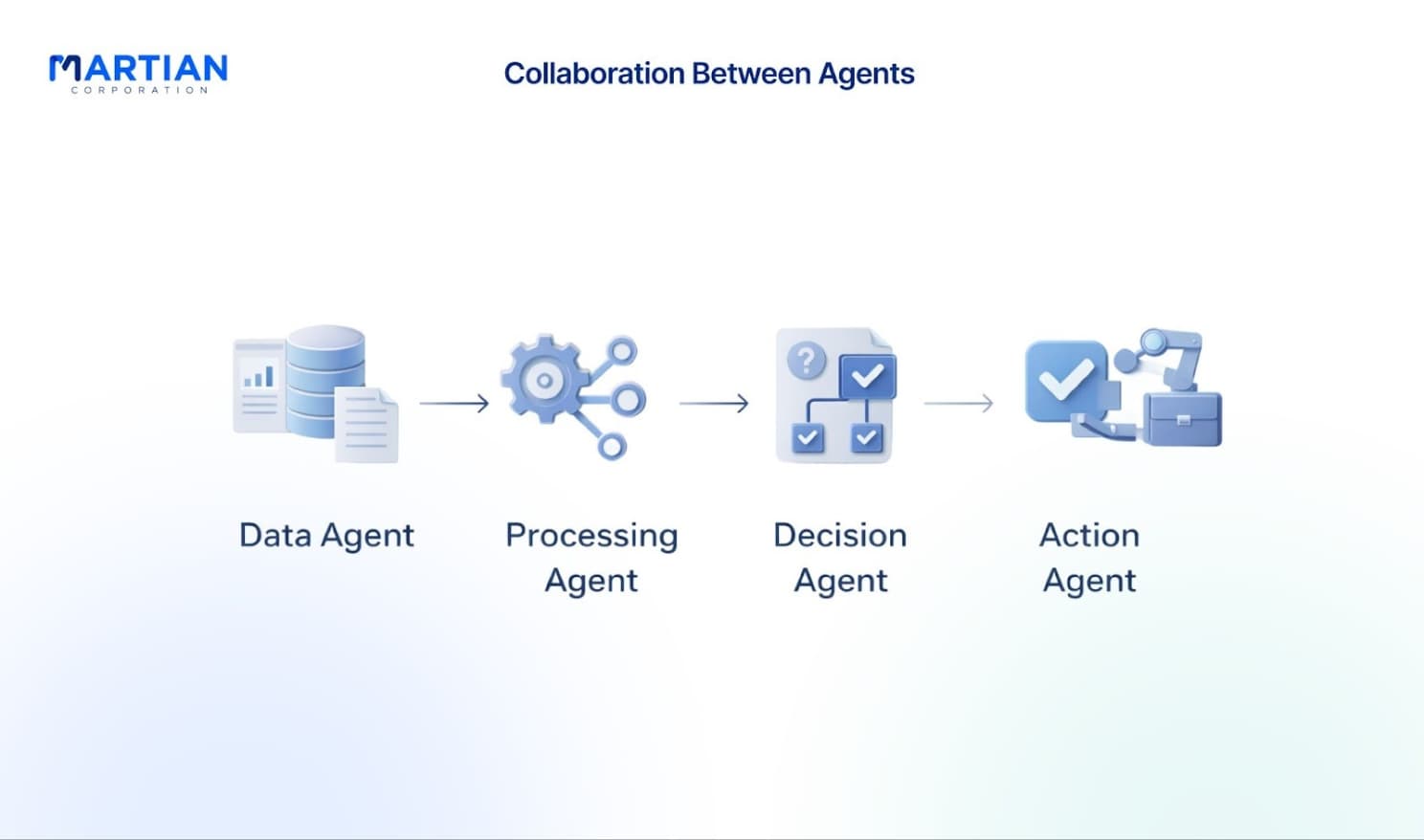
“Complex tasks require teamwork, even in software.” In these systems, agents don’t work in isolation—they communicate and coordinate. Information flows between them, and each agent contributes to the final outcome.

For example, one agent gathers data, another interprets it, and another takes action. This structured collaboration reduces errors and ensures that each step is handled by a specialized component.

It’s similar to how teams work. Different roles, One outcome

Article content

Handling Complex Workflows

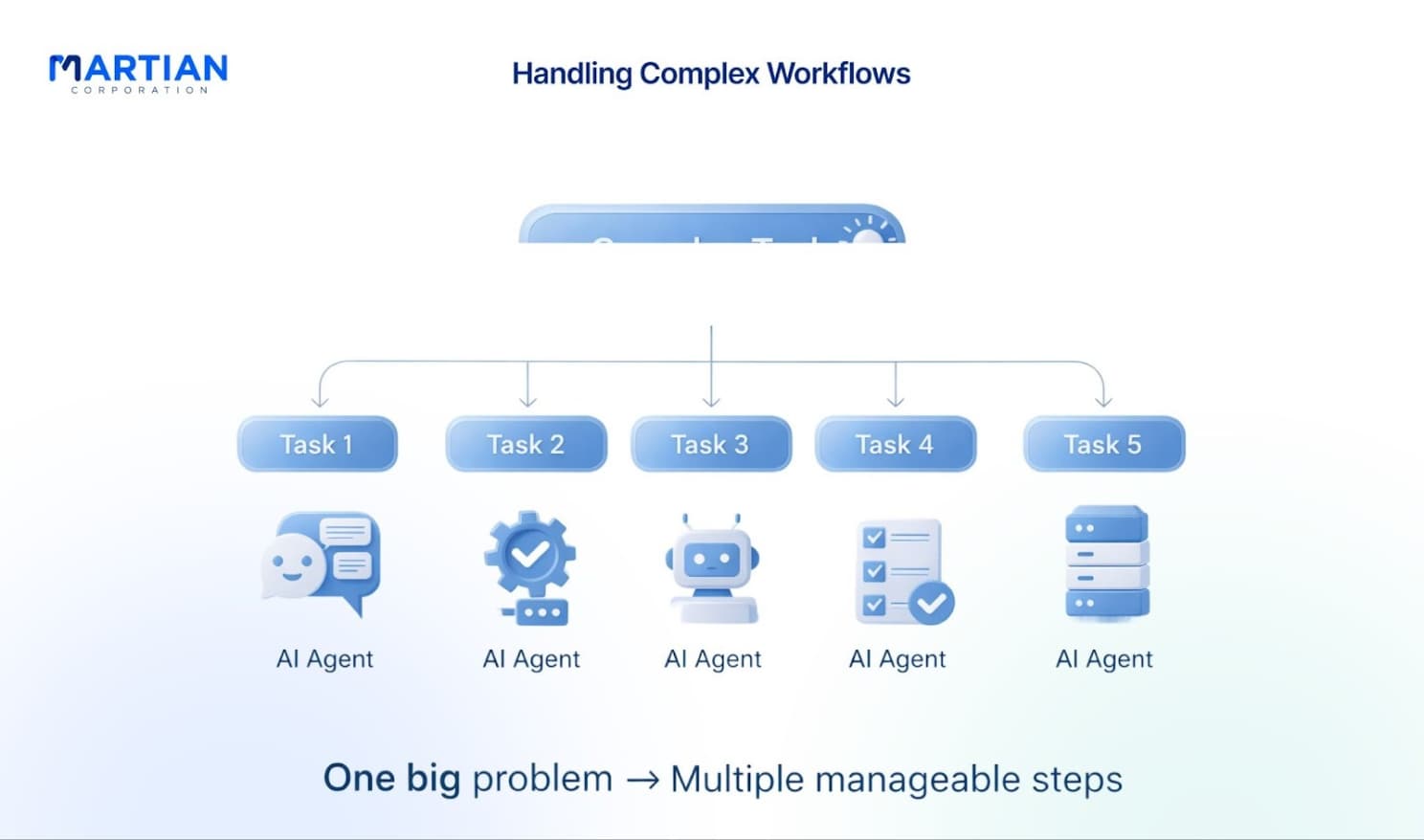
“Breaking problems into smaller parts makes them easier to solve.” Large workflows are difficult to manage when handled by a single system. Multi-agent systems simplify this by breaking workflows into smaller, manageable tasks.

Each agent takes responsibility for a part of the process, making the overall system more organized and efficient. This approach also makes debugging and improving workflows easier over time.

Instead of one long process, You get clear, manageable steps

Scalability and Performance

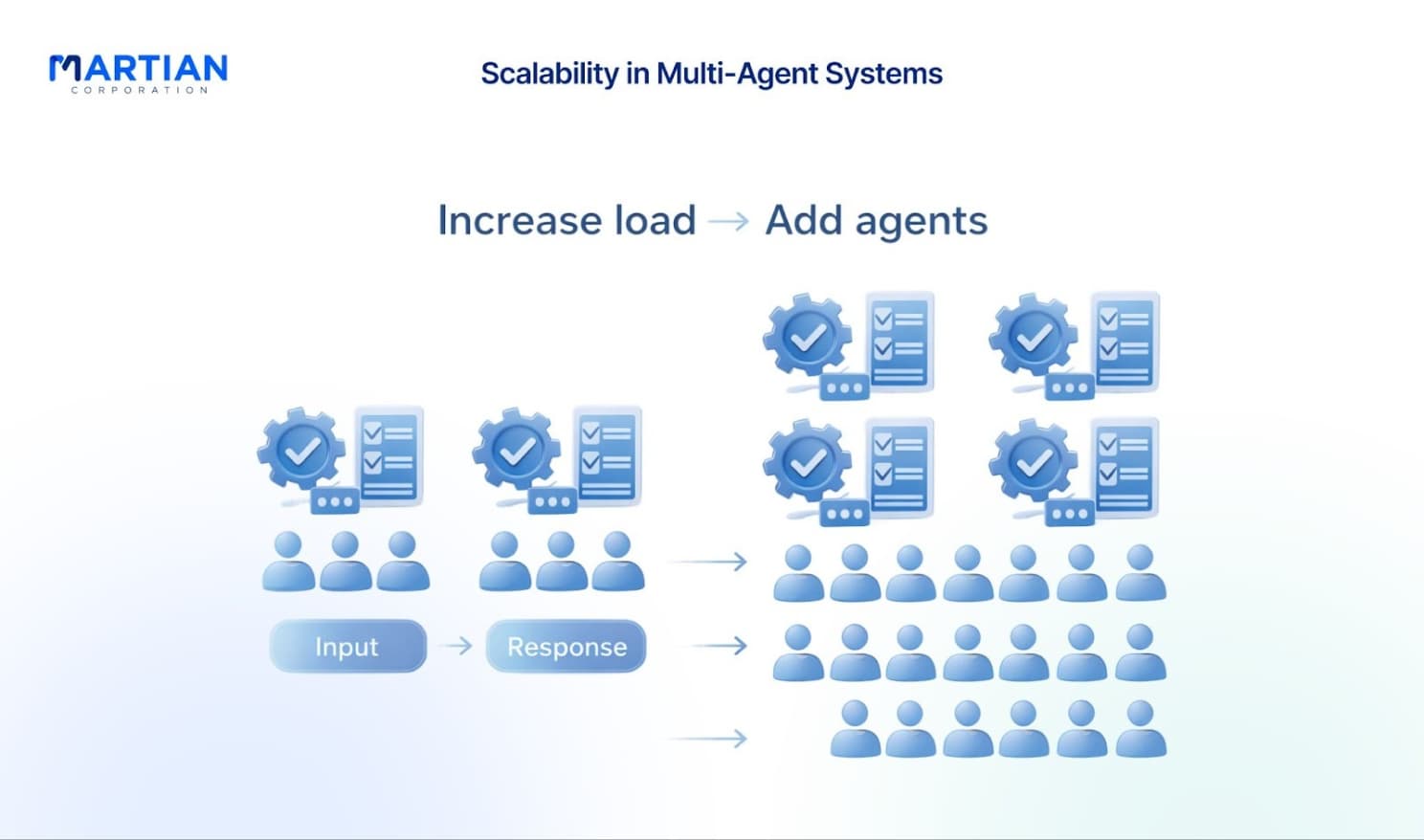
“Distributed systems scale better than centralized ones.” As demand increases, multi-agent systems can scale by adding more agents rather than redesigning the entire system. This makes them highly efficient for handling growing workloads.

This is already visible in cloud platforms and large-scale systems, where distributed architectures outperform centralized ones. Multi-agent systems follow a similar principle.

More load, Add more agents, Keep the system stable

Flexibility and Adaptability

“Systems that adapt are the ones that last.” One of the biggest advantages of multi-agent systems is flexibility. Each agent can be updated, replaced, or improved independently without affecting the entire system.

This makes it easier to adapt to changing requirements. Businesses don’t need to rebuild everything—they can simply adjust specific parts.

Change one part, Improve the whole system

Article content

Real-World Applications

“This approach is already shaping modern software.” Multi-agent systems are already being used in areas like cloud management, financial systems, automation platforms, and autonomous technologies.

A practical example can be seen in modern AI-driven development tools, where different agents handle coding, testing, debugging, and deployment. Instead of one system doing everything, multiple agents collaborate to complete the workflow.

This is where things are heading.

Not one AI doing everything, But many AIs working together

Challenges to Consider

“Coordination is key to success.” While multi-agent systems offer strong advantages, they also introduce new challenges. Communication between agents must be well-designed, and coordination needs to be reliable.

If agents are not aligned, the system can become inefficient or inconsistent. That’s why planning, monitoring, and proper architecture are essential when building such systems.

More agents, More coordination required

The Future of Software Development

“The next generation of software will be collaborative by design.” Software is moving toward systems where multiple intelligent agents handle different responsibilities. Instead of building large, monolithic systems, developers are designing smaller, specialized components that work together.

This approach makes software faster, more adaptable, and easier to scale. It also aligns with how modern systems are evolving—toward distributed, intelligent architectures.

Article content

Conclusion

“The future of software is not a single system — it’s a network of intelligent agents.” Multi-agent systems represent a fundamental shift in how software is built. They bring collaboration into system design, allowing multiple intelligent components to work together toward a shared goal.

This is not just a technical improvement—it’s a change in approach. From single systems To connected intelligence

And that’s what will define the next generation of software.

NewsLetter

Stay ahead in the world of technology

Get curated technology trends, expert analysis, and product updates delivered straight to your inbox — no noise, just signal.

Enter your email address

By subscribing you agree to our Terms and Conditions and Privacy Policy