All Blogs/AI Agents
26 May 2026
5 min read

AI Agents vs Chatbots: What’s the Difference?

AI Agents vs Chatbots: What’s the Difference?

By: Martian Corporation

Article content

Introduction

“Not all AI systems are built to do the same job.” If you’ve used any modern app, you’ve likely interacted with AI—whether it’s a chatbot answering your questions or a support assistant guiding you through a process. At first glance, all these systems feel similar. You type something, and you get a response.

But underneath, there’s a major difference. Some systems are designed only to communicate, while others are built to actually complete tasks. As businesses move toward automation, understanding this difference becomes important because it directly impacts how much work your system can actually handle.

Some systems talk. Some systems work.
What Are Chatbots

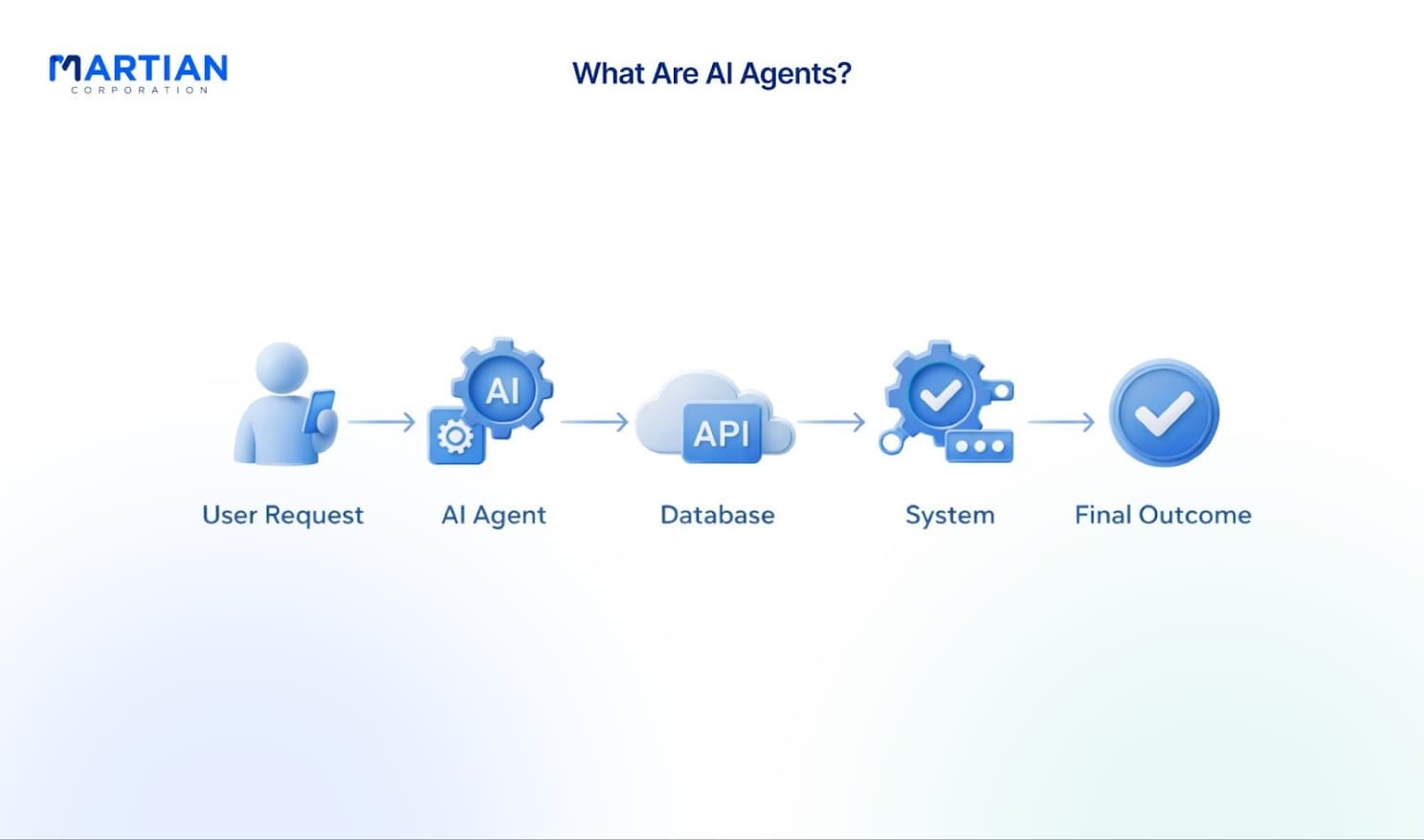
“Chatbots are designed to communicate, not to act.” Chatbots are AI systems built primarily for interaction. Their job is to respond to users, answer questions, and guide them through simple processes. You’ll commonly see them in customer support, FAQs, onboarding flows, and help centers.

They are useful because they are quick, consistent, and always available. However, most chatbots operate within predefined boundaries. Even advanced ones that use AI to generate responses are still focused on conversation. They can tell users what to do, but they usually don’t perform the task themselves.

What Are AI Agents

“AI agents go beyond conversation — they perform tasks.” AI agents take things a step further. Instead of stopping at responses, they are designed to act. They can connect to systems, access data, and complete multi-step workflows based on a goal.

This changes how you interact with software. You’re no longer just asking for information—you’re assigning work. The system interprets your request, breaks it down, and attempts to complete it. That makes AI agents far more powerful in real-world business environments where outcomes matter more than answers.

They don’t just respond. They move forward.

Article content

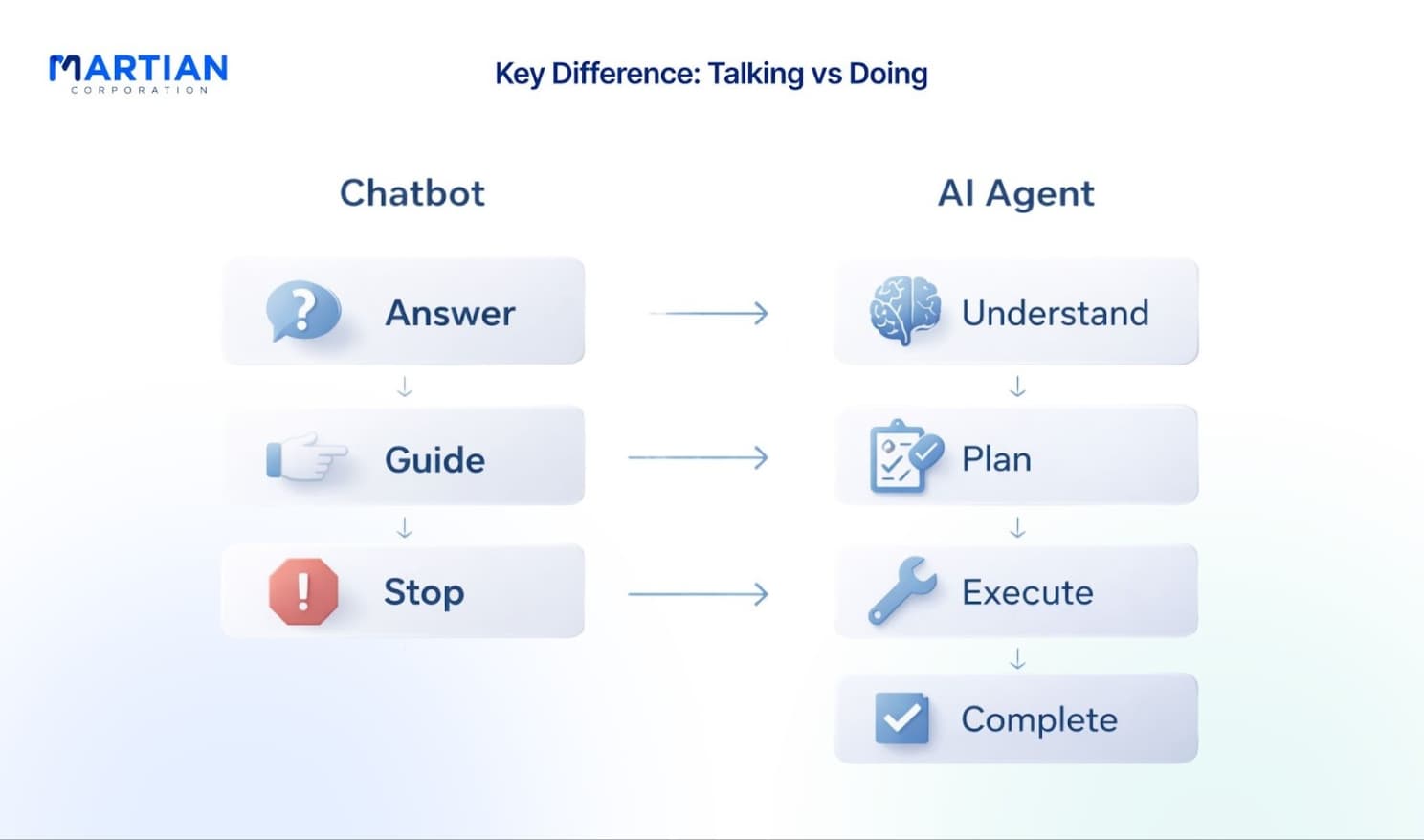
Key Difference Between Them

“The difference is not in talking — it’s in doing.” At a surface level, both chatbots and AI agents look similar because they interact through conversation. But the real difference appears after the response is given.

A chatbot stops once it answers your query. An AI agent continues the process by taking action toward completing a task. One provides information, while the other works toward an outcome.

That shift—from answering to executing—is what defines the difference.

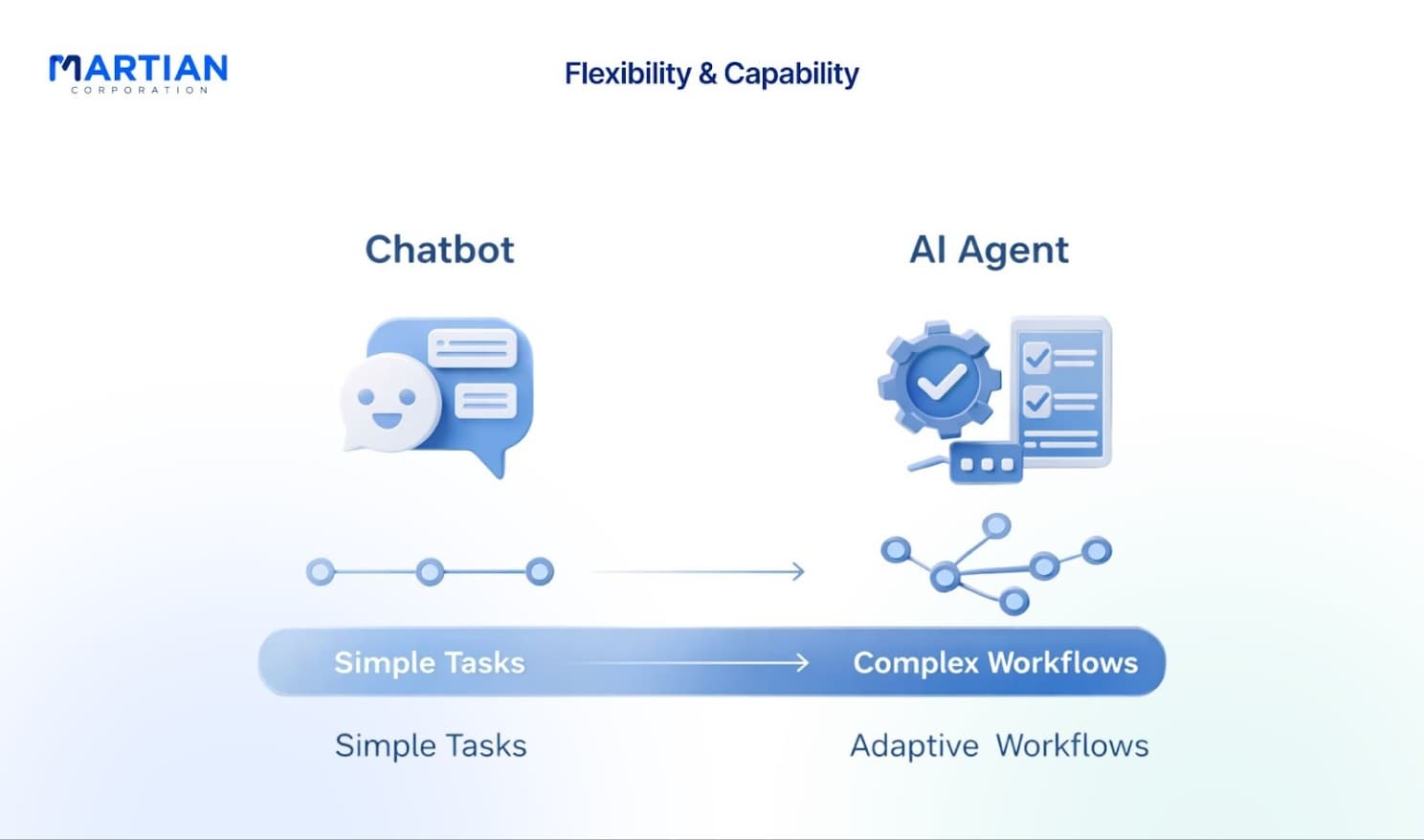
Flexibility and Capability

“AI agents handle complexity better than chatbots.” Chatbots are typically designed for structured and predictable interactions. They perform well when conversations follow a known path. However, when situations become more dynamic, their limitations start to show.

AI agents are built to operate in less predictable environments. They can adjust based on context, manage multiple steps, and make decisions along the way. This makes them more suitable for complex workflows where conditions may change.

Use Cases in Real World

“Each tool solves a different problem.” Chatbots are widely used in customer-facing roles. They help reduce response time, handle common queries, and improve user experience.

AI agents are being used more in operations and internal workflows. They automate processes, manage systems, and complete tasks across multiple platforms.

A good example of this shift is seen in companies like Klarna. Earlier, chatbots were used mainly to answer customer queries. Now, AI systems are handling entire support interactions—resolving issues and completing processes without human involvement. This shows how businesses are moving from simple assistance to full automation.

Article content

Integration with Systems

“Action requires connection.” Chatbots usually connect to knowledge bases or databases to retrieve information. Their role is mostly limited to presenting that information to users.

AI agents go further by integrating deeply with systems like CRMs, APIs, and internal tools. They don’t just fetch data—they update it, trigger workflows, and perform actions across platforms. This level of integration is what makes them operational rather than just conversational.

Impact on Businesses

“Choosing the right tool changes how work gets done.” Using chatbots helps businesses improve customer interaction and reduce response times. They are effective for handling large volumes of queries quickly.

AI agents, however, impact how work is done internally. They reduce manual effort, automate workflows, and allow teams to focus on more strategic tasks. Many businesses are now using both—chatbots for communication and AI agents for execution—depending on their needs.

The Future of AI Systems

“AI is moving from interaction to execution.” The direction is clear. AI systems are evolving from tools that simply respond to systems that can act.

As technology improves, more businesses will adopt AI agents to handle workflows that previously required manual effort. Chatbots will continue to play a role in communication, but AI agents will become central to automation and decision-making.

Article content

Conclusion

“The real difference is simple: one talks, the other works.” Chatbots made AI accessible by improving how users interact with systems. AI agents are taking it further by changing what systems can actually do.

This is not just an upgrade—it’s a shift in how software behaves. Businesses that understand this difference will be able to choose the right approach and build systems that are not only responsive but also capable of getting real work done.

NewsLetter

Stay ahead in the world of technology

Get curated technology trends, expert analysis, and product updates delivered straight to your inbox — no noise, just signal.

Enter your email address

By subscribing you agree to our Terms and Conditions and Privacy Policy