All Blogs/AI Agents
26 Apr 2026
4 min read

How Businesses Can Build AI Agents for Automation

How Businesses Can Build AI Agents for Automation

By: Martian Corporation

Article content

Introduction

“Automation becomes powerful when it becomes intelligent.” Businesses have always tried to reduce manual work. Earlier, automation meant writing rules—if this happens, do that. It worked, but only within limits.

Now something different is happening.

AI agents are not just following instructions. They are understanding tasks. They are deciding what to do next.

This shift is moving businesses from rigid systems to flexible, thinking workflows. And for many companies, this is no longer experimental—it’s already happening.
Understanding the Role of AI Agents

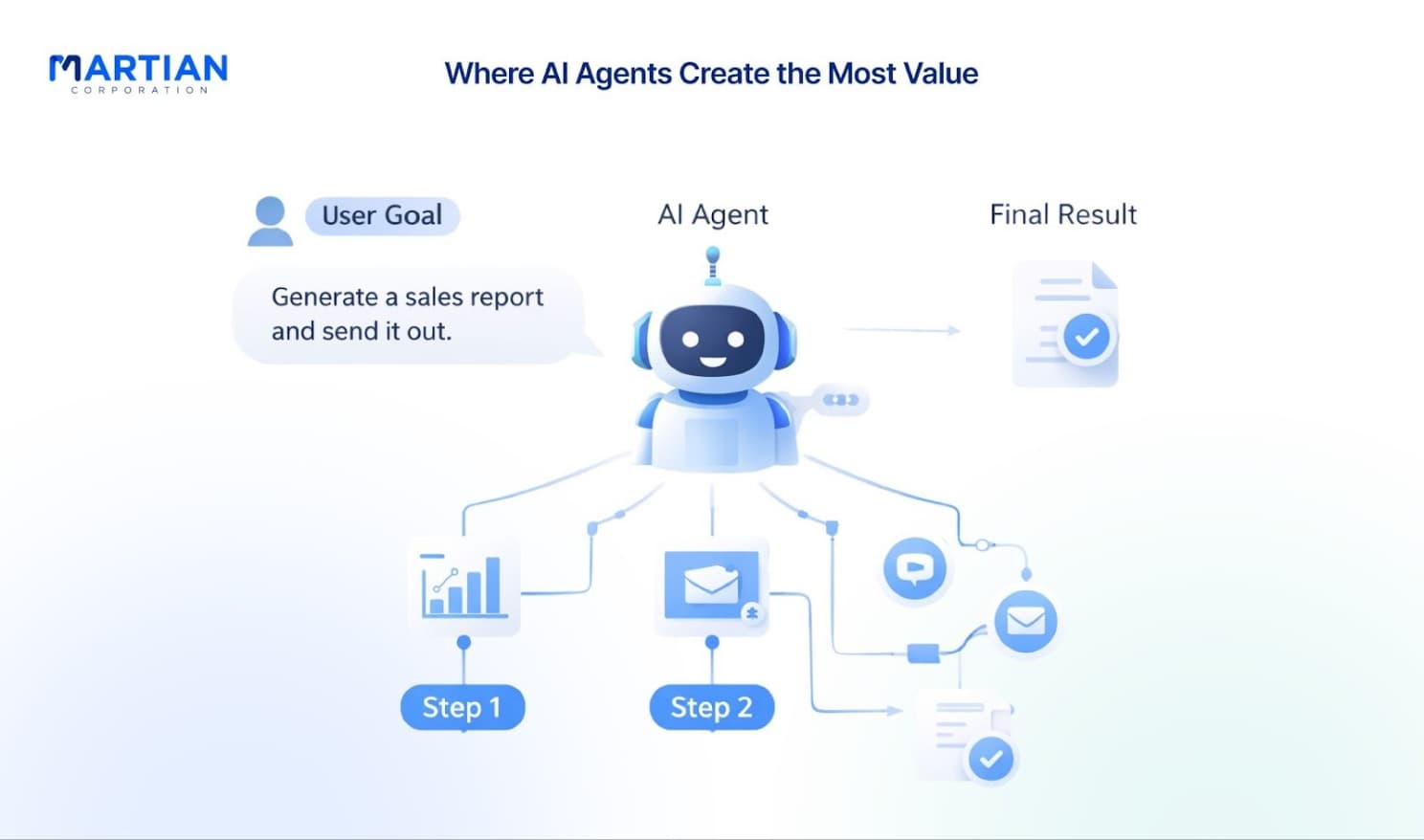
“AI agents don’t just follow rules — they make decisions.” Traditional automation depends on predefined steps. If something changes, the system breaks or needs rewriting. AI agents work differently. They analyze the situation, understand context, and decide the next action.

That’s why they are more useful in real business environments where things are rarely predictable.

You don’t define every step anymore. You define the goal. The system figures out the path.

This is what makes AI agents feel less like tools and more like assistants.

Identifying the Right Use Cases

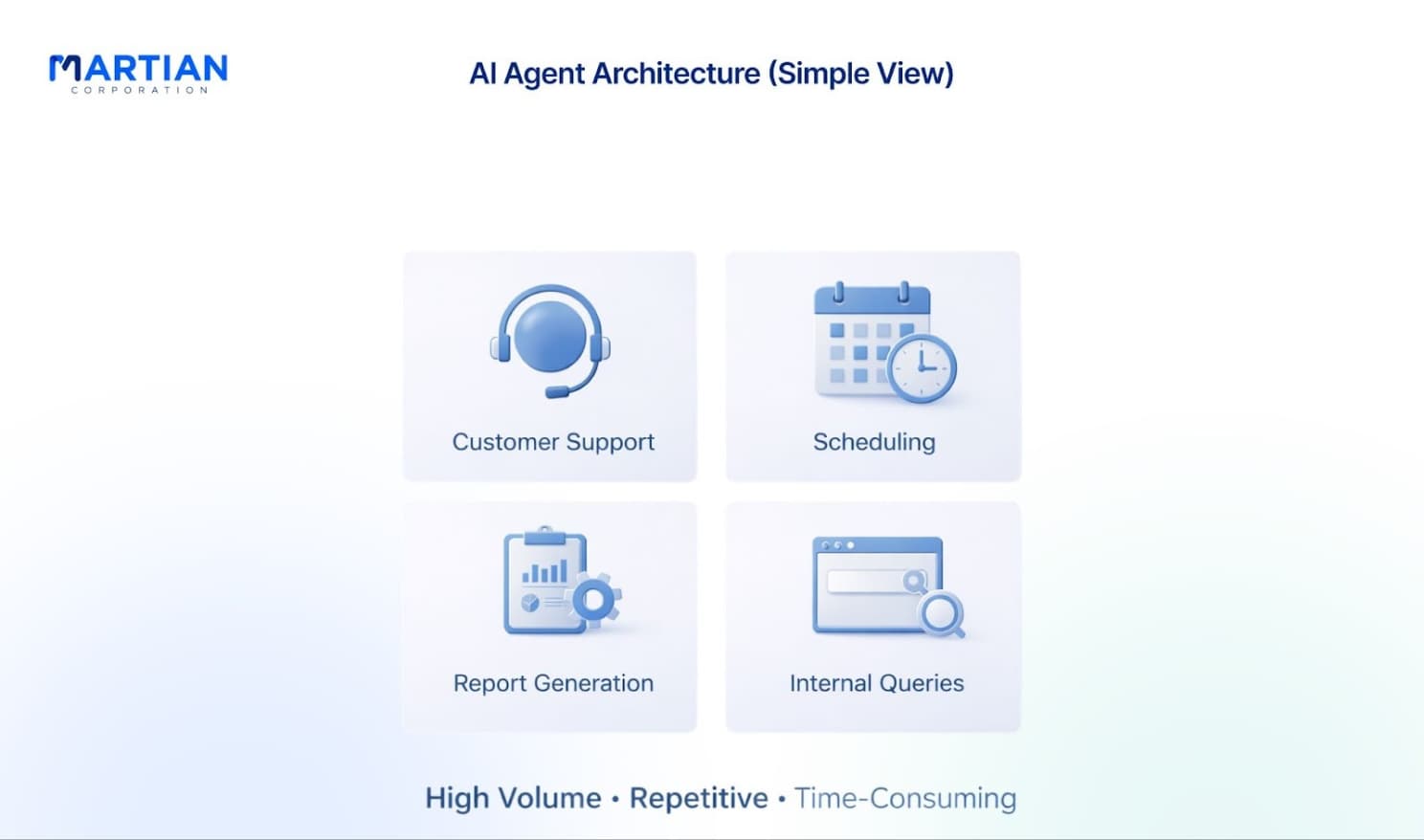
“Start with tasks that are repetitive and time-consuming.” Not everything needs AI. The smartest approach is to begin with tasks that are repetitive, structured, and consume time.

Customer support replies, report generation, scheduling, internal queries—these are perfect starting points. They don’t require creativity but demand consistency and speed.

This is exactly what companies are already doing.

For example, Klarna deployed AI agents in customer support, and those systems are now handling a large portion of queries that previously required human teams. Not just answering—but resolving.

Start where effort is high And value is clear

Article content

Choosing the Right Tools and Frameworks

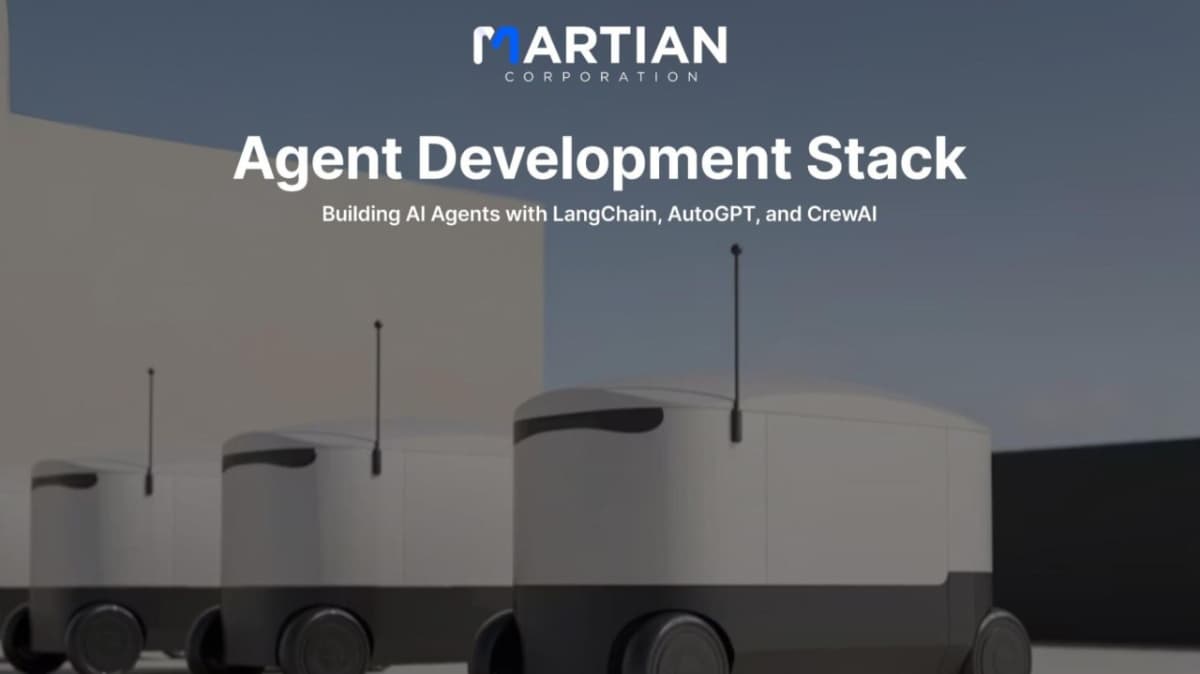
“The right tools make building faster and easier.” Building AI agents from scratch is possible—but not practical for most teams. That’s why frameworks like LangChain, AutoGPT, and CrewAI exist.

They provide structure—handling memory, workflows, and integrations—so developers can focus on business logic instead of system wiring.

The difference is noticeable.

Without frameworks → build everything With frameworks → build what matters

Speed increases Complexity decreases

Integrating with Existing Systems

“Automation works best when everything is connected.” An AI agent is only useful if it can interact with real systems—CRMs, databases, internal tools, APIs.

This is where the real value comes in. Not generating answers But taking action

Update records Send emails Trigger workflows

Many companies are already moving here—where AI doesn’t just assist employees but directly works inside business systems.

Testing and Improving Performance

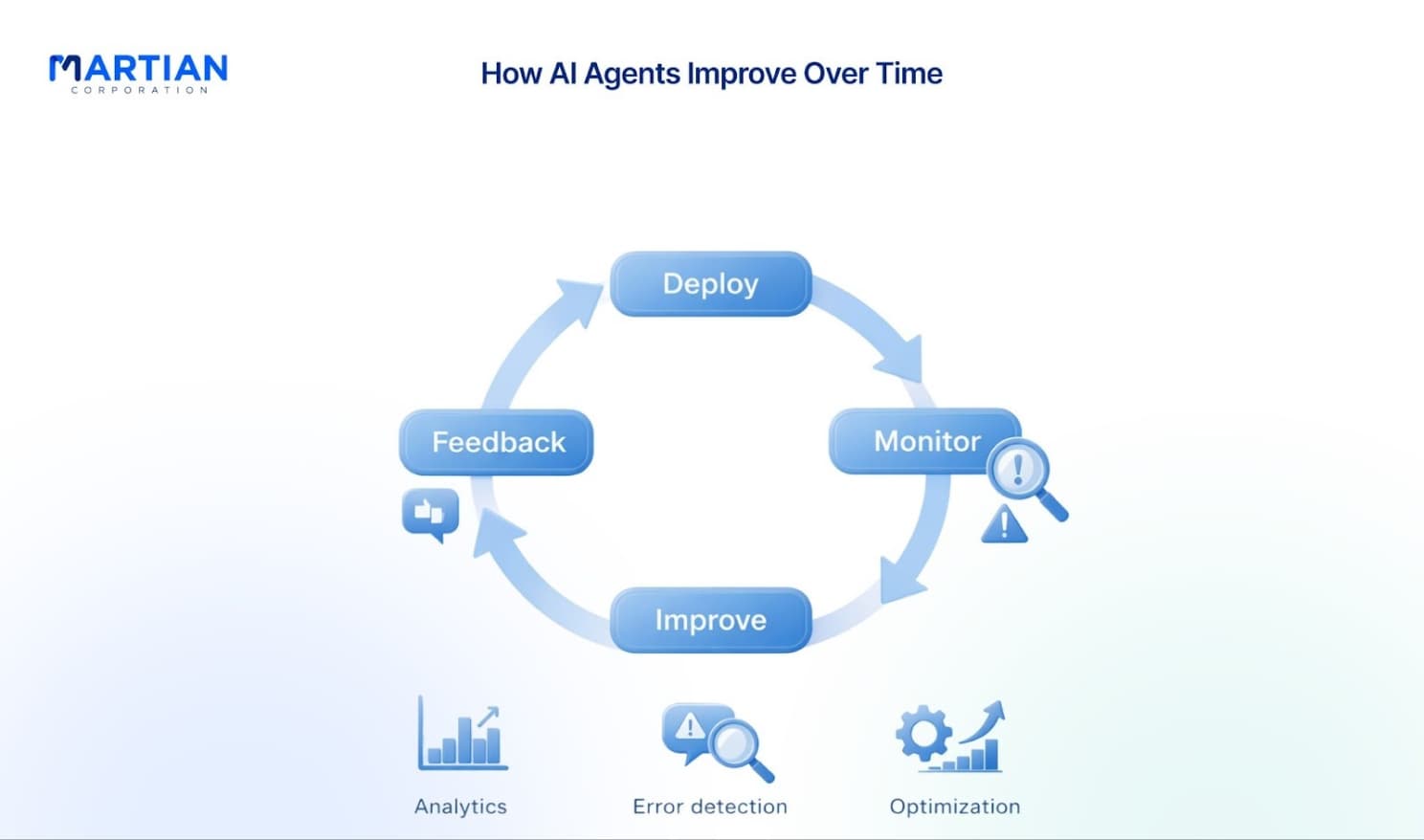
“Better systems come from continuous improvement.” AI agents are not perfect on day one. They improve with usage, feedback, and refinement.

Businesses need to monitor performance, identify errors, and adjust how agents behave in real scenarios. Over time, these systems become more accurate and reliable.

Launch small Observe carefully Improve continuously

That’s how strong systems are built.

Article content

Scaling AI Agents Across Operations

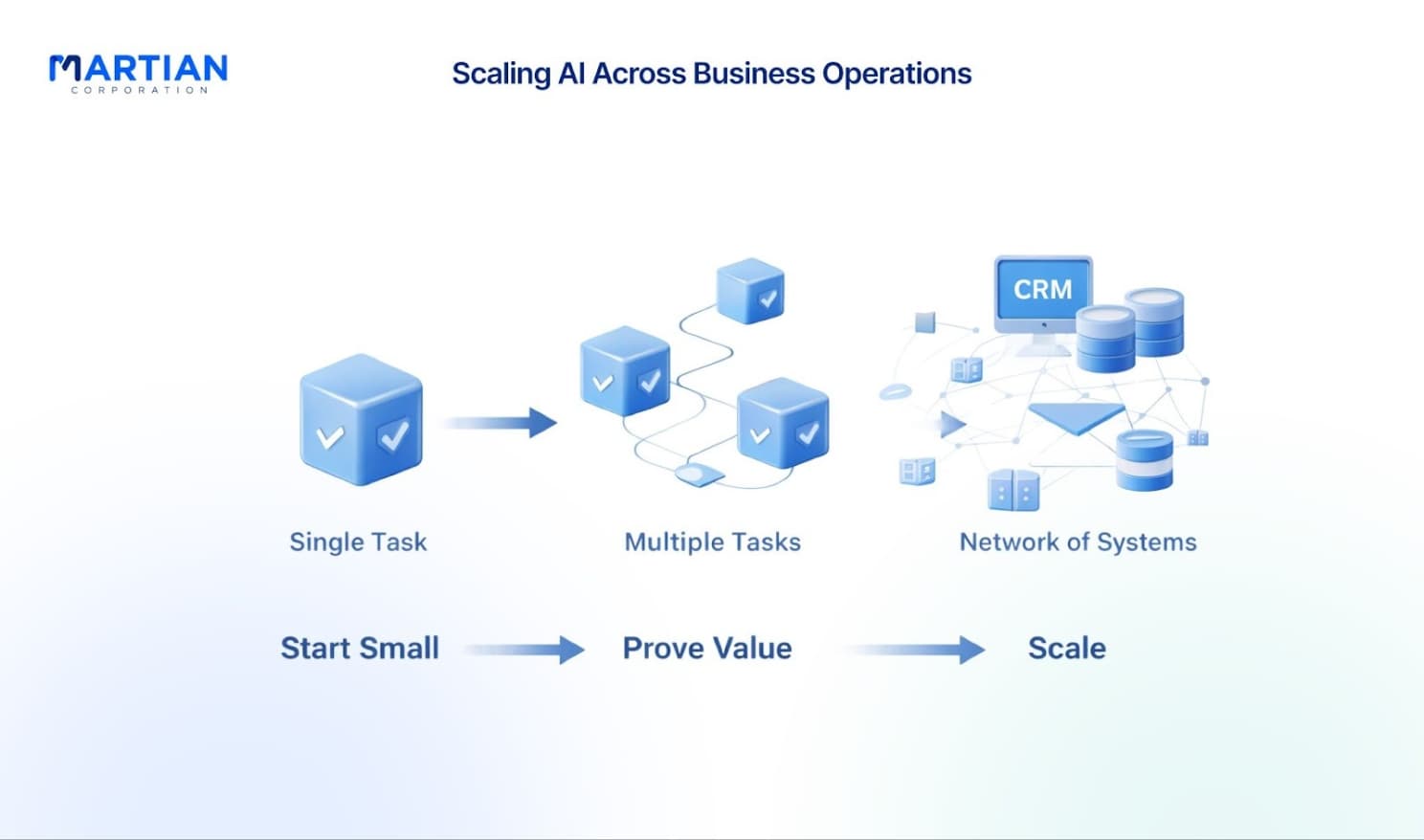
“Start small, then expand.” Most successful implementations don’t begin at scale. They start with one workflow, prove value, and then expand across teams.

What begins as a support automation tool can grow into operations, marketing, internal processes, and beyond.

This is exactly how adoption is happening today.

Not big launches But gradual expansion

From one task To entire workflows

Impact on Teams and Productivity

“Automation should support people, not replace them.” There’s always a concern—will AI replace jobs? In most real cases, it changes how work is done.

AI agents take over repetitive, time-consuming tasks. Humans focus on decisions, creativity, and strategy.

Teams spend less time clicking through systems And more time solving real problems

This shift is already visible in companies where productivity is increasing—not because people are working more, but because systems are working with them.

The Future of Business Automation

“Automation is becoming more intelligent and adaptive.” We’re moving toward systems where workflows don’t need constant supervision.

Think about your daily tools.

Your emails Your dashboards Your internal systems

Right now, you manage them.

Soon, they will start managing tasks for you.

Suggesting Acting Completing

Not perfectly. But increasingly well.

This is where business automation is heading.

Article content

Conclusion

“The real shift isn’t automation — it’s delegation.” Businesses are no longer just automating tasks. They are starting to delegate work to systems that can think, adapt, and execute.

This changes how teams operate, how decisions are made, and how fast organizations move.

Because in the end, it’s not about doing more work. It’s about getting more done—with less effort.

And AI agents are becoming the systems that make that possible.

NewsLetter

Stay ahead in the world of technology

Get curated technology trends, expert analysis, and product updates delivered straight to your inbox — no noise, just signal.

Enter your email address

By subscribing you agree to our Terms and Conditions and Privacy Policy