All Blogs/AI Agents
26 May 2026
4 min read

How AI Agents Can Automate Business Operations

How AI Agents Can Automate Business Operations

By: Martian Corporation

Article content

Introduction

“Automation is no longer just about speed — it’s about intelligence.” Businesses have always tried to automate repetitive work, but traditional automation has limits. It follows fixed rules, and when something changes, it struggles.

AI agents are changing that.

They don’t just follow instructions. They understand tasks.

This shift is moving businesses from rigid workflows to systems that can adapt, decide, and execute. And for many companies, this is no longer a future idea—it’s already happening.
Understanding AI-Driven Automation

“Automation becomes powerful when systems can think.” AI agents bring decision-making into automation. Instead of executing predefined steps, they analyze context, interpret data, and choose what to do next.

We’re already seeing a shift in how systems are designed.

Earlier, automation was about steps. Now, it’s about outcomes.

This makes AI-driven automation far more useful in real-world business scenarios where conditions are constantly changing.

Automating Repetitive Tasks

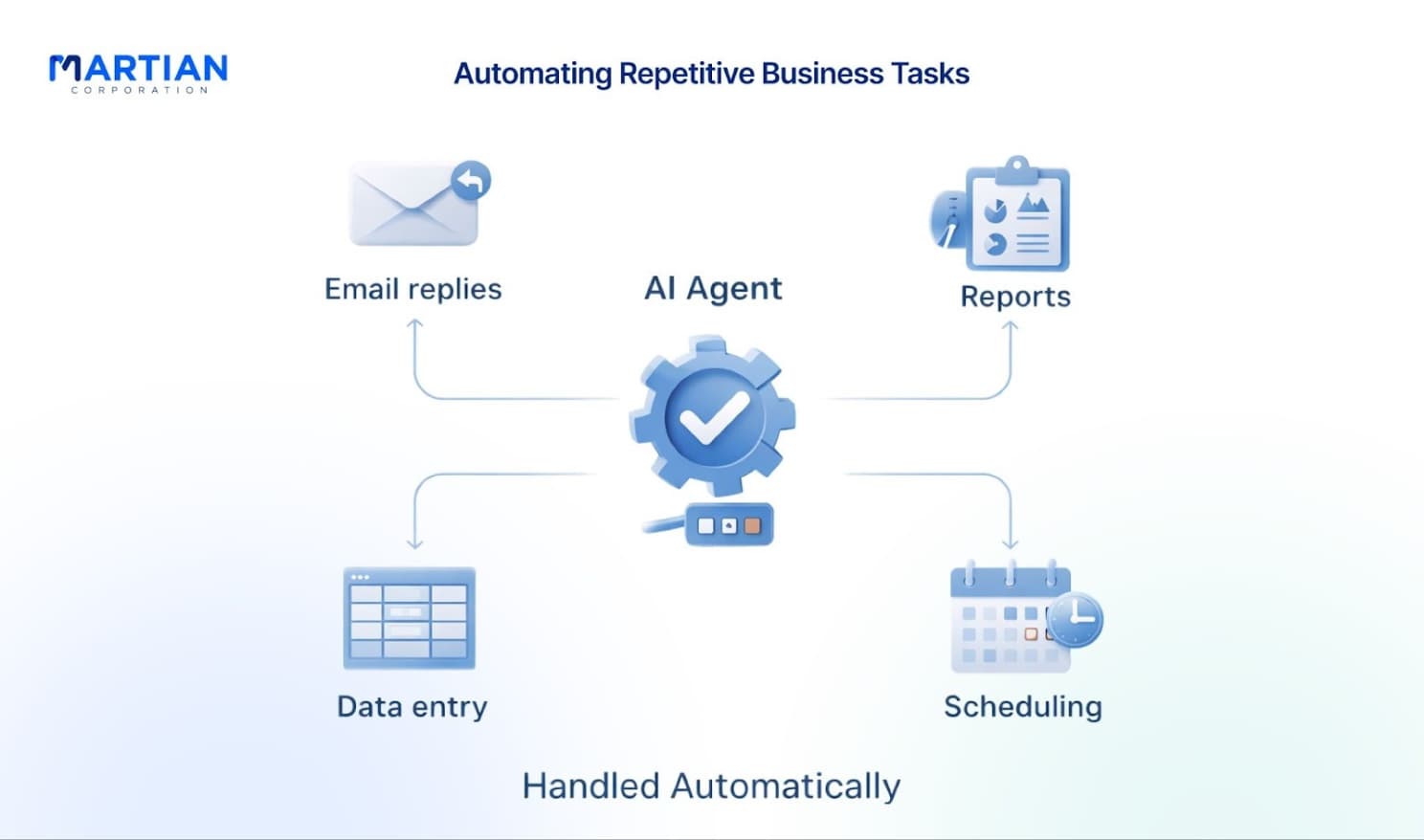
“Time-consuming work is the easiest to automate.” AI agents are highly effective at handling repetitive tasks like data entry, report generation, email responses, and scheduling. These are areas where consistency matters more than creativity.

A strong pattern is emerging in how teams approach this.

Instead of asking, “How do we build this feature?” They’re asking, “How do we get this task done automatically?”

That mindset shift is what makes AI agents powerful—they are built around completing work, not just supporting it.

Article content

Improving Operational Efficiency

“Efficiency comes from reducing delays and errors.” AI agents can execute tasks faster and with greater consistency than manual processes. They reduce errors, remove bottlenecks, and ensure workflows run smoothly.

The impact is not just speed—it’s stability. Systems become more predictable, and operations become easier to manage as fewer steps depend on manual intervention.

Real-Time Decision Making

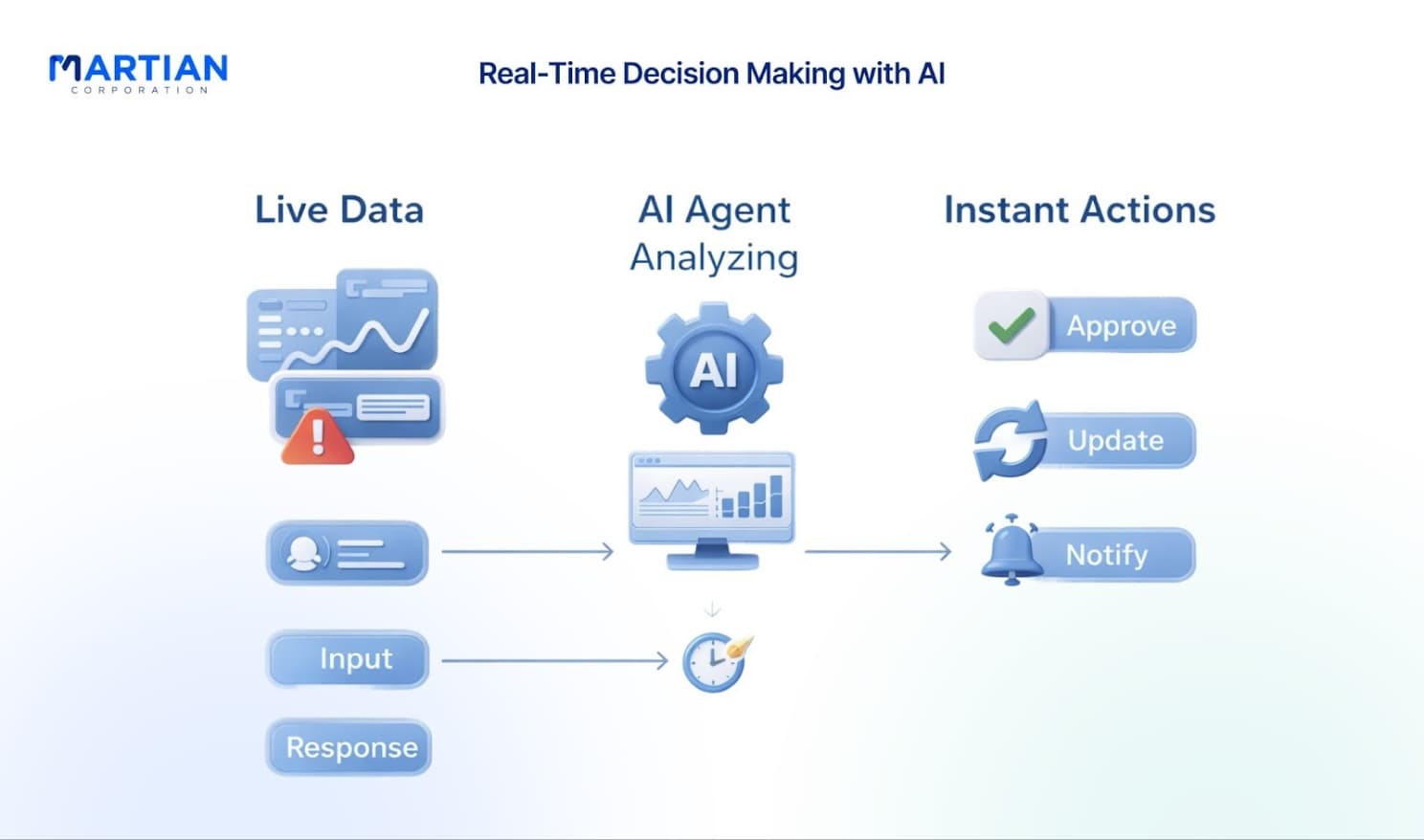
“Fast decisions drive faster operations.” AI agents can process data instantly and act in real time. Whether it’s approving requests, updating systems, or responding to events, they eliminate delays that usually slow down operations.

This is especially valuable in environments where timing matters—finance, logistics, customer operations—where even small delays can affect outcomes.

Integration Across Business Systems

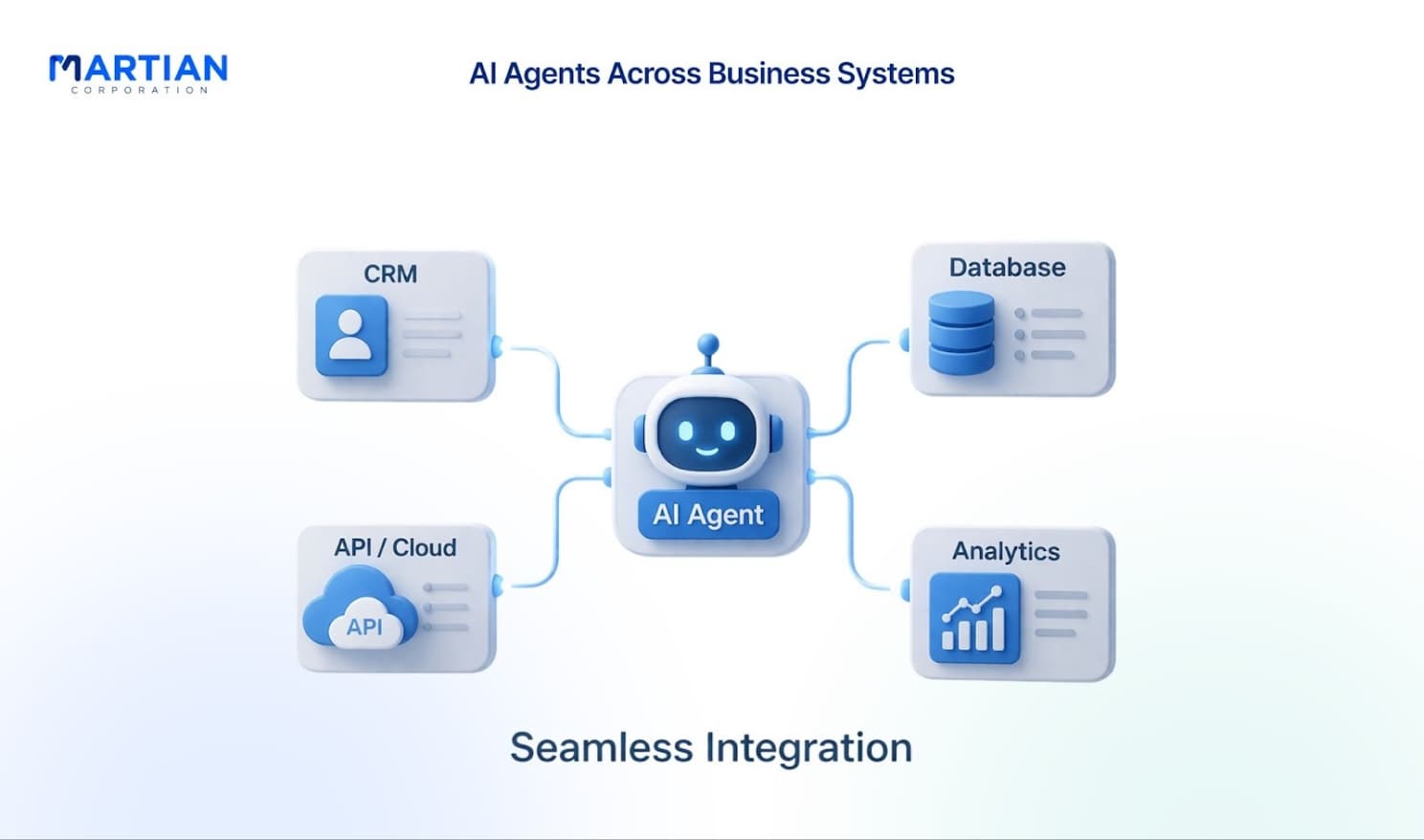
“Automation works best when systems are connected.” AI agents become truly useful when they interact with real business tools. By integrating with CRMs, databases, APIs, and cloud platforms, they can perform actions across systems without human involvement.

They don’t just read data. They update it. They move workflows forward.

This creates a seamless flow across different parts of the organization.

Article content

Scaling Operations with AI Agents

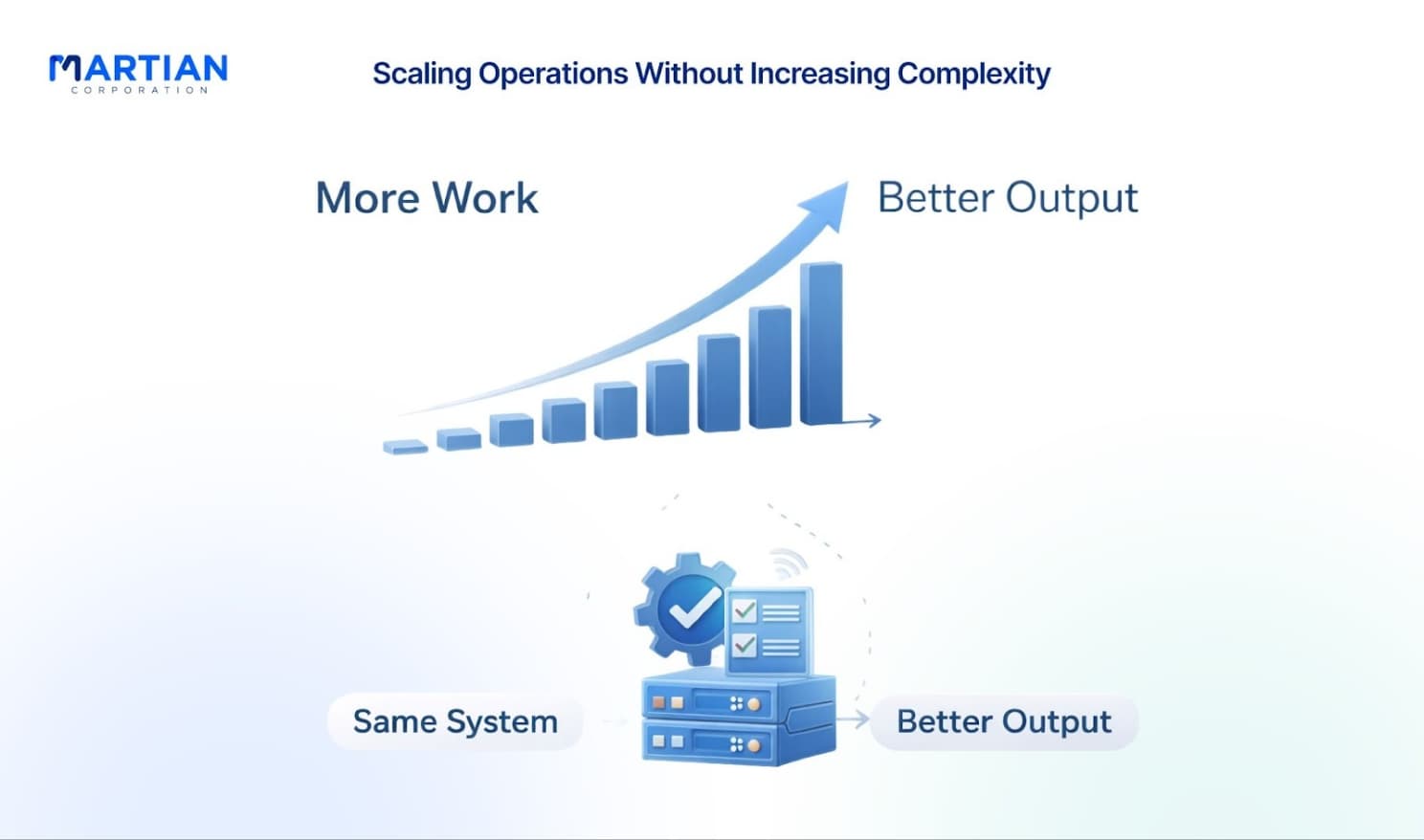
“Growth should not increase complexity.” As businesses grow, operations often become more difficult to manage. AI agents help handle increasing workloads without requiring proportional increases in manpower.

Instead of hiring more people for repetitive work, businesses can scale using systems that operate continuously and consistently.

More work, Same system, Better output

Impact on Teams and Productivity

“Automation supports people, it doesn’t replace them.” AI agents take over routine and repetitive tasks, allowing employees to focus on more meaningful work. This leads to better productivity and improved job satisfaction.

Teams spend less time managing processes and more time making decisions, solving problems, and creating value.

Challenges and Considerations

“Smart systems still need proper oversight.” Despite the benefits, AI agents require careful implementation. Businesses need to monitor performance, ensure security, and continuously refine how these systems operate.

Autonomy does not mean no control. It means controlled independence, where systems operate freely within defined boundaries.

Article content

The Future of Business Operations

“Operations are becoming more intelligent and autonomous.” Business systems are gradually shifting toward automation that requires minimal supervision. Workflows that once needed constant input are becoming self-operating.

This change is not sudden—but it’s consistent.

Less manual effort, More system-driven execution

AI agents will become a core part of how modern businesses operate.

Conclusion

“The real shift is from managing work to delegating it.” AI agents are transforming business operations by combining automation with intelligence. They allow systems to handle tasks, make decisions, and execute workflows with minimal human involvement.

This is not just about doing things faster. It’s about changing how work gets done.

And businesses that adapt to this shift will be able to operate more efficiently, scale more effectively, and move faster in an increasingly competitive environment.

NewsLetter

Stay ahead in the world of technology

Get curated technology trends, expert analysis, and product updates delivered straight to your inbox — no noise, just signal.

Enter your email address

By subscribing you agree to our Terms and Conditions and Privacy Policy