
React: The Powerhouse Behind Modern Interfaces
React changed how we think about building the web. Its component-based architecture and virtual DOM made front-end development modular, predictable, and efficient. With React, you can craft interactive user experiences where every UI piece works like a reusable building block.
It’s clean, dynamic, and fast—perfect for modern single-page applications.
“React doesn’t just render pages. It renders experiences.”
Next.js: The Evolution of React
Next.js takes React and pushes it into production mode—adding server-side rendering (SSR), static site generation (SSG), and automatic optimizations that make your site load faster and rank higher.
No more manual Webpack setups or SEO headaches. Next.js delivers performance out of the box—with features like built-in routing, image optimization, and prefetching that React alone doesn’t handle.
The difference? React builds apps. Next.js builds performant, discoverable web apps.
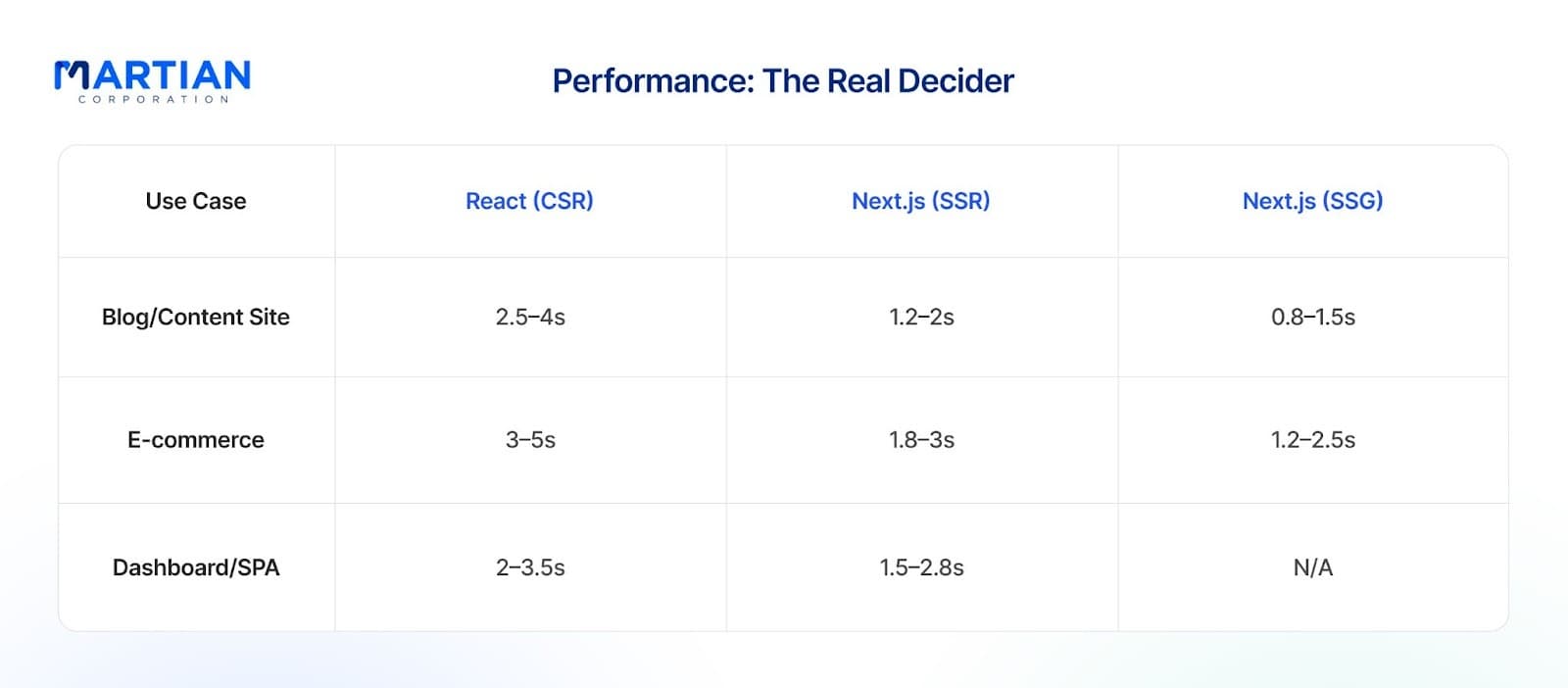
Performance: The Real Decider
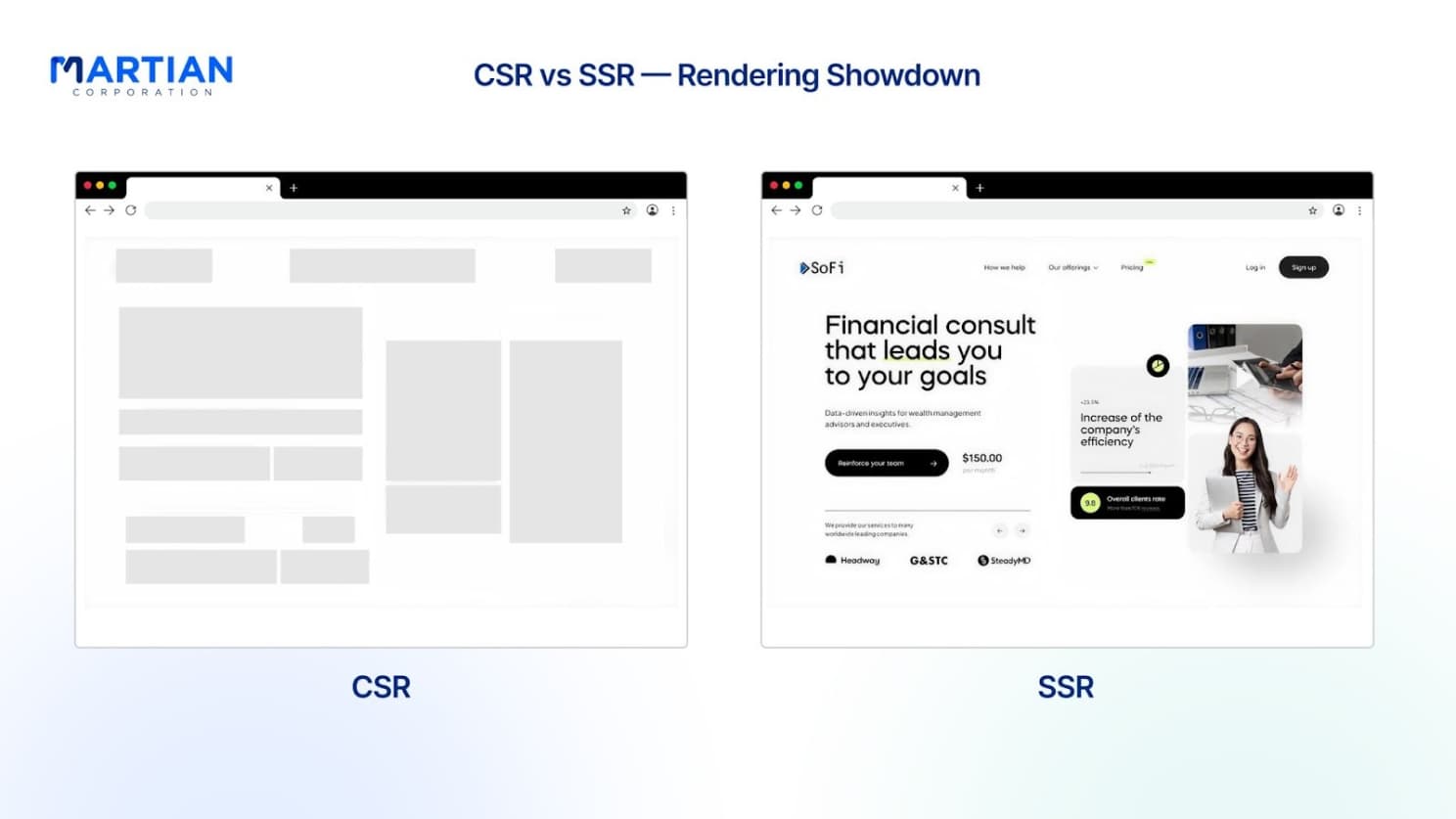
CSR vs SSR — The Rendering Showdown
React relies on client-side rendering (CSR), meaning the browser handles most of the work. It’s smooth once loaded—but initial load times can lag.
Next.js adds server-side rendering (SSR) and static generation, delivering pre-rendered HTML straight from the server. This means your page appears instantly—no waiting for JavaScript to finish loading.
Static sites fly. SSR offers balance. CSR shines in highly interactive SPAs.
Why Next.js Feels Faster
It’s not magic—just smart optimization. Next.js automatically splits your code, compresses assets, and preloads routes. React can do this too, but it needs manual setup.
In real-world terms: a Next.js site feels instant, while a React site feels flexible. Both are powerful; they just prioritize different experiences.
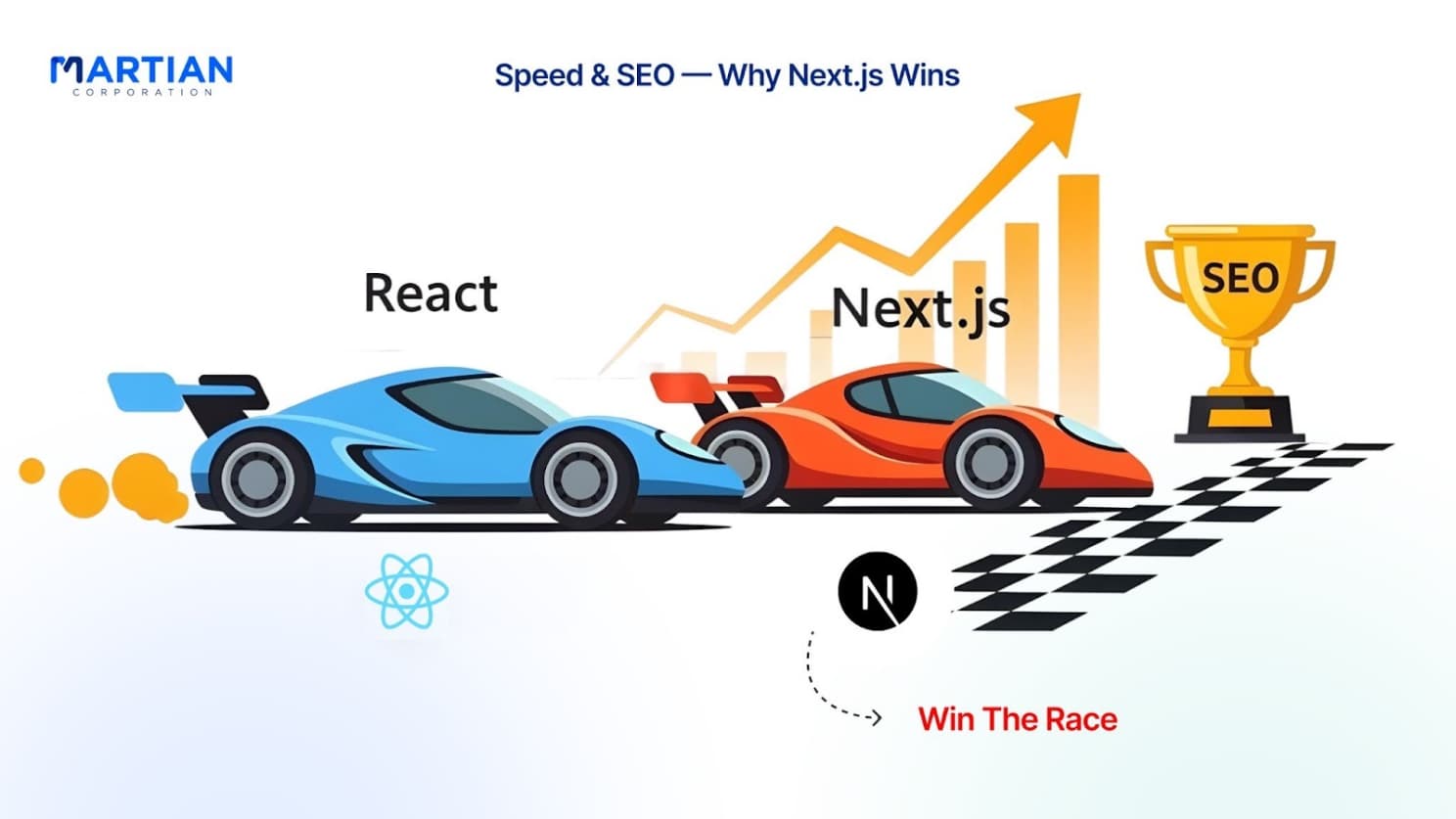
SEO: Where Next.js Steals the Spotlight
SSR for Visibility
Search engines love clarity—and Next.js gives them just that. With SSR, your content is ready the moment crawlers arrive. React’s CSR often leaves crawlers waiting for JavaScript to load, risking lost SEO opportunities.
Static Generation for Speed and Ranking
SSG in Next.js builds pages ahead of time—lightning fast and SEO-friendly. Google rewards faster sites with better rankings and lower bounce rates.
“In SEO, speed isn’t a luxury—it’s a ranking factor.”
Meta Tags and Dynamic Content
Next.js’s <Head> component simplifies meta tag management. No need for extra libraries to handle dynamic titles or social previews—everything is baked in. React requires more setup for the same outcome.
Developer Experience and Productivity
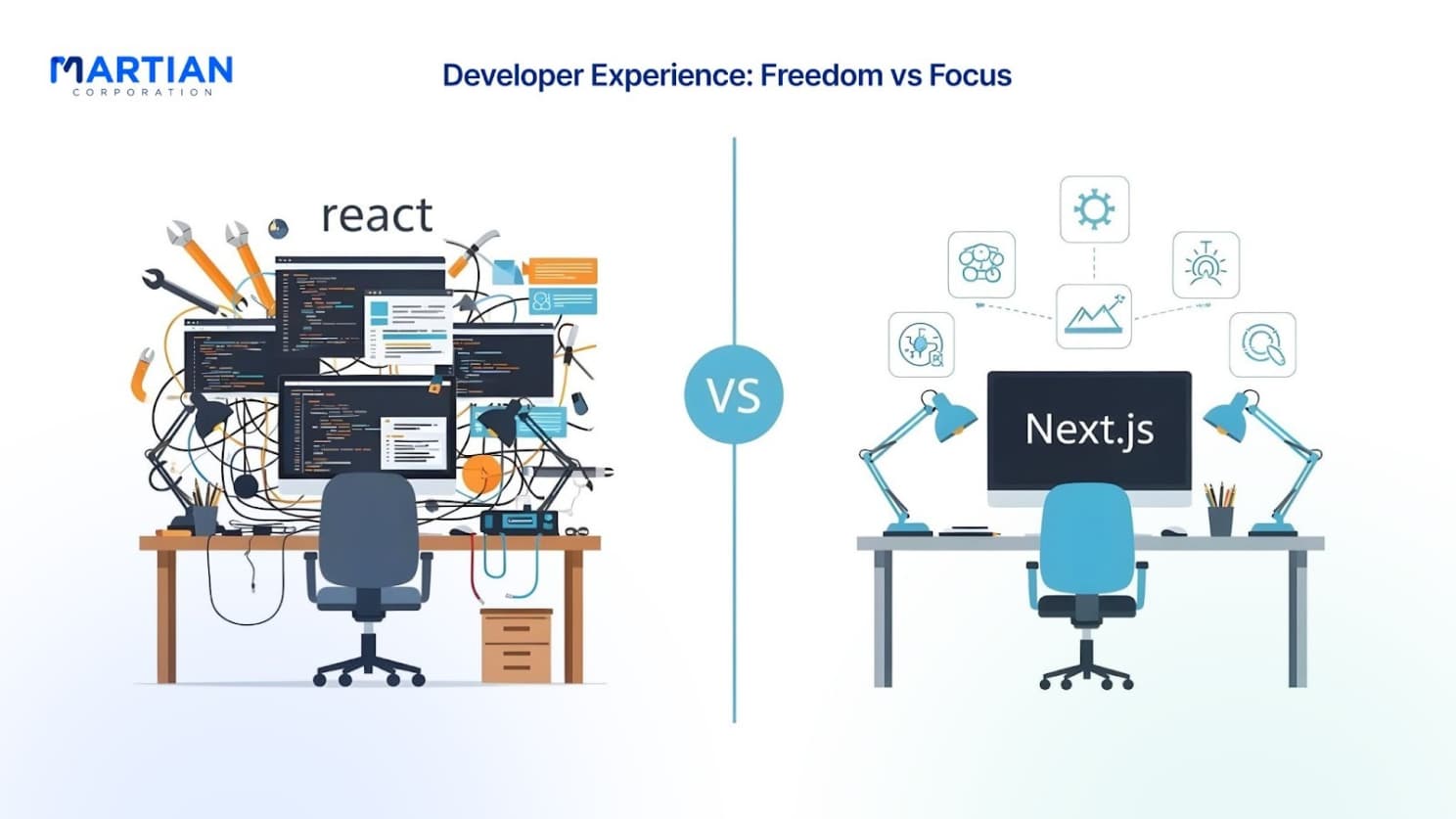
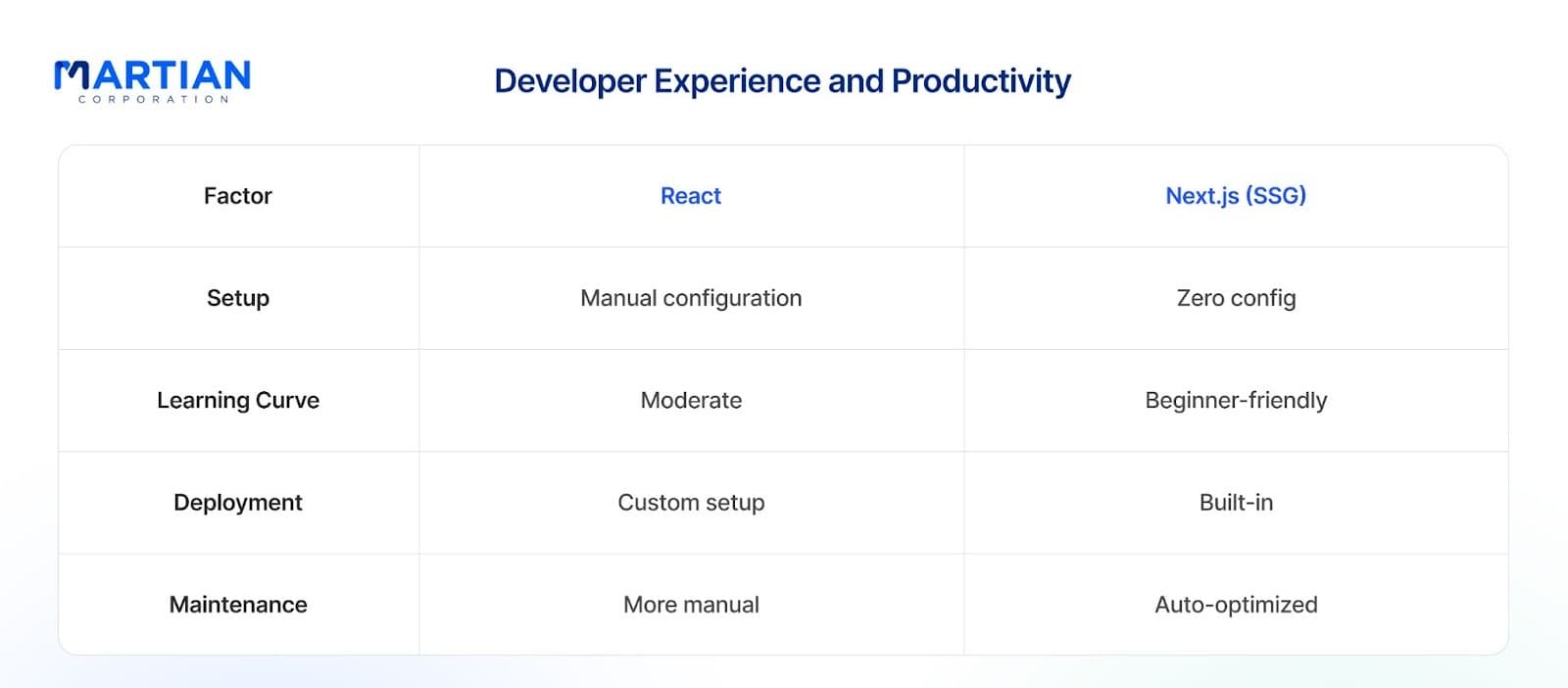
React gives you flexibility—you build your setup from scratch. Next.js gives you focus—it’s preconfigured for production.
React’s freedom suits seasoned devs who love customization. Next.js accelerates teams that value speed, structure, and built-in best practices.
When to Use React
Choose React if you’re building:
A complex SPA or dashboard with custom architecture A tool-heavy application where SEO is secondary A project requiring maximum flexibility and control
It’s like choosing to build your own race car—more effort, more power.
When to Use Next.js
Go with Next.js if you need:
Fast, SEO-friendly pages for blogs, portfolios, or e-commerce A content-driven site that must perform well on search Quick time-to-market with built-in optimization
It’s the framework for businesses that want visibility and velocity from day one.
Conclusion
Choosing between React and Next.js isn’t about which is “better”—it’s about what your project needs.
If you want full creative control and are building an app-first experience, React is your ally. If you want to move fast, rank higher, and deliver instantly, Next.js is your secret weapon.
“React builds the app you dream of. Next.js makes sure the world sees it.”
In the end, both frameworks share the same DNA—but Next.js adds the polish, performance, and discoverability that modern web experiences demand.