All Blogs/Mobile Development
26 May 2026
4 min read

Kotlin or Java: The Intelligent Choice for Your Next Android App in 2026

Kotlin or Java: The Intelligent Choice for Your Next Android App in 2026

By: Martian Corporation

Article content

Introduction

“Your programming language today decides your maintenance cost tomorrow.” Choosing between Kotlin and Java in 2026 isn’t just a developer preference — it affects app quality, team productivity, and long-term scalability. Both languages still power millions of Android apps, but the ecosystem has clearly evolved.

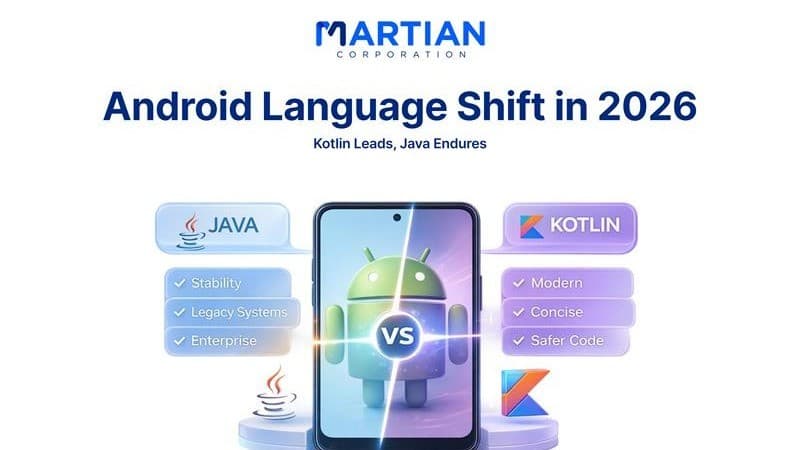
Google now treats Kotlin as the primary Android language, while Java remains trusted for stability and legacy systems. This guide explains where each language stands today so your team can confidently choose the right foundation for future projects.
State of Android Development Today

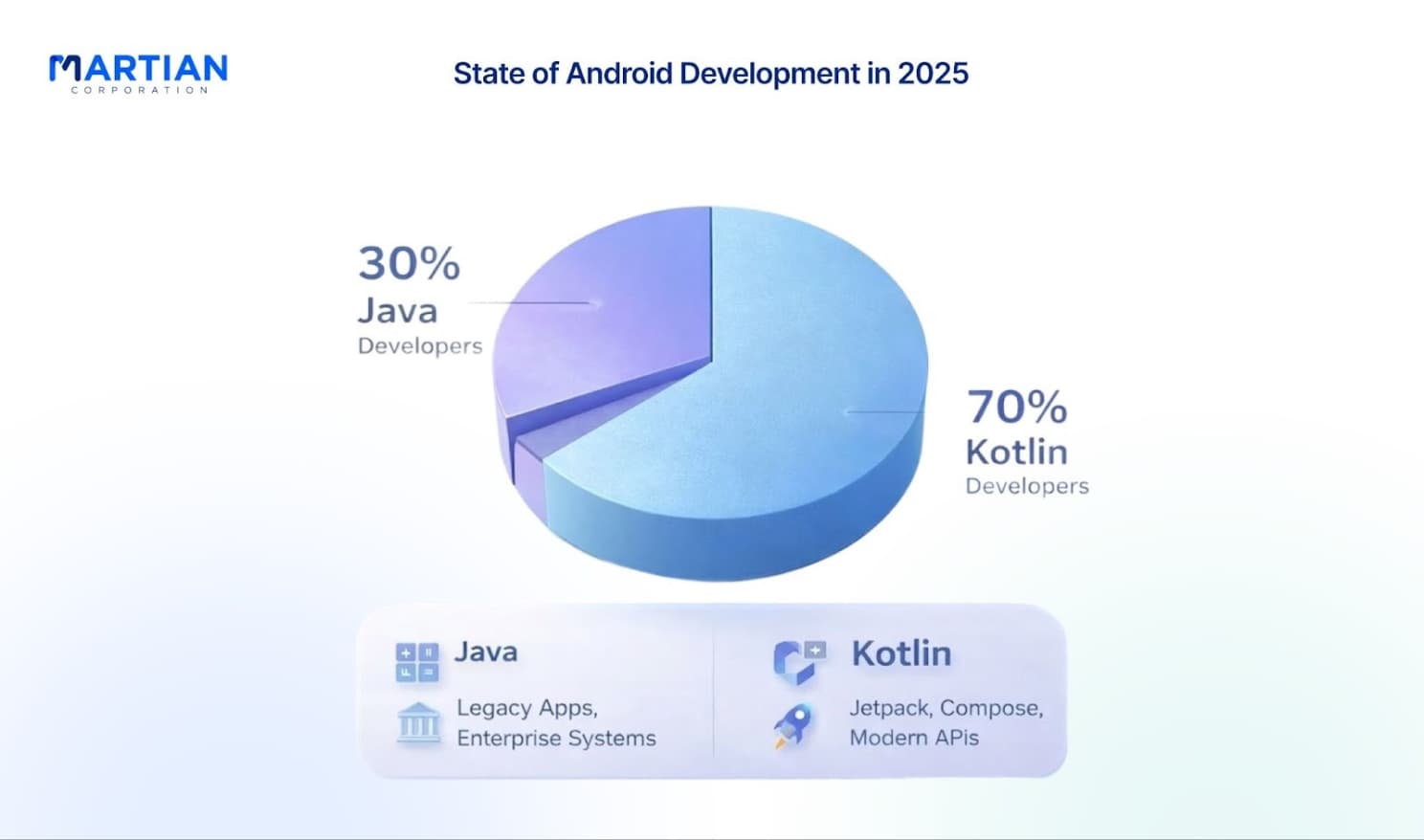
“The ecosystem has shifted — not disappeared.” Around 70% of Android developers now primarily use Kotlin, while Java still holds strong in enterprise and older codebases. Google releases most modern APIs with Kotlin-first support, meaning documentation, tutorials, and tooling increasingly prioritize Kotlin.

Developer sentiment reflects this shift. Teams moving to Kotlin often report fewer bugs and faster development cycles, largely due to safer syntax and reduced boilerplate.

Performance and Technical Capabilities

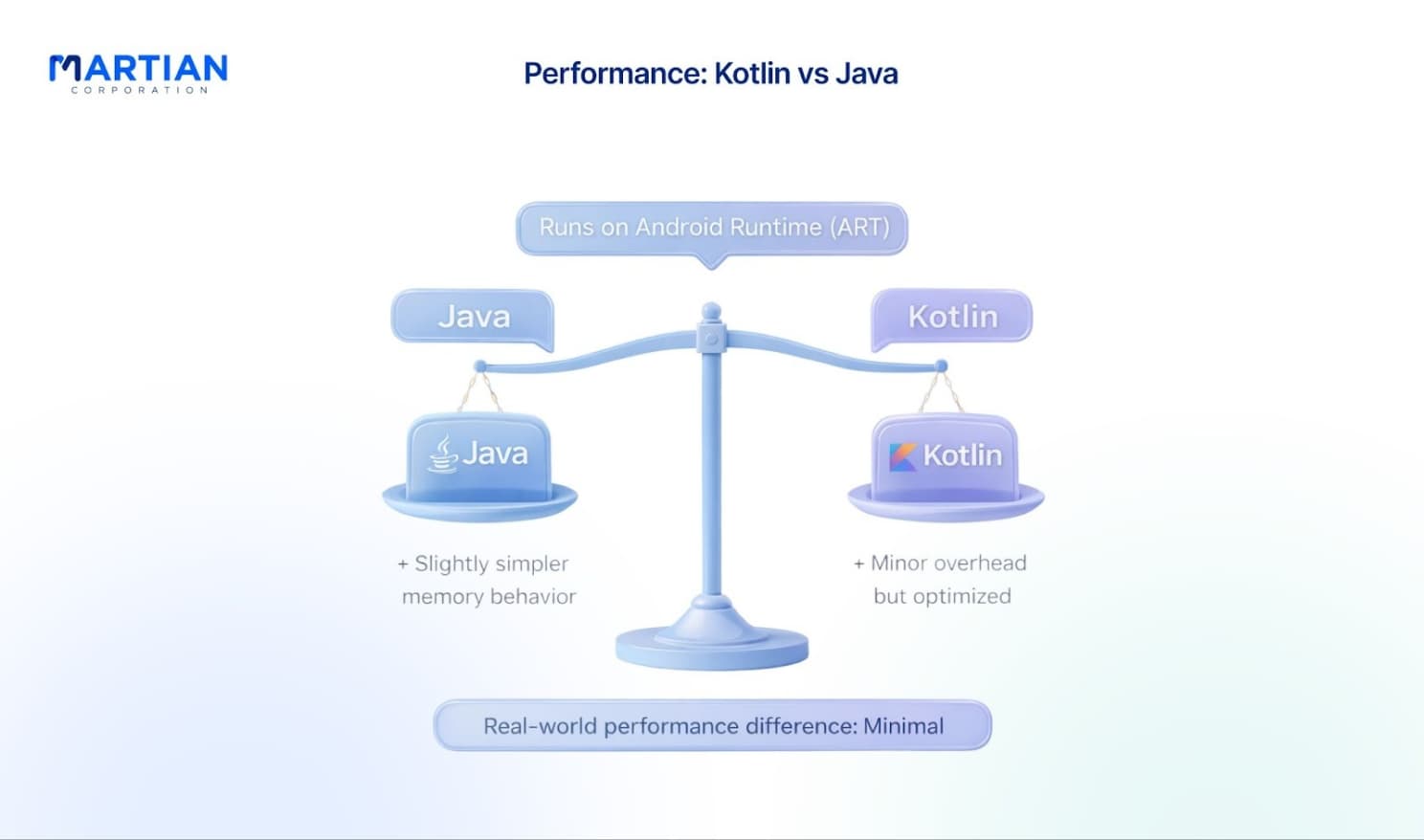
“Speed isn’t decided by the language — it’s decided by how it runs.” Both Kotlin and Java compile into the same bytecode and run on Android Runtime (ART), so real-world performance differences are minimal. Most apps will not show noticeable speed variation between the two.

Java has slightly simpler memory behavior, while Kotlin adds minor overhead due to modern features. However, compiler optimizations have nearly eliminated the gap. Build times can be a little slower in Kotlin during clean builds, but incremental builds make the difference negligible in daily work.

In practice, performance rarely determines the decision — productivity does.

Article content

Learning Curve and Developer Experience

“Good tools reduce developer frustration.” Kotlin’s concise syntax makes it easier for new developers. Less boilerplate means developers focus on logic rather than structure. Java is more verbose, which can feel overwhelming for beginners but familiar for experienced enterprise teams.

Migration from Java to Kotlin is relatively safe. Both languages interoperate fully, allowing mixed codebases. Android Studio even provides automatic conversion tools, making gradual adoption practical instead of risky.

Kotlin also benefits from modern documentation and strong IDE support, while Java relies on mature but older learning resources.

Language Features That Matter in Android

“Modern features prevent modern problems.”

Kotlin’s biggest advantage is null safety. It forces developers to handle null values during development instead of causing runtime crashes. This alone significantly reduces common Android crashes.

Coroutines simplify asynchronous programming. Instead of complex threads and callbacks, developers can write readable code for network calls, database operations, and background tasks.

Extension functions improve readability by allowing developers to enhance Android components without inheritance. Combined with seamless interoperability with Java, teams can adopt Kotlin without rewriting entire apps.

Future-Proofing Your Investment

“Support matters more than popularity.” Google’s continued investment strongly favors Kotlin. New Android tools, Jetpack libraries, and modern UI frameworks (like Jetpack Compose) are designed primarily for Kotlin. Java is still supported but no longer the focus of innovation.

Large companies such as Netflix, Uber, and Pinterest have already migrated major projects to Kotlin. Meanwhile, Java remains valuable for maintaining legacy enterprise systems and teams deeply invested in existing infrastructure.

Article content

Conclusion

“Choose stability or choose momentum — both are valid.” Kotlin and Java are both capable Android languages in 2026, but they serve different needs. Kotlin is ideal for new apps, faster development, and cleaner, safer code. Java remains reliable for long-term enterprise projects and teams already experienced with it.

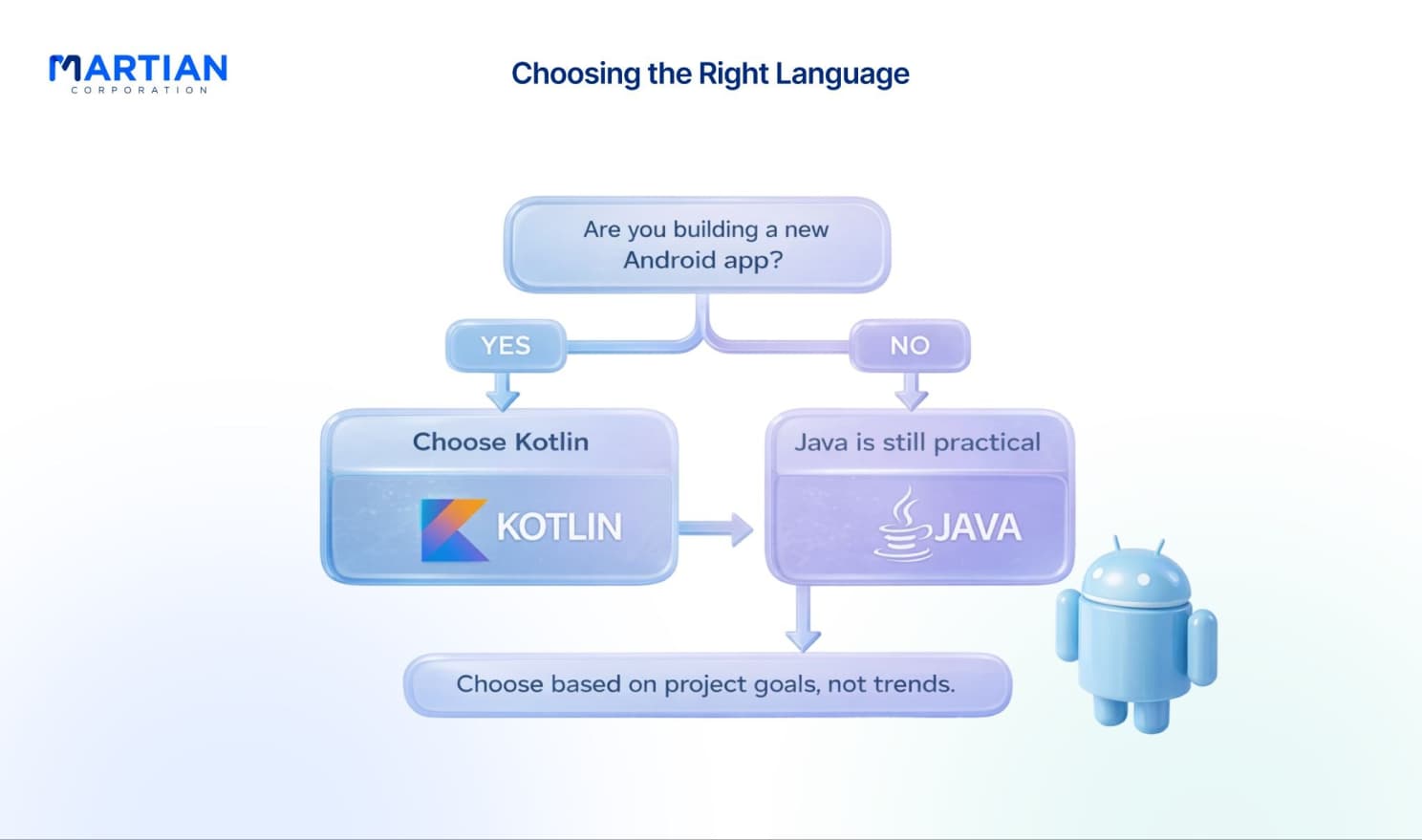
If you are starting a fresh Android app, Kotlin is generally the smarter strategic choice. If you are maintaining a large existing system, Java still makes sense. The best decision depends not on trends, but on your team’s experience, project goals, and future plans.

NewsLetter

Stay ahead in the world of technology

Get curated technology trends, expert analysis, and product updates delivered straight to your inbox — no noise, just signal.

Enter your email address

By subscribing you agree to our Terms and Conditions and Privacy Policy