All Blogs/Artificial Intelligence
24 Jun 2026
4 min read

How Enterprises Can Use AI for Decision Making

How Enterprises Can Use AI for Decision Making

By: Martian Corporation

Article content

Introduction

“Good decisions come from good data — great decisions come from intelligent insights.” Every business runs on decisions. What to build, where to invest, how to respond, when to act. And today, those decisions are happening faster than ever.

But here’s the problem—data has exploded.

Too much data, Too little clarity

That’s where AI steps in. Not just to analyze, but to actually guide decisions. Enterprises are no longer guessing or relying only on experience—they’re using systems that can process information, spot patterns, and suggest what to do next.

And that’s changing how decisions are made at every level.
Understanding AI in Decision Making

“AI turns data into actionable insights.” AI in decision-making is about moving beyond raw data. It takes complex datasets and turns them into something useful—recommendations, predictions, and clear insights.

Instead of asking teams to manually interpret everything, AI helps answer the real question:

“What should we do next?”

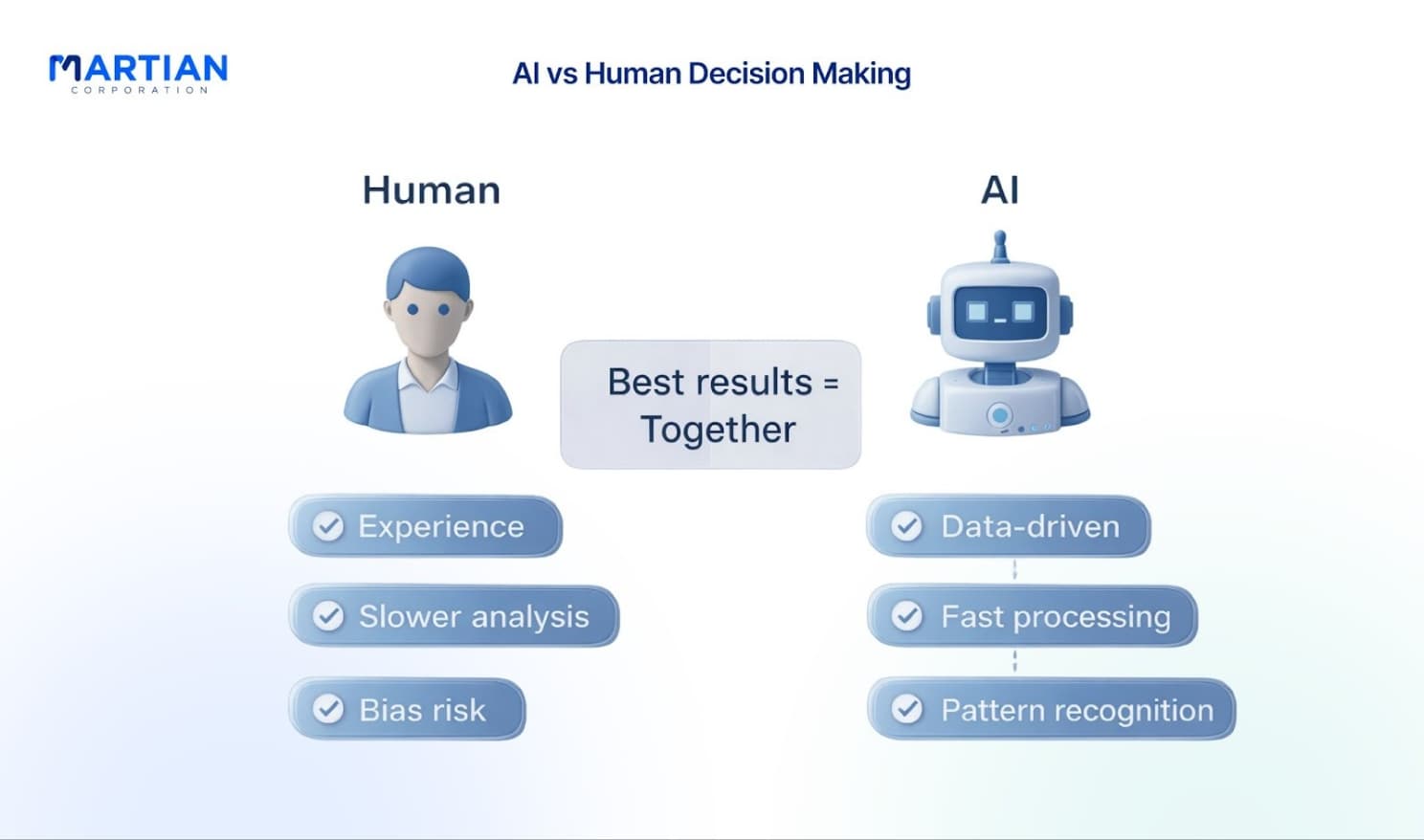
This doesn’t remove human judgment—but it strengthens it. Decisions become more informed, more structured, and far less dependent on guesswork.

Data Analysis at Scale

“Humans analyze data — AI understands it at scale.” Enterprises deal with data from everywhere—customers, operations, transactions, systems. Processing all of this manually is nearly impossible.

AI changes that.

It scans, It connects, It identifies patterns

And it does this at a scale no human team can match. That’s why companies are now able to uncover insights that were previously hidden inside massive datasets.

Article content

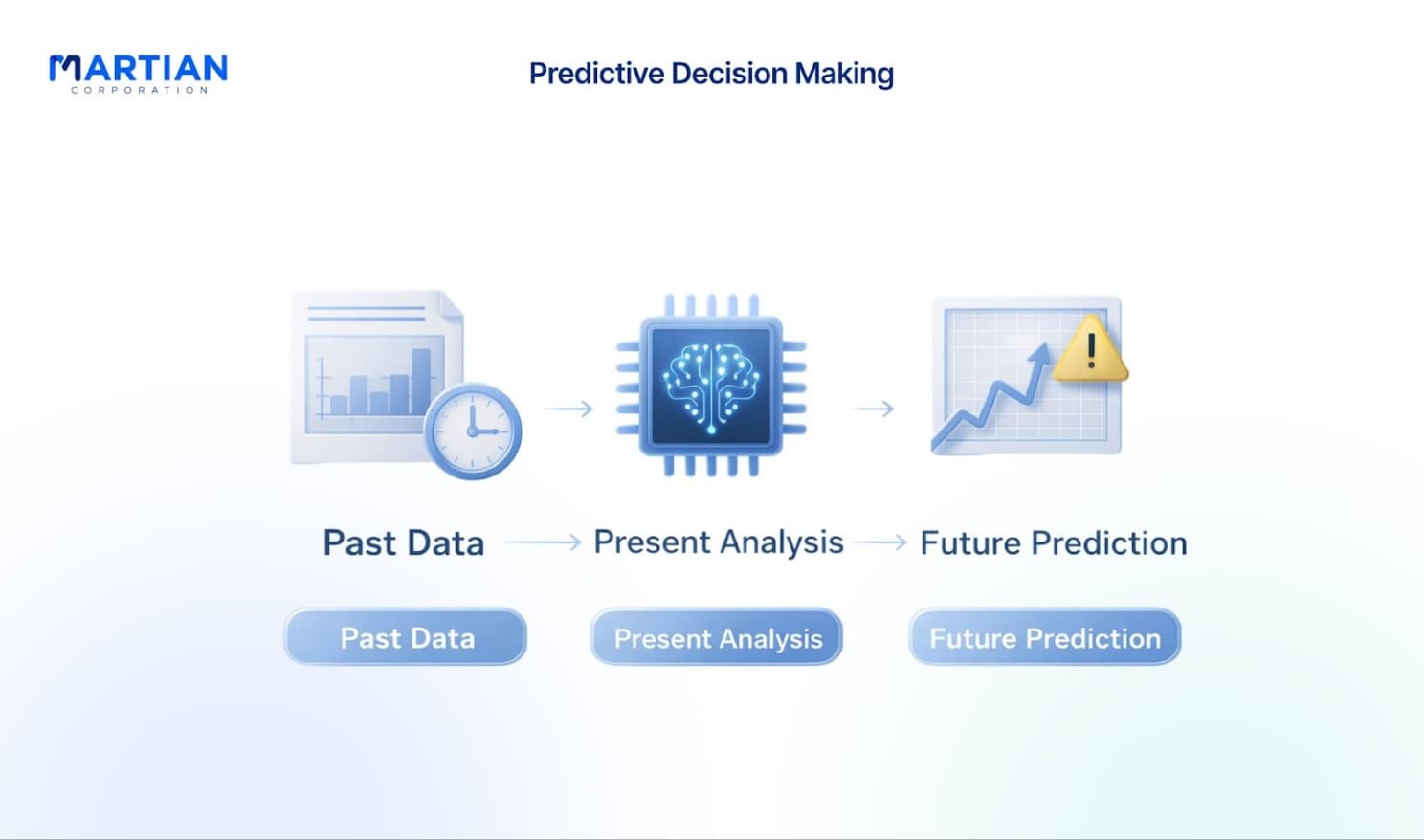
Predictive Decision Making

“The best decisions are the ones made before problems arise.” AI doesn’t just look at the present—it predicts the future. By analyzing historical data and patterns, it helps businesses anticipate what’s coming next.

Demand changes, Customer behavior shifts, Risks start forming

Instead of reacting late, companies can act early.

This is already happening in industries like retail and finance, where AI predicts buying patterns or flags risks before they become real problems.

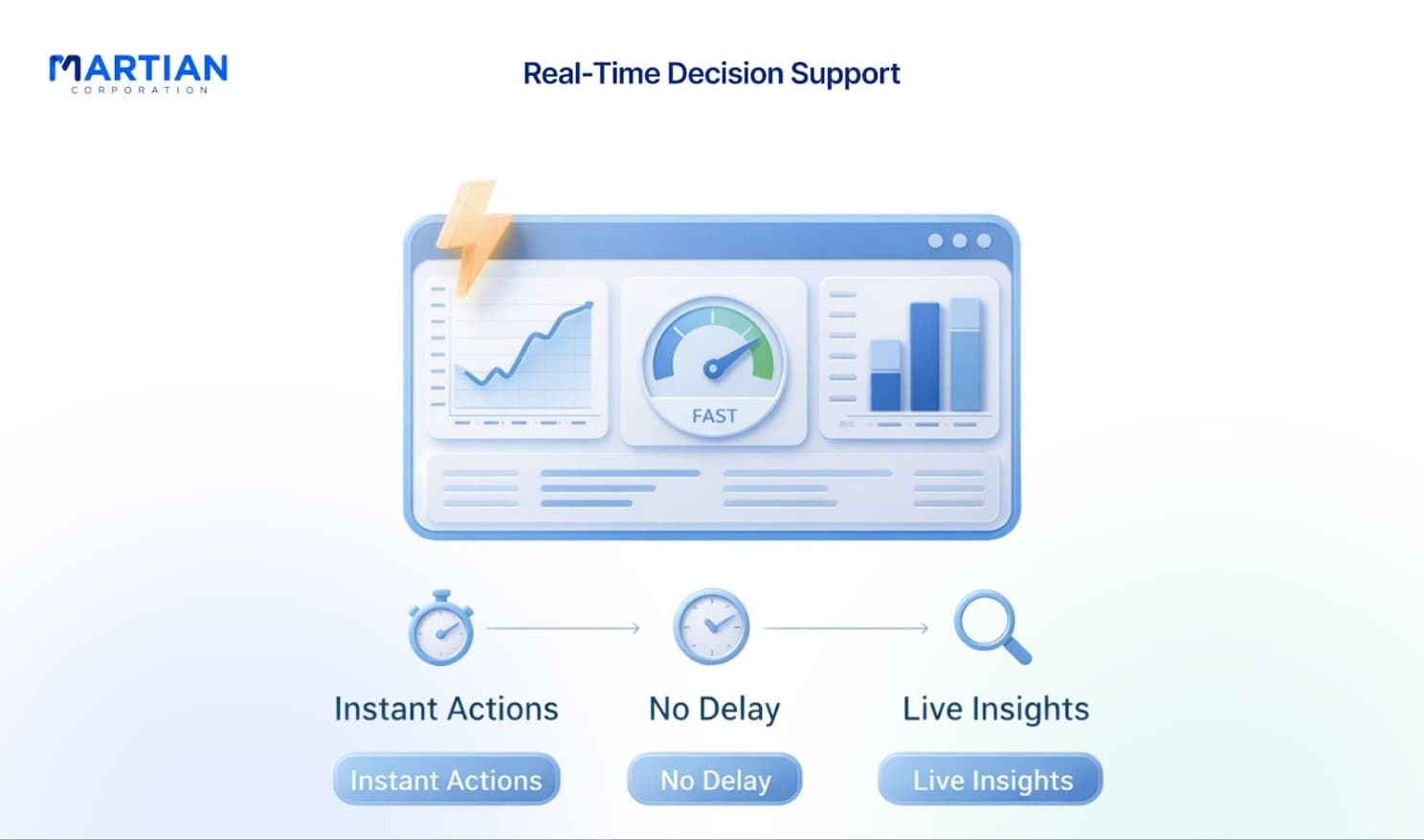
Real-Time Decision Support

“Speed matters as much as accuracy.” In many situations, waiting too long to decide can be as bad as making the wrong decision. AI helps by providing real-time insights that allow businesses to act instantly.

Whether it’s approving a transaction, adjusting pricing, or responding to customer activity—AI ensures decisions don’t get delayed.

No waiting, No bottlenecks, Just action

Reducing Human Bias

“Objective decisions lead to better results.” Human decisions are often influenced by experience, assumptions, or incomplete information. While that’s natural, it can sometimes lead to bias.

AI, when trained correctly, brings objectivity. It focuses on data, patterns, and probabilities rather than opinions.

This doesn’t replace human thinking—it balances it.

Less assumption, More evidence

Article content

Use Cases in Enterprises

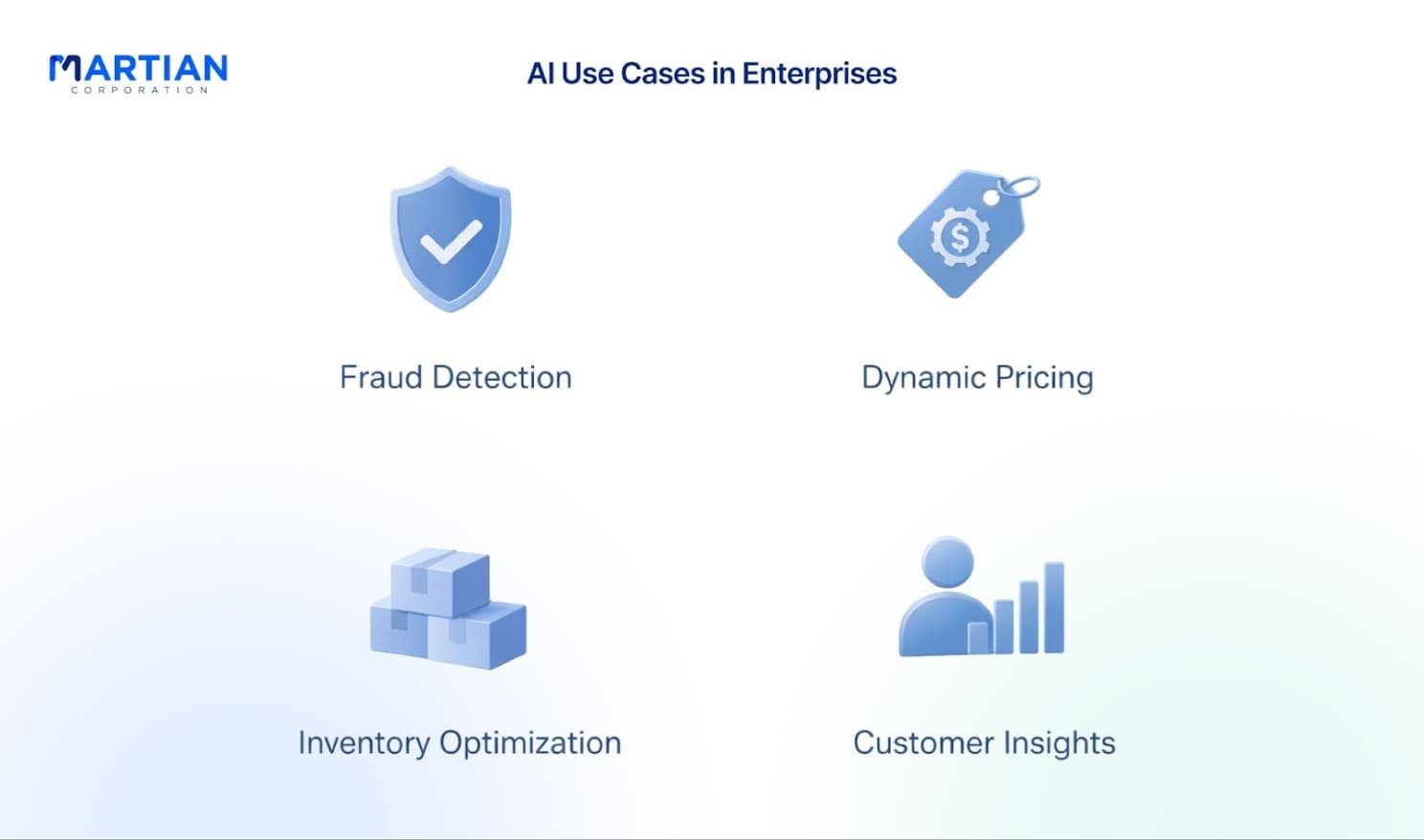
“AI-driven decisions are already shaping industries.” AI is already deeply embedded in enterprise decision-making.

Financial systems use it to detect fraud in real time. Retail companies use it to adjust pricing dynamically. Supply chains use it to optimize inventory and reduce waste.

A strong example—many fintech platforms today rely heavily on AI to approve or reject transactions instantly, something that once required manual checks.

Decisions that took hours, Now happen in seconds

Challenges and Limitations

“AI is powerful, but not perfect.” Despite its capabilities, AI is not a magic solution. It depends heavily on data quality, and poor data can lead to poor decisions.

There’s also the challenge of transparency. Sometimes, it’s not always clear how an AI system arrived at a conclusion.

That’s why businesses need to stay involved.

Trust the system, But verify the outcome

Best Practices for Implementation

“Smart adoption leads to smart outcomes.” The most successful companies don’t blindly rely on AI—they use it strategically.

They start with key decision areas where impact is high. They ensure clean, reliable data. They combine AI insights with human judgment.

There’s also a mindset shift here.

Not “Will AI replace decisions?” But “How can AI improve our decisions?”

That’s the right way to approach it.

Article content

The Future of AI in Decision Making

“Decisions will become faster, smarter, and more data-driven.” We are moving toward a future where decision-making becomes a continuous process supported by AI.

Systems will monitor, analyze, and suggest actions constantly. In many cases, they will even execute decisions automatically within defined boundaries.

Less manual thinking, More assisted intelligence

This doesn’t remove humans—it changes their role.

Conclusion

“The real shift is not in making decisions — it’s in making better ones, consistently.” AI is not here to replace decision-makers. It’s here to enhance how decisions are made.

By combining data, speed, and intelligence, AI allows enterprises to move with more clarity and confidence.

Because in today’s world, the advantage doesn’t go to the company that works harder— it goes to the one that decides better.

NewsLetter

Stay ahead in the world of technology

Get curated technology trends, expert analysis, and product updates delivered straight to your inbox — no noise, just signal.

Enter your email address

By subscribing you agree to our Terms and Conditions and Privacy Policy