All Blogs/Artificial Intelligence
19 Jun 2026
4 min read

AI-Powered Business Automation: A Complete Guide

AI-Powered Business Automation: A Complete Guide

By: Martian Corporation

Article content

Introduction

“Automation is no longer about saving time — it’s about scaling smarter.” A few years ago, automation meant simple things—auto emails, scheduled reports, rule-based workflows. It helped, but it still needed humans at every important step.

Now look at what’s happening.

Systems are not just executing tasks. They are deciding what to do next.

Businesses today are using AI to automate work in a way that actually feels intelligent. Not just faster—but smarter. And the companies adopting this early are not just improving efficiency… they’re moving ahead faster than everyone else.
What is AI-Powered Automation

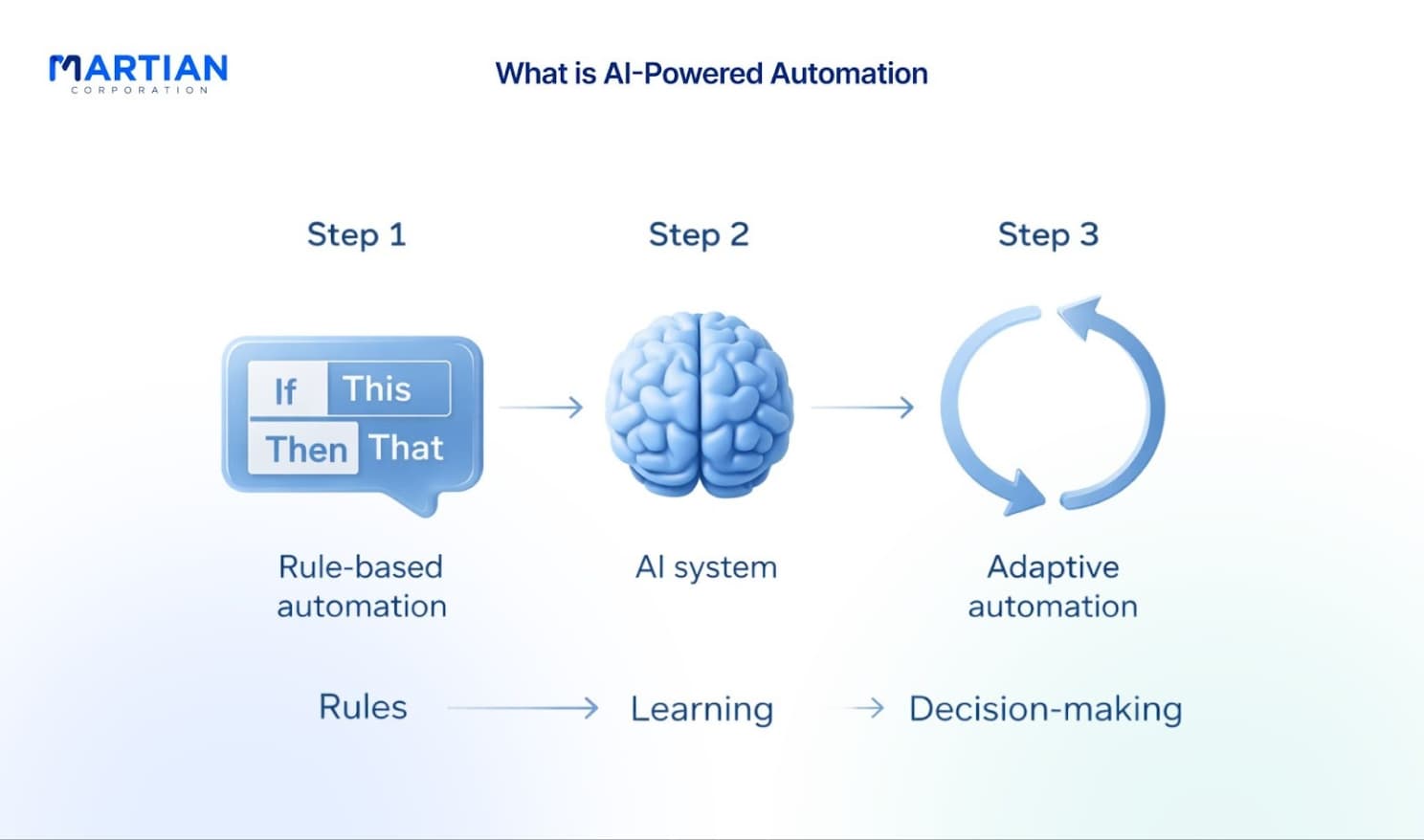
“It’s automation that can think, not just follow instructions.” AI-powered automation is what happens when you combine automation with intelligence. Instead of rigid “if-this-then-that” logic, these systems can understand patterns, learn from data, and adapt their actions.

This is why it feels different.

You don’t define every step anymore. You define the goal.

And the system figures out how to move toward it.

That’s what makes it powerful—and honestly, a bit game-changing.

How It Works

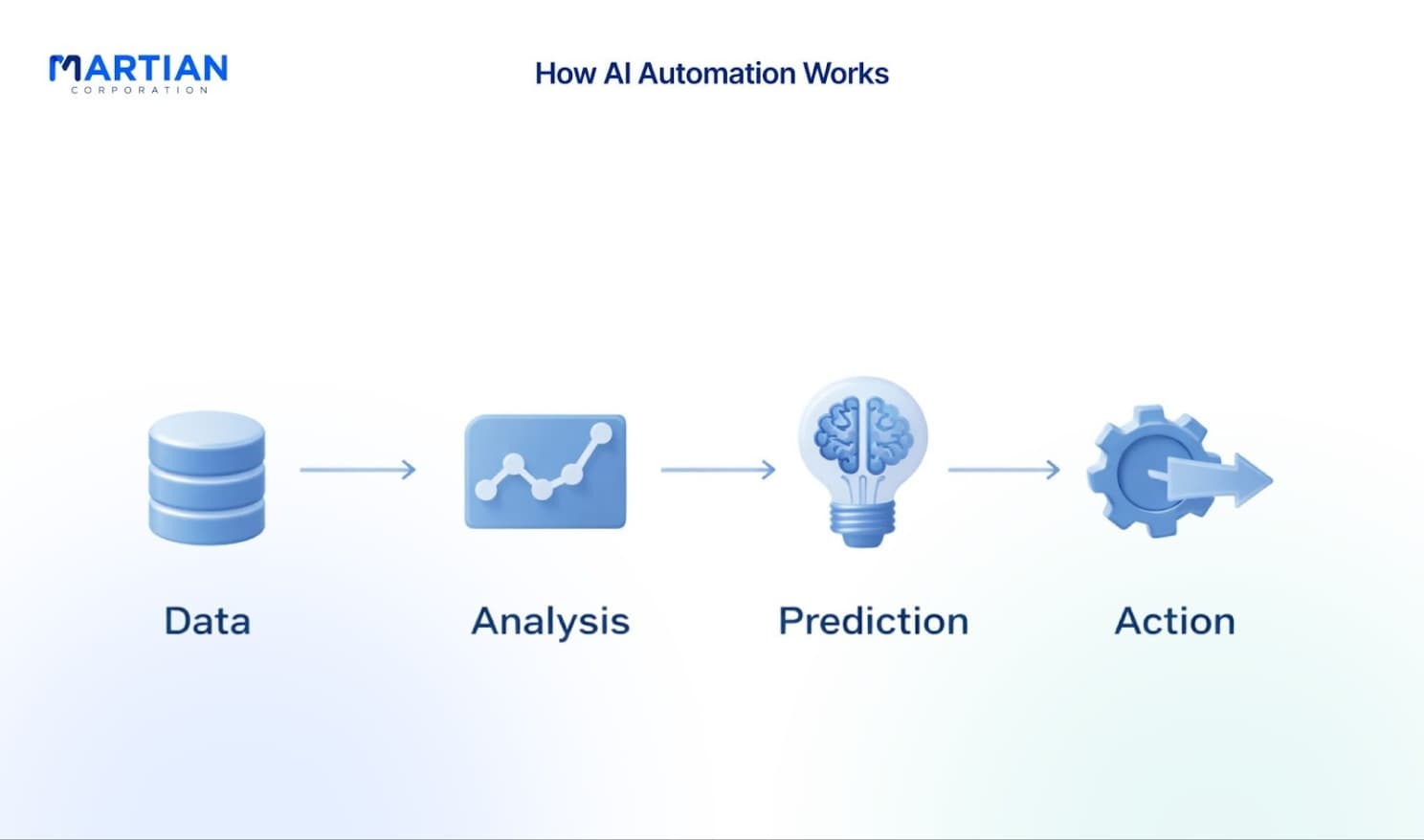
“Data fuels intelligence, and intelligence drives action.” At the core, everything starts with data. AI systems collect information from different sources—user activity, business tools, transactions, workflows.

Then comes the interesting part.

They analyze, They predict, They decide

And based on that, they take action—sending updates, triggering processes, making adjustments in real time.

Over time, they get better. Not because someone rewrites them, but because they learn.

Article content

Key Benefits for Businesses

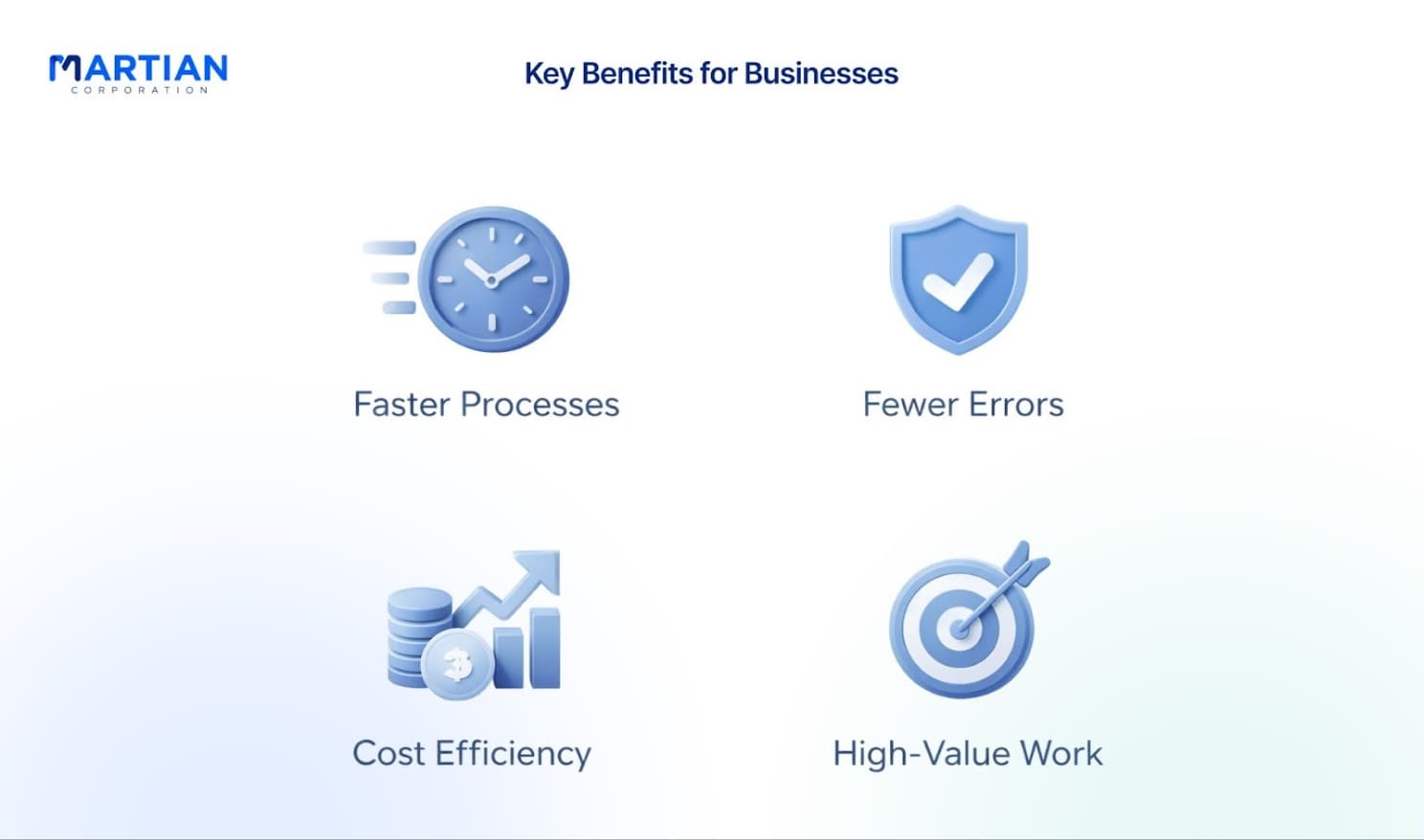
“Better efficiency leads to better outcomes.” AI-powered automation doesn’t just save time—it changes how work flows inside a business. Tasks get completed faster, errors reduce, and operations become more consistent.

But the real benefit?

Teams stop doing repetitive work, And start focusing on meaningful work

That’s where productivity actually improves—not by working more, but by working differently.

Common Use Cases

“Automation is everywhere—you just need to notice it.” AI automation is already running quietly inside many businesses.

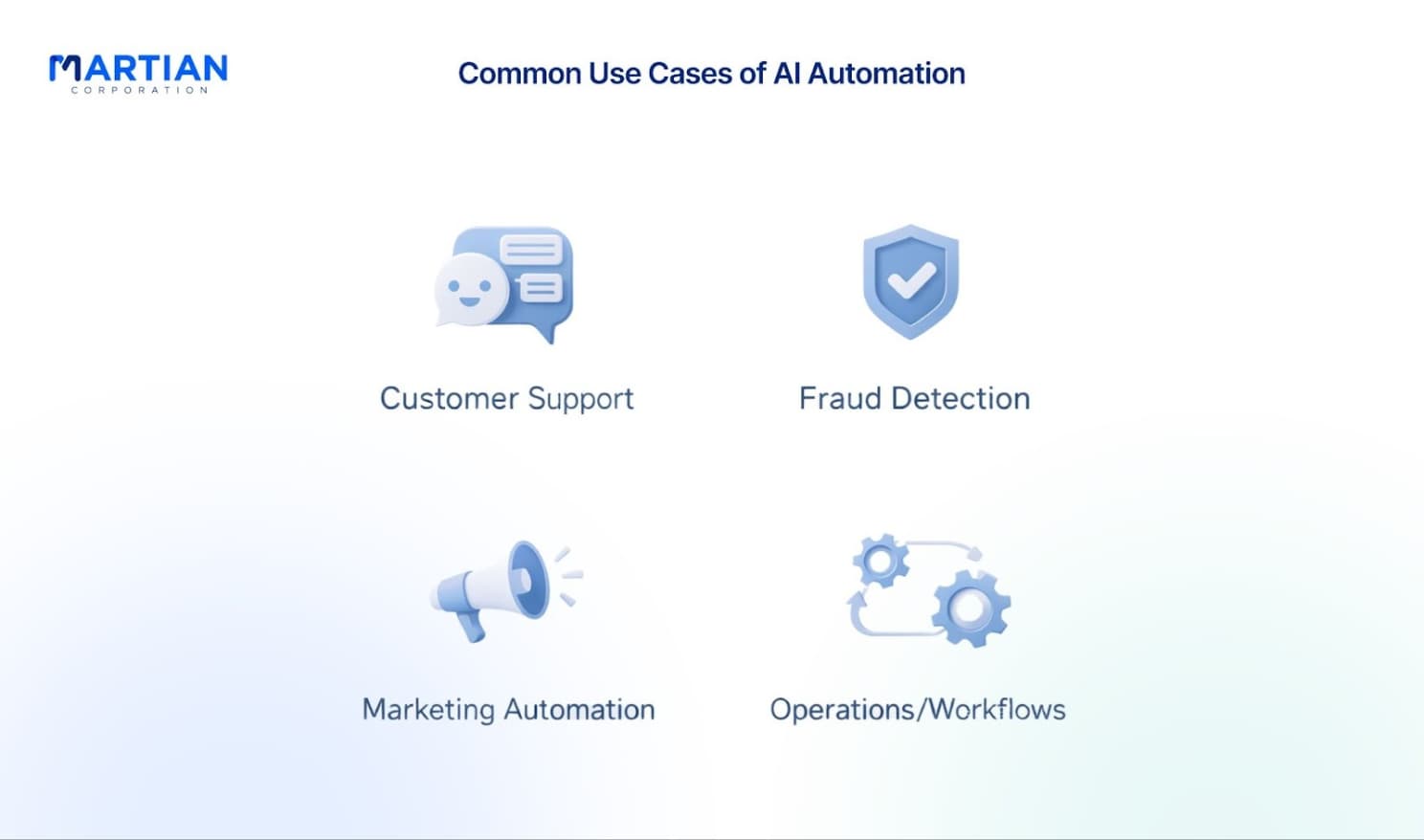
Customer support systems that respond instantly, Finance tools that detect fraud before it happens, Marketing platforms that personalize campaigns automatically

A strong real-world example—companies like Klarna have used AI to handle a huge portion of customer interactions. Not just answering queries, but resolving them.

That’s the shift.

From helping users, To handling the work

Integration with Existing Systems

“Automation works best when it fits into your current ecosystem.” One of the biggest reasons AI automation is growing so fast is because it doesn’t require rebuilding everything. It connects with what businesses already use—CRMs, databases, cloud tools.

It fits in, And then improves everything around it

This makes adoption faster and far more practical.

Article content

Scalability and Growth

“Automation grows as your business grows.” Scaling a business usually means more people, more processes, more complexity.

AI changes that.

More workload, Same system, Less friction

Instead of increasing manual effort, businesses can scale using systems that handle increasing demand without slowing down.

Challenges to Consider

“Smart systems still need smart planning.” Of course, it’s not perfect. AI automation comes with challenges—data quality issues, integration complexity, and the need for proper monitoring.

And there’s something important here.

Just because a system can act, Doesn’t mean it should act without control

Good automation needs boundaries, testing, and constant improvement.

Best Practices for Implementation

“Start small, then scale smart.” The smartest companies don’t automate everything at once. They start with clear, high-impact areas—repetitive tasks, time-consuming workflows—and build from there.

There’s also a mindset shift happening here.

Not “What can we automate?” But “Where are we wasting time?”

Fix that first—and the value becomes obvious.

Article content

The Future of AI Automation

“The next wave of business will be AI-driven.” What we’re seeing right now is just the beginning. AI systems are getting better at handling more complex workflows, making decisions, and working alongside humans.

Think about your daily tools.

Your emails, Your dashboards, Your internal systems

Right now, you manage them.

Soon, they will start managing parts of your work.

Not perfectly. But increasingly well.

Conclusion

“The real shift is not automation — it’s intelligent execution.” AI-powered automation is not just improving businesses—it’s changing how they operate at a fundamental level.

This is no longer about saving a few hours. It’s about building systems that can think, adapt, and execute.

And the companies that understand this early won’t just be more efficient… they’ll be operating on a completely different level.

NewsLetter

Stay ahead in the world of technology

Get curated technology trends, expert analysis, and product updates delivered straight to your inbox — no noise, just signal.

Enter your email address

By subscribing you agree to our Terms and Conditions and Privacy Policy