All Blogs/Technology
26 Apr 2026
4 min read

Cross-Platform vs Native: What Tech Stack Helps You Win in the Market?

Cross-Platform vs Native: What Tech Stack Helps You Win in the Market?

By: Martian Corporation

Article content

Introduction

“Your tech stack is not just a code decision — it’s a business decision.” Choosing between native and cross-platform development can directly affect your app’s speed to market, budget, and user experience. Founders and product teams often face the dilemma: launch faster on multiple platforms, or deliver the highest possible performance on one. Understanding when each approach works best helps you avoid expensive rebuilds later and align technology with business goals.

Understanding the Two Approaches

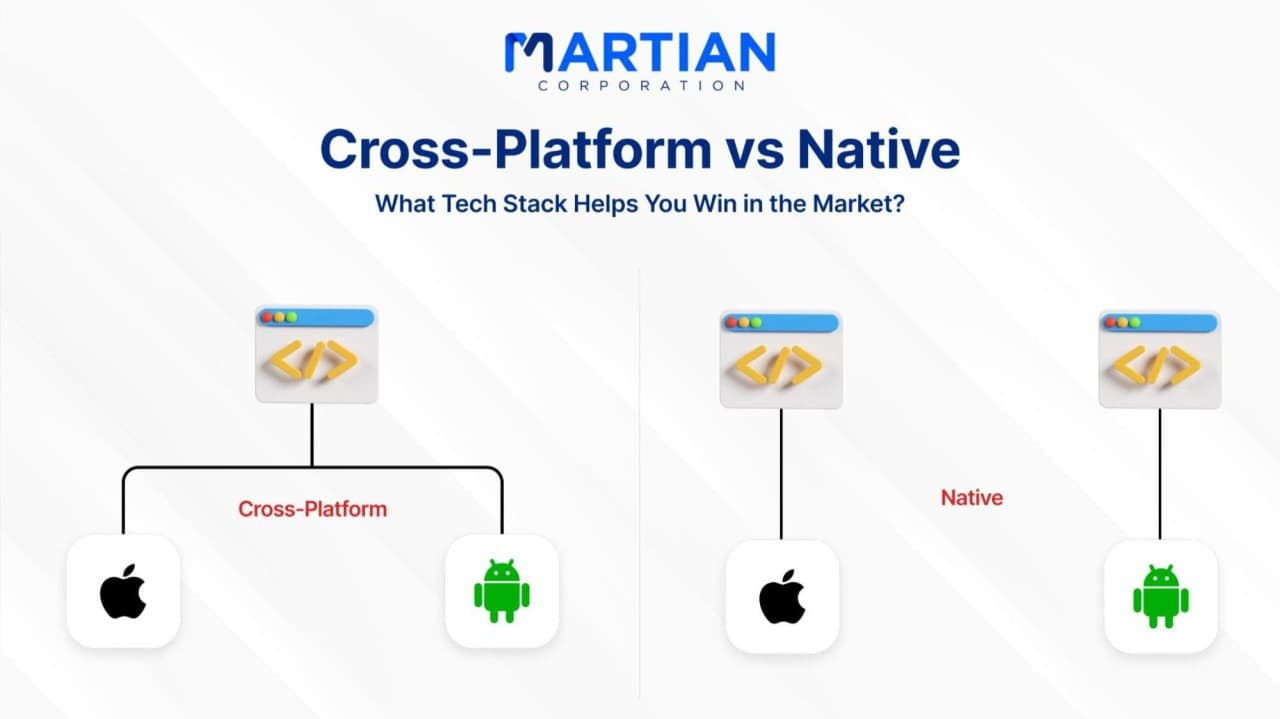
“Different paths, same destination — a successful app.” Native development means building separate apps using Swift for iOS and Kotlin for Android, optimized specifically for each platform. Cross-platform frameworks like Flutter and React Native allow a single codebase to run on both platforms, reducing development effort but sometimes trading off fine-tuned control.

Modern cross-platform tools have improved dramatically. What once struggled with performance now delivers near-native responsiveness for most business applications, shrinking the gap between the two approaches.

Evolution of Cross-Platform Technologies

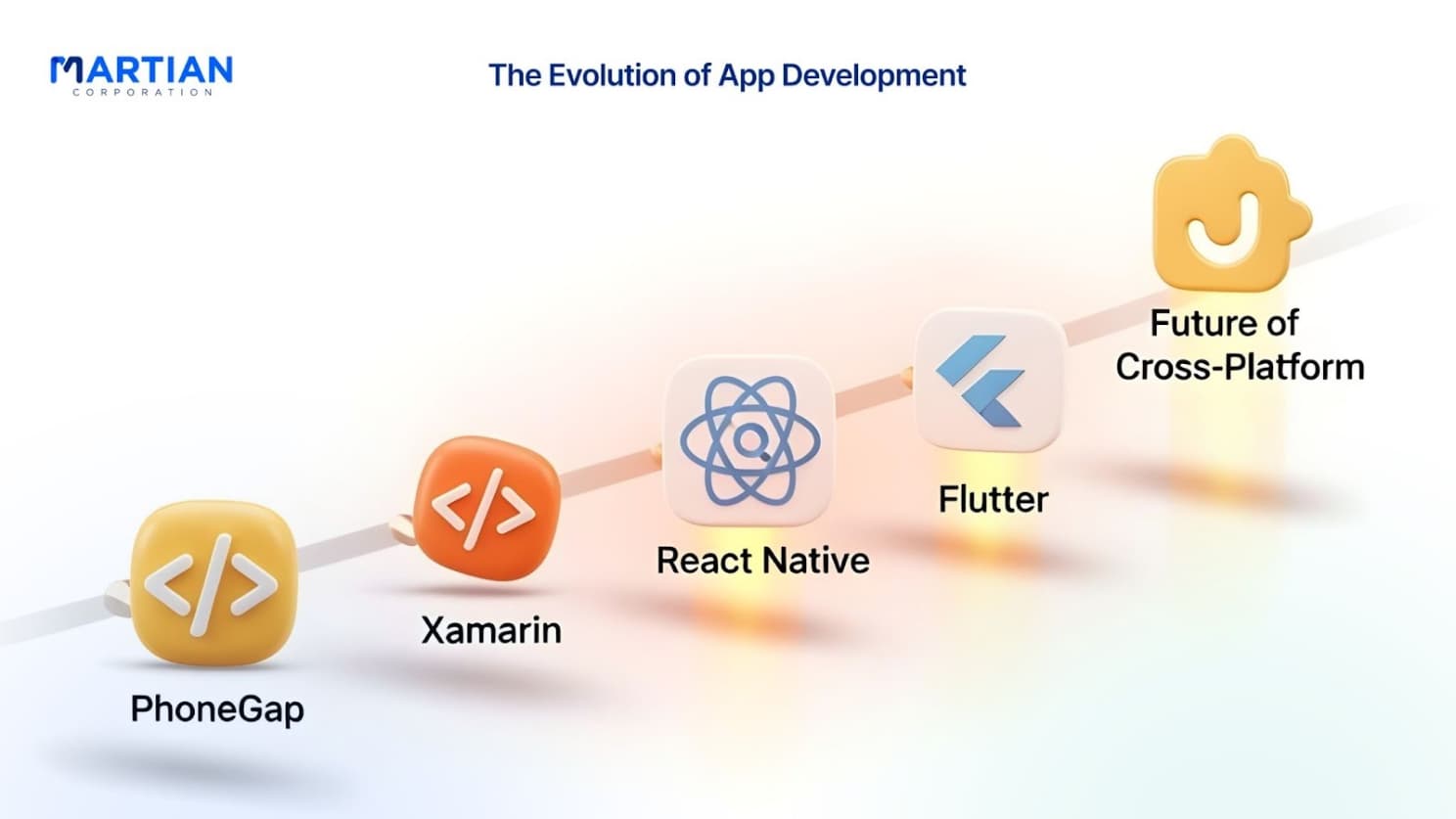
“Cross-platform development has moved from compromise to competition.” Earlier tools like PhoneGap offered convenience but struggled with performance and user experience. Today, frameworks such as Flutter deliver near-native speed from a single codebase. With each update, the performance gap between native and cross-platform continues to shrink, making modern cross-platform solutions a practical choice for many real-world apps.

Article content

Strengths of Cross-Platform Development

“Speed wins markets.” Cross-platform development reduces both cost and development time. A single team can build for multiple platforms simultaneously, often cutting development cycles by 30–50%. This makes it ideal for startups, MVPs, and products validating market demand.

Code reuse is its biggest advantage. Features built once automatically work across platforms, eliminating duplicate work and simplifying maintenance. Updates also ship faster because you maintain only one primary codebase.

Advantages of Native Development

“Performance creates loyalty.” Native apps interact directly with device hardware, delivering faster load times, smoother animations, and more responsive interfaces. Users notice this difference immediately, especially in demanding applications.

Native development also offers complete access to device capabilities — camera systems, sensors, GPS, and platform-specific APIs — without workarounds. This reliability makes native ideal for apps that depend heavily on device features.

Business Factors That Should Guide Your Choice

“Technology follows strategy, not the other way around.” Your target audience matters. If your users primarily exist on one platform, native development may be the best investment. But if you need reach quickly across both ecosystems, cross-platform offers faster entry into the market.

Budget and deadlines also influence the decision. Native requires separate teams and longer timelines, while cross-platform stretches resources further and accelerates launch.

Article content

Market Success Stories and Case Studies

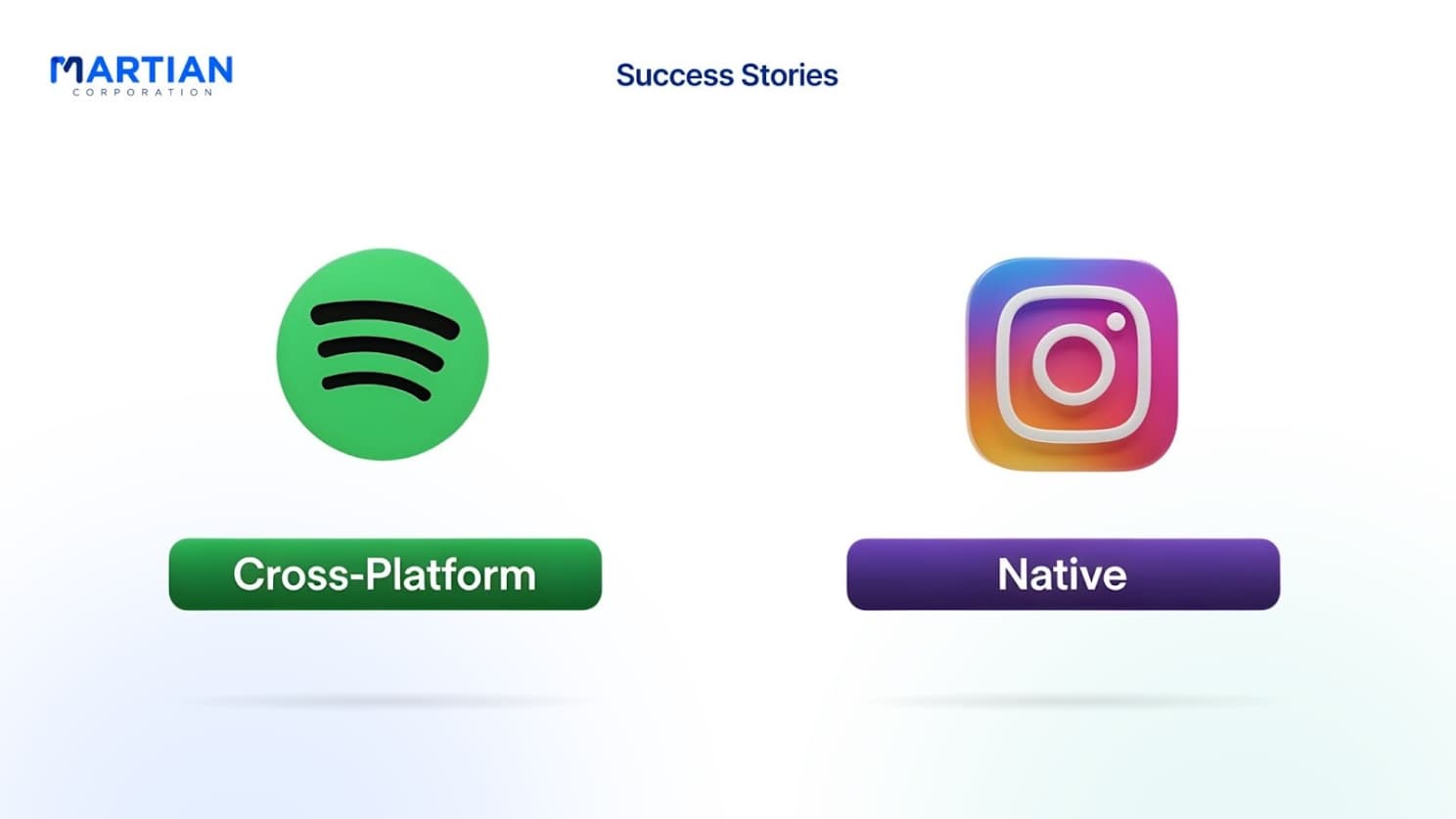
“The right choice depends on the product.” Some companies succeed with cross-platform solutions. Products focused on content delivery, marketplaces, and social interaction benefit from faster updates and consistent interfaces across devices.

Others succeed with native development. Apps requiring heavy media processing, camera optimization, or advanced performance rely on platform-specific engineering to stand out.

A Simple Decision Framework

“Choose based on need, not trend.” Cross-platform works best for MVPs, startup launches, and business apps where speed and reach matter more than deep hardware control. It allows companies to test ideas quickly and scale efficiently.

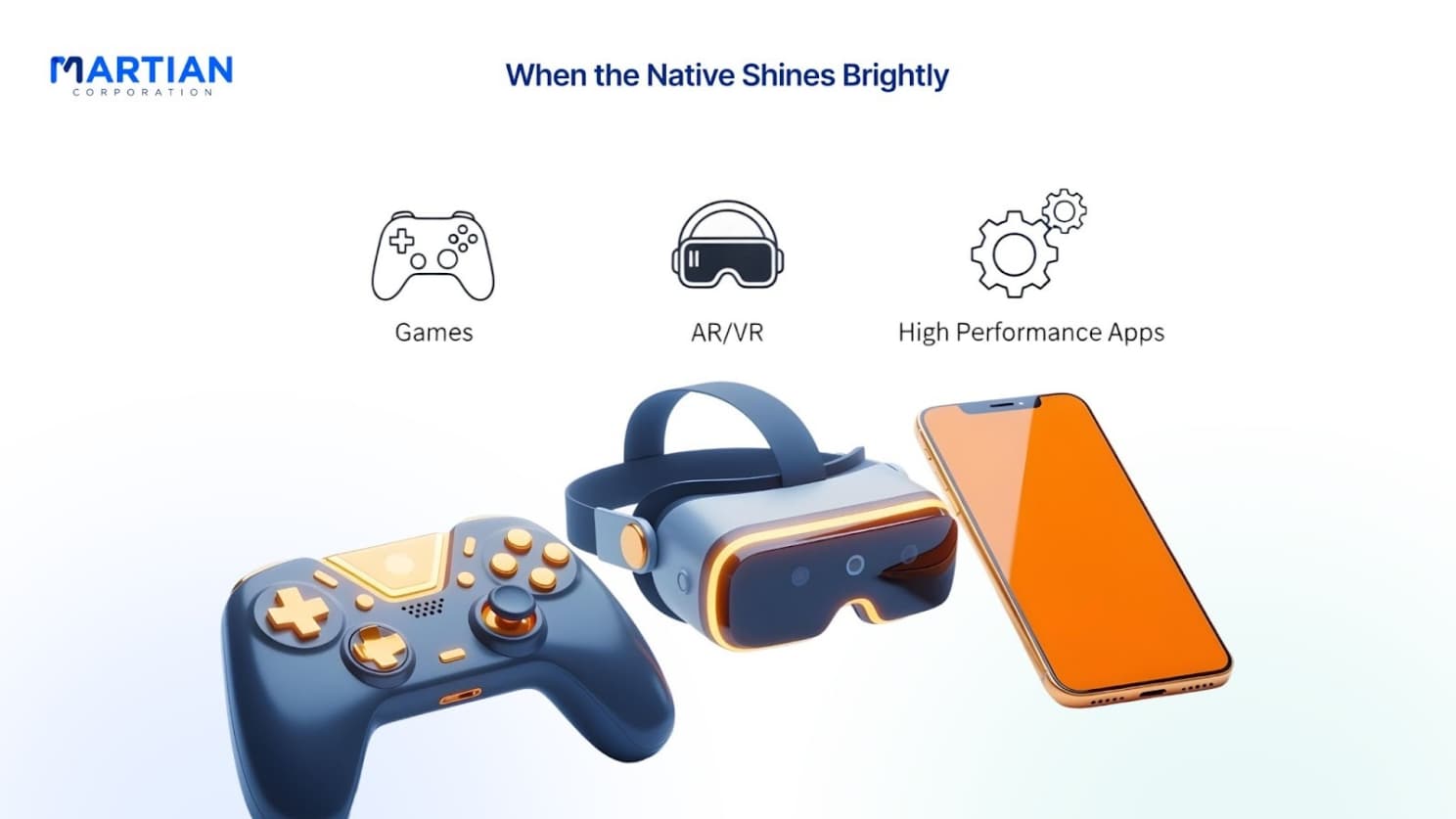
Native development is the clear winner for games, AR/VR experiences, or performance-critical products. When every millisecond matters or hardware integration is essential, native provides unmatched optimization.

Conclusion

“Winning apps are built with the right priorities.” The native vs cross-platform debate isn’t about which technology is better — it’s about which fits your product strategy. Cross-platform delivers faster development and lower cost, while native delivers maximum performance and platform precision.

The best teams don’t follow trends blindly. They choose a stack that supports their competitive advantage, aligns with their users, and sustains long-term growth. When technology matches business goals, the app doesn’t just launch — it succeeds.

Article content

NewsLetter

Stay ahead in the world of technology

Get curated technology trends, expert analysis, and product updates delivered straight to your inbox — no noise, just signal.

Enter your email address

By subscribing you agree to our Terms and Conditions and Privacy Policy