
By clicking “Accept All Cookies”, you agree to the storing of cookies on your device to enhance site navigation, analyze site usage, and assist in our marketing efforts.*

All Blogs/Technology
26 Jan 2026
3 min read

Clean Data Models = Clean Business Logic: A Practical Mongoose Guide

Clean Data Models = Clean Business Logic: A Practical Mongoose Guide

By: Martian Corporation

Article content

Introduction

“Behind every successful business lies data that’s structured, reliable, and easy to understand.”

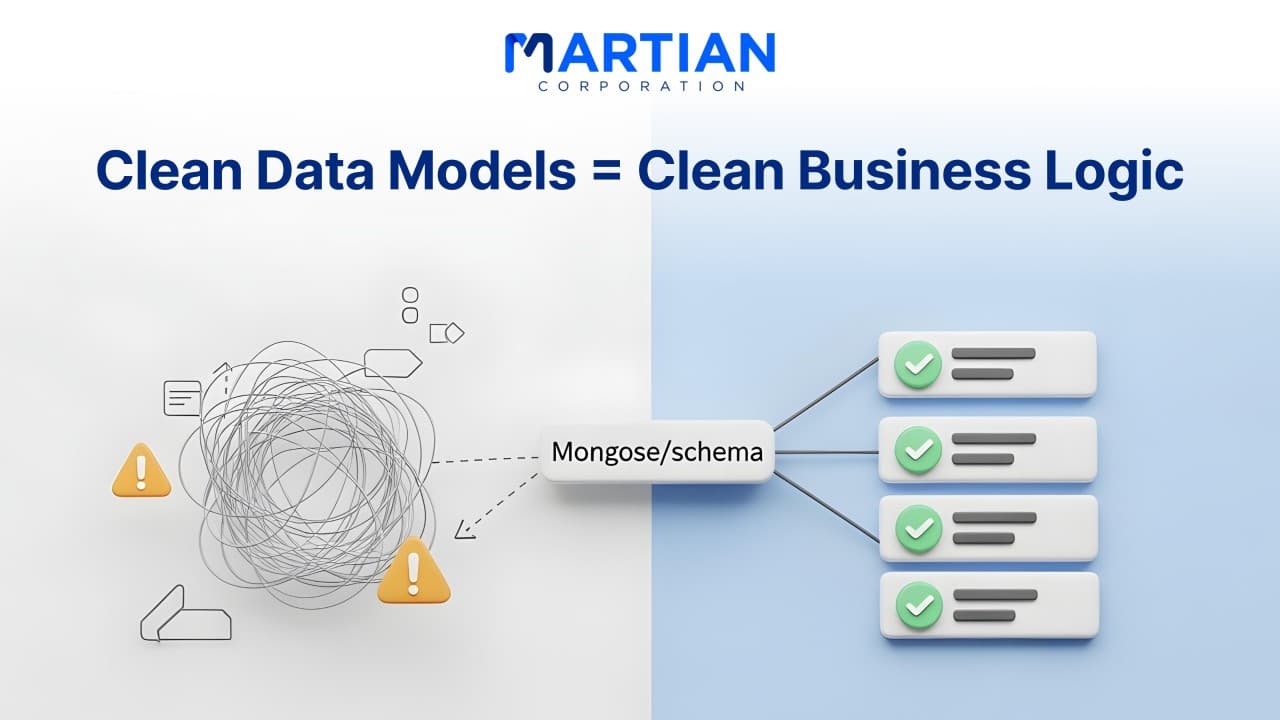
In today’s fast-moving world, data drives decisions — but only if it’s clean. Poorly structured data slows teams down, creates confusion, and leads to errors that cost time and money.

Mongoose bridges the gap between raw MongoDB collections and well-organized data models. It helps define clear schemas, enforce rules, and keep your business logic clean and predictable. Here’s why this matters more than ever for modern businesses handling huge amounts of information.
Why Clean Data Models Matter

“Clean data models create clarity — and clarity creates better decisions.”

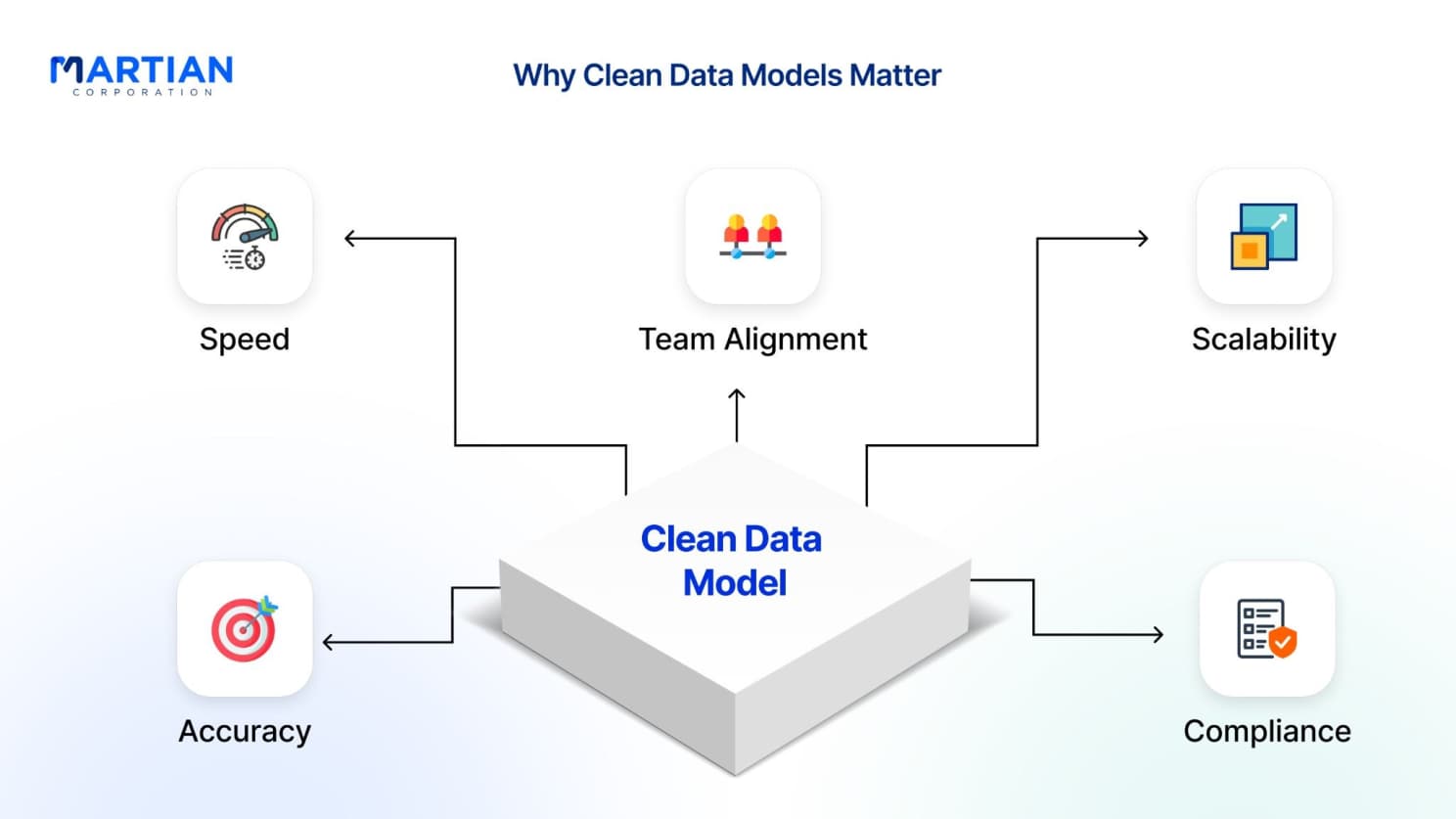
They act as a structured backbone for your entire organization Teams get faster access to reliable information Collaboration becomes easier when everyone follows the same data rules Scaling the business becomes smoother with predictable models Regulatory compliance and audits become far less painful

Clean models create an environment where decisions are faster, communication clearer, and growth far more manageable.

Why Mongoose Is the Ideal Tool for Data Modeling

“Good tools don’t just store data — they protect your business logic.”

Mongoose shines because it offers:

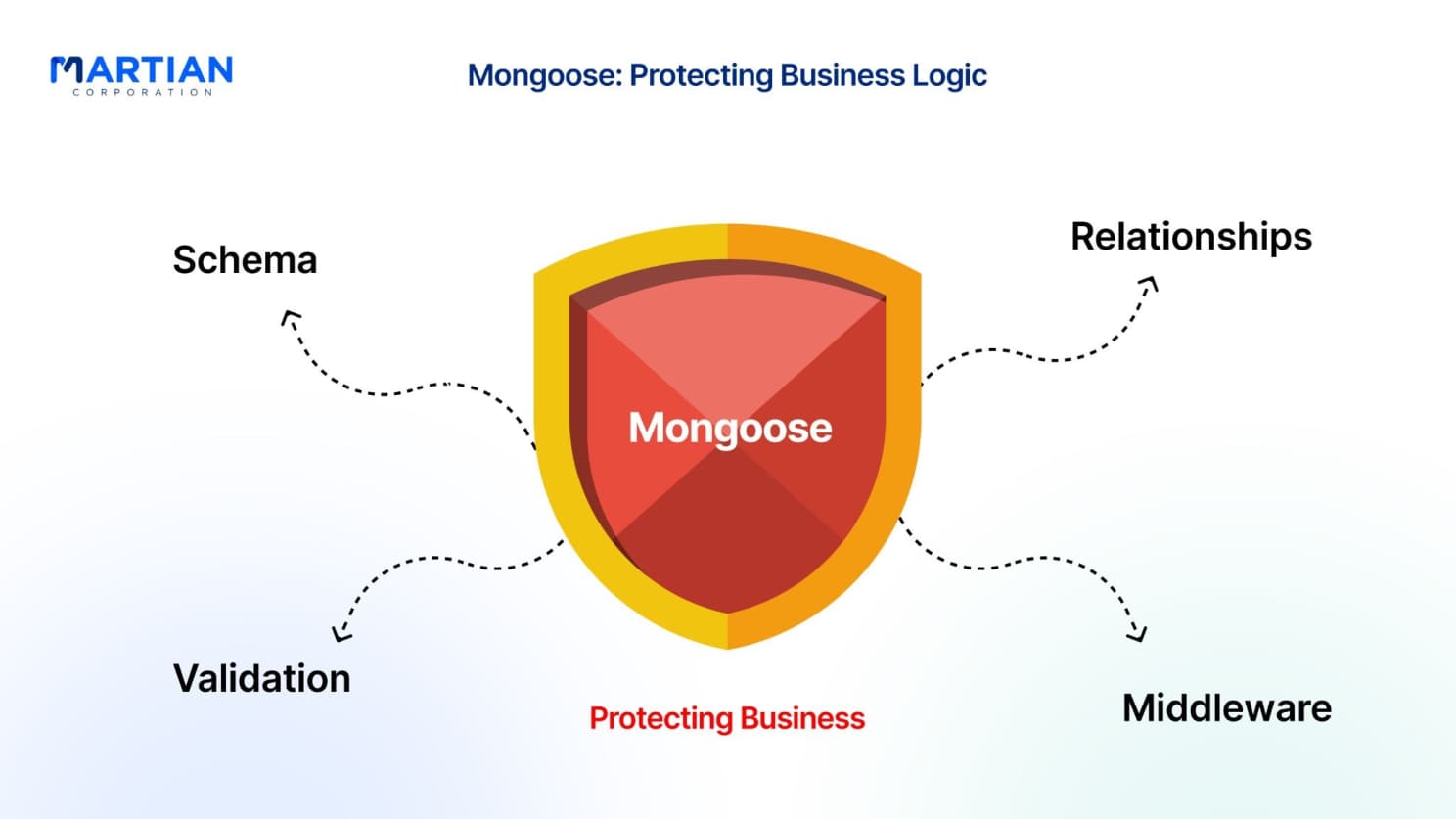
Clear, defined schemas to avoid chaotic collection structures Automatic type casting that catches errors early Middleware & hooks to keep business logic clean and organized Population features for handling relationships efficiently Strong documentation & community support to solve issues quickly

It’s a developer-friendly way to bring order, consistency, and predictability to MongoDB.

Article content

A Practical, Clean Approach to Building Mongoose Models

“A good schema is simple, readable, and built for change.”

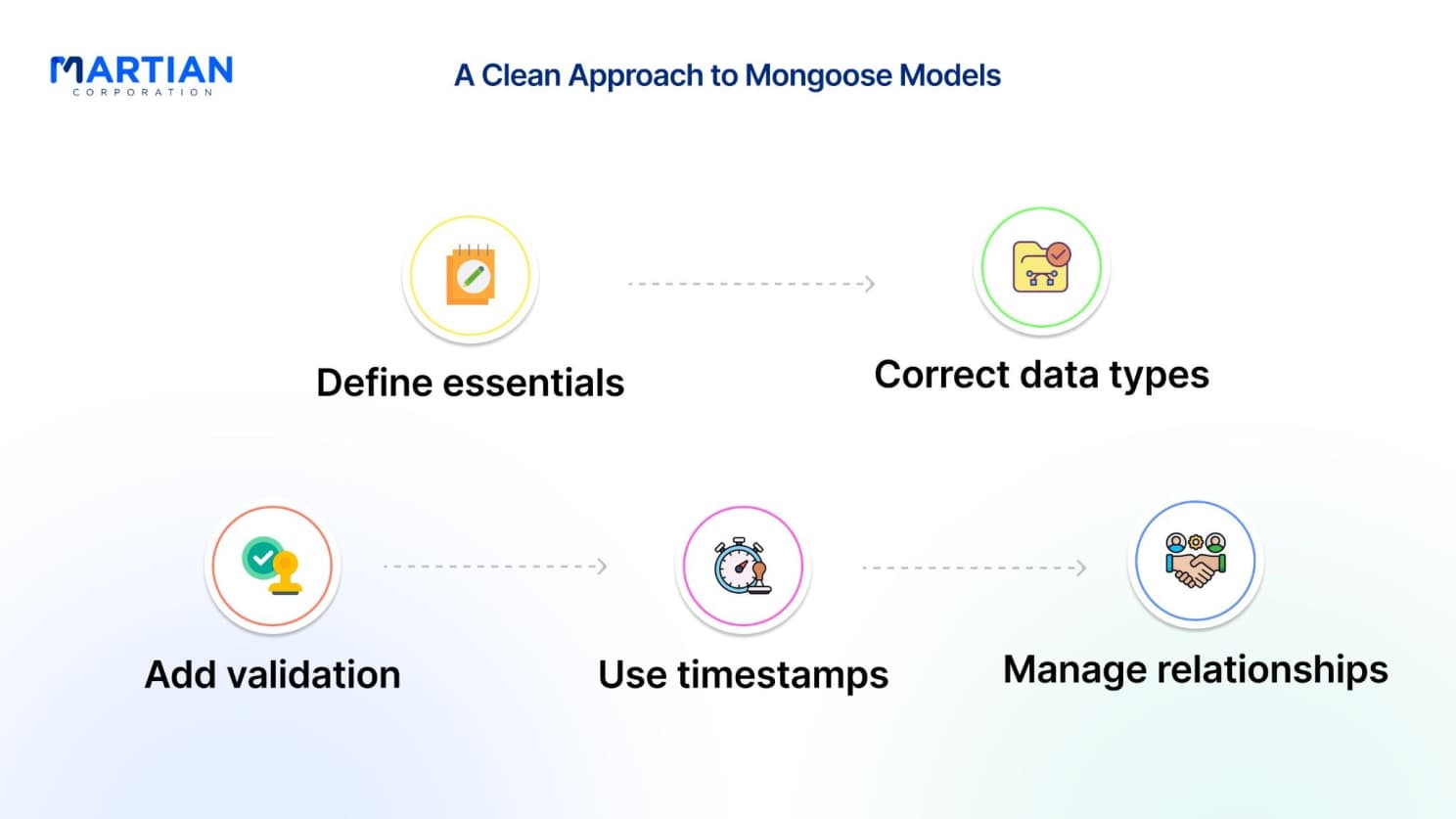
Start by defining only the essential fields. Use correct data types — String, Number, Date, Boolean, etc. Add validation rules to prevent bad data from entering your system. Use built-in timestamps and default values to keep metadata consistent. Use population thoughtfully to manage relationships across collections. Refactor models as your business logic evolves — clean models grow with you.

A small investment in structure today saves countless hours later.

Best Practices for Clean Business Logic

“Complex logic is just simple logic that was never cleaned up.”

Keep your codebase well-organized with clear naming conventions Break logic into small, single-responsibility functions Refactor regularly to remove outdated or duplicate logic Write unit tests to prevent unexpected bugs Use code reviews to maintain consistency across the team

Clean logic = fewer bugs, faster development, and happier developers.

How Companies Benefit From Clean Data Models

“When your data is clean, your operations run like a machine.”

E-commerce startup: Eliminated slow queries and messy product–customer relationships Healthcare provider: Improved patient record consistency with structured schemas Finance firm: Achieved accurate forecasting and reduced manual errors

Across industries, teams that adopt structured Mongoose models see faster systems, better collaboration, and more confident decision-making.

Article content

Conclusion

“Clean models aren’t optional — they’re the foundation of reliable business logic.”

Mongoose makes it easy to build structured, trustworthy data models that support your entire application. When businesses embrace clean modeling practices, they unlock smoother workflows, lower error rates, and stronger decision power.

As digital operations grow more complex, the companies that prioritize clean data models will be the ones that scale confidently — and stay ahead.With tools like Mongoose, maintaining clarity, consistency, and reliability becomes not just manageable, but effortless.

NewsLetter

Stay ahead in the world of technology

Get curated technology trends, expert analysis, and product updates delivered straight to your inbox — no noise, just signal.

Enter your email address

By subscribing you agree to our Terms and Conditions and Privacy Policy

More Blogs

future-of-iotTechnology
29 May 2026
2 min read

The Future of IoT in 2026 and Beyond

Artificial intelligence (AI) refers to a machine's capability to execute tasks that usually necessitate human intelligence, including reasoning, learning, and problem-solving. AI systems can analyze vast amounts of data, recognize patterns, and make decisions based on their findings. As technology advances, AI is increasingly being integrated into various sectors, enhancing efficiency and innovation. From virtual assistants to autonomous vehicles, the applications of AI are transforming our daily lives and shaping the future.

Read more
Cross-Platform vs Native: What Tech Stack Helps You Win in the Market?Technology
26 Apr 2026
3 min read

Cross-Platform vs Native: What Tech Stack Helps You Win in the Market?

“Your tech stack isn’t just a code decision — it’s a business decision.” 📱 Choosing between native and cross-platform development can define your app’s speed t

Read more
Deploy Your Web App to the Cloud in 15 Minutes: A DigitalOcean GuideTechnology
26 Feb 2026
2 min read

Deploy Your Web App to the Cloud in 15 Minutes: A DigitalOcean Guide

“Cloud deployment isn’t complicated — it’s empowering.” ☁️ In today’s development landscape, launching your web app shouldn’t take days. With DigitalOcean, you

Read more