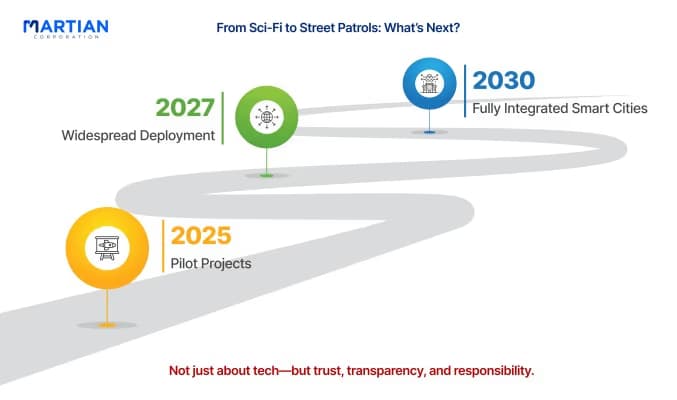

Introduction: A Glimpse Into the Future:
Imagine a city where crimes are spotted before they happen. No sirens. No delays. Just bots on duty. 🤖🚨
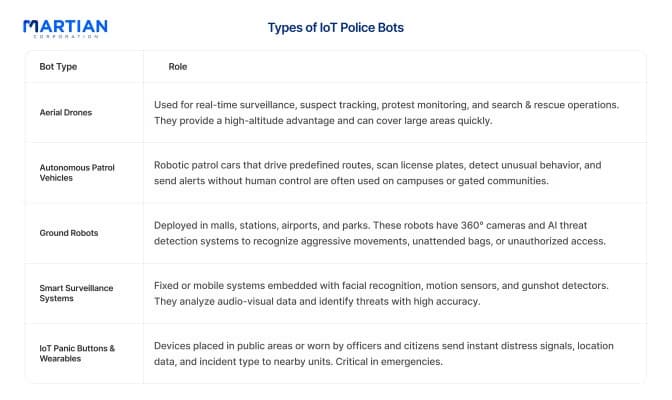
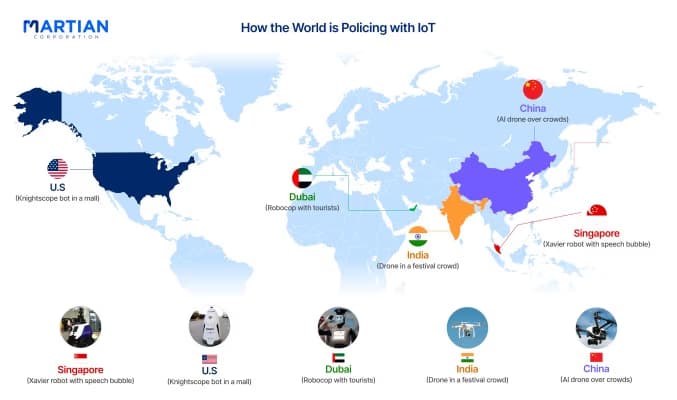
The idea of robotic policing has boomed its way from the pages of science fiction into the streets of present-day cities. Along with the growth of urban populations and the complexity of keeping them safe, a new class of tools is gradually emerging to support human efforts- intelligence, connection, and autonomy. Using robots' abilities with the connectivity and data-sharing power of the Internet of Things, law enforcement agencies worldwide are investigating innovative ways to prevent and respond to crimes.
Such innovations are meant to complement rather than replace human officers, constantly keeping watchers looking for threats, emergencies, or crime predictions. About robotic policing, the mind has to get out of hardware and into thinking of more innovative public safety systems driven by data.
The Urban Security Dilemma:
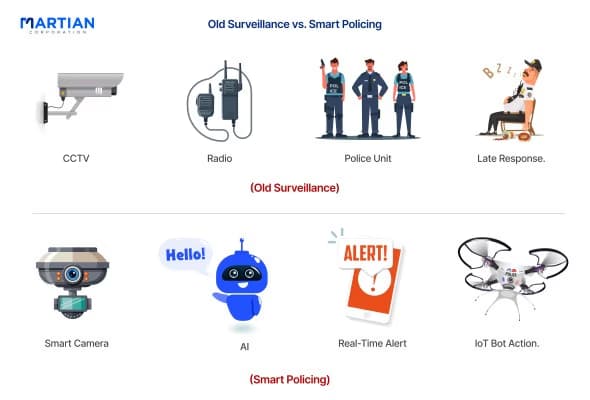
Urbanization forces a big wave of new problems: busy public places, increasing levels of anonymity, and crimes on the rise. And Law enforcement agencies, no matter how well-trained or equipped, are finding it hard to keep up with the pace. The times of CCTVs with radio calls and systems of static monitoring were bygone times when crime used to be slower and disciplined.